Break Cue, Jump Cue, or Break-Jump Combo: Choosing Your Second Cue
Three tools compete for the second slot in your case — for most league players the three-piece combo wins on logistics, but your league's rules may decide first.
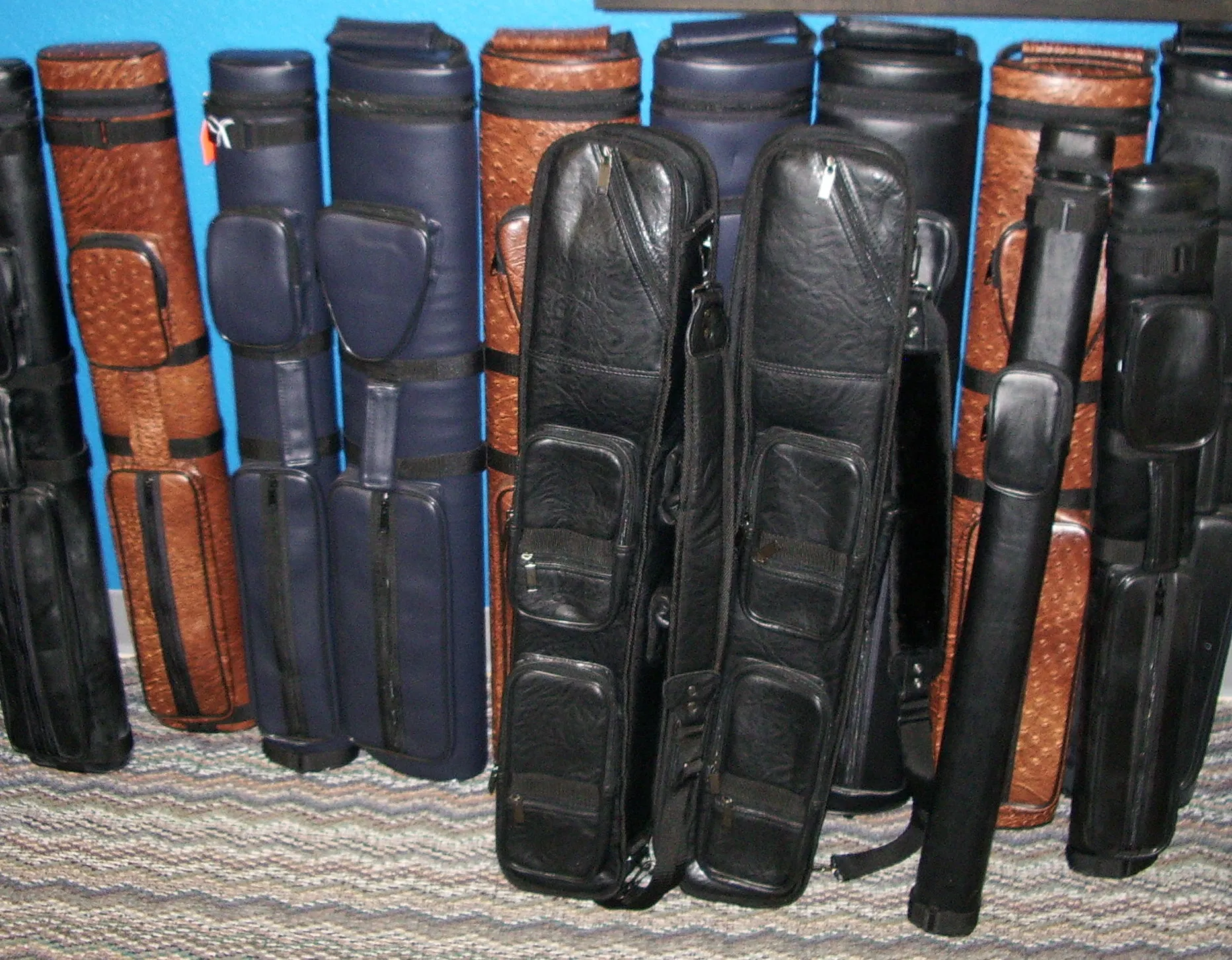
Every serious cue case has an empty slot waiting, and once you own a playing cue the question is what earns it. Three tools compete for that space: a dedicated break cue, a dedicated jump cue, or the three-piece break-jump combo that tries to be both. Each is genuinely different equipment, and the right answer depends less on the gear than on where you play and what your league allows.
The short version: for most league players a break-jump combo is the sensible second cue, because it covers both jobs for one price in one slot. Dedicated tools win only at the specialist end. And if you are still working on your first playing cue, the honest answer is "nothing yet" — the break cue vs playing cue explainer covers whether you need a second cue at all, and our first pool cue guide covers the purchase that comes before this one.
What each tool is actually for
The break cue exists to deliver maximum cue-ball speed into the rack, hundreds of times, without slowly destroying the leather tip your playing game depends on. Manufacturers answer with a stiffer shaft, a conical taper and a hard — usually phenolic — tip, which Dr. Dave's efficiency testing credits with roughly 17% more delivered break energy than leather. The full build breakdown lives in the break cue vs playing cue guide; the short version is "beefier stick, harder tip, one violent job."
The jump cue solves a different problem: getting the cue ball airborne legally over an obstructing ball. Dr. Dave's jump cue analysis describes the type as shorter, lighter and stiffer than a playing cue, again with a hard tip — each trait serving the physics. A hard tip and stiff shaft shorten tip contact time so the cue ball separates cleanly before it presses into the slate; a short, light cue is simply easier to hold in the steeply elevated position a legal jump demands. Most jump cues also break into three pieces, which lets you reconfigure for a dart-style stroke versus a standard one.
Playing cues, Dr. Dave notes, generally do not jump well — softer tip, less-stiff shaft, more weight to accelerate downward. A low-deflection shaft, particularly carbon, can still clear a partial ball reliably, so a playing cue is not helpless, just worse at the job.
The break-jump combo is why most players never buy either dedicated tool. It is a three-piece cue: assembled, it breaks like a breaker; remove a butt section and the remaining assembly is a roughly 40-inch jumper — 40 inches being the minimum legal cue length in common rule sets. Browse the mid-priced "break cue" listings at any large retailer and most of what you find is actually this format, which is why our jump cue roundup and the Viking CRUSH vs Pure X HXT comparison spend so much time on it.
The rules may decide before you do
Equipment rules are the part of this decision nobody prices in, and they can make a purchase literally unusable. The American Poolplayers Association's equipment rules are the clearest published example:
- Jump cues are only allowed in APA's Masters divisions. A dedicated jumper is dead weight in standard APA league play.
- Break cues are allowed for breaking only — they may only be used for jump or massé shots in Masters divisions too.
- Your regular shooting cue may legally jump, massé and break — and APA explicitly says you may not "break down" your regular cue to perform a jump shot. No unscrewing the butt to improvise a jumper.
- APA does allow switching cues or shafts during a game as long as the equipment is legal and you stay within time guidelines.
Other rule sets are more permissive: open tournaments and most open leagues allow dedicated jump cues, and Dr. Dave's break cue advice notes that some leagues and tournaments go the other way and restrict phenolic tips or dedicated break cues outright because of the advantage they confer. The practical rule: check your own league's equipment page before spending — the cheapest second cue is the one you are allowed to use.
The honest case for each option
Buy the combo if you play league or tournaments weekly and your rules allow specialty cues. You get a real breaker and a legal jumper for one price and one case slot — the format dominates the mid-range for a reason. Dr. Dave himself reports being converted by a modest J&J break/jump combo after doubting the concept, partly because a combo simply takes less room in the case. The compromise is real but modest: one phenolic front end does both jobs, and the joint placement is a shared decision rather than two optimized ones.
Buy a dedicated break cue if the break is a genuine weapon in your game and you want it optimized rather than shared — purpose-built breakers offer options a combo does not, like the deliberately heavy builds (Rage's Heavy Hitter runs to 25 oz) or flagship carbon shafts. If jumping is rare or illegal in your league, there is nothing to combine it with anyway.
Buy a dedicated jump cue if you jump often enough to want the tool perfected: the lightest possible assembly, multiple length modes, a tip built for lift alone. Published configurations show what specialization buys — Predator's Air Rush lists a 40.25-inch, 8.1-ounce short mode and a 51.5-inch, 12.1-ounce full assembly; Cuetec's Propel is an 11-ounce all-composite build with its Kintrol break/jump tip. Our Air Rush vs Propel comparison shows how far the premium end takes the idea.
Buy nothing if you play a few casual racks a month, are still on your first cue, or play under APA-style restrictions where the jump half of any purchase is unusable. A playing cue can break and jump legally; a $150-250 second cue changes nothing at the casual end. Spend the money on table time, or on a cue case that protects what you own.
What they cost
Retail and manufacturer listings checked in October 2026:
- Entry dedicated breakers: about $125-160 — Rage maple break cues at Seybert's, including the 25 oz Heavy Hitter.
- Mid-range break-jump combos: roughly $227-450 — Players JB models at $227-237 at Seybert's; Mueller's lists the Star S2 at $285, the Stinger at $380 and the RAT-JB1 at $450.
- Flagship breakers: $429-849 — Predator's BK4 line at $429-469 and the carbon BK Rush at $849.
- Premium dedicated jumpers: $569-599 — the Cuetec Cynergy Propel at $569 MSRP and the Predator Air Rush at $599 on the manufacturers' own pages.
The math explains the market: a combo at $227-450 costs the same as an entry dedicated breaker alone and throws in a legal jumper. That is the whole value case — for more on what the money buys inside each category, the cue specs guide, joint types explainer and the model entries in our Cue Database go deeper.
The bottom line
The second-cue decision is really two questions: what does your league allow, and how specialized is your game? Under APA-style restrictions the answer is largely written for you — your playing cue is your only legal jumper, so buy a breaker or a combo and use the break half. In open play, a mid-priced break-jump combo is the rational first second cue: one purchase, one slot, both jobs done competently. Dedicated tools earn their keep only when a specific shot — your break, or your jump — is strong enough to deserve its own equipment. And if none of that sounds like your game yet, keep the money; the playing cue you already own does all three jobs legally, just less theatrically.
Is a jump shot legal in pool?
Yes, when executed as a legal hit — striking down through the cue ball so it rebounds off the slate, not scooping under it. Whether you may use a jump cue is a separate question: the APA restricts dedicated jumpers to its Masters divisions, while most open tournaments allow them.
Can I jump with my regular playing cue?
Yes. APA rules explicitly allow a regular shooting cue to perform jump, massé and break shots, and Dr. Dave notes that a low-deflection — especially carbon — playing shaft can still clear partial obstacles reliably. What you may not do, under APA rules, is unscrew your playing cue to shorten it for the jump.
Do beginners need a break cue or a jump cue?
Neither, at first. A playing cue breaks and jumps legally, and at casual frequency the wear argument barely applies. Buy the best playing cue your budget allows — see our first cue guide — and revisit the second-cue question once league play makes the break or the jump a weekly event.
Is a break-jump combo as good as two dedicated cues?
For most players, close enough that the convenience wins. You give up a purpose-optimized front end and some configuration options; you gain a legal jumper essentially free. Players who break or jump at a serious competitive level eventually outgrow the compromise, which is exactly who the dedicated tools are for.
Can I use my break cue to jump?
Mechanically, a full-length break cue can execute a legal jump — but under APA rules a break cue may only be used for jump or massé shots in Masters divisions. In standard league play, jump with your regular cue instead.
Sources
- Dr. Dave — Jump Cue — why jump cues are shorter, lighter, stiffer with hard tips; tip contact time; playing cues jumping poorly; LD/carbon clearing small jumps; three-piece stroke options
- Dr. Dave — Cue Types and Tapers — jump portions commonly 40" (minimum legal length), conical break taper, break-jump construction, the J&J combo anecdote
- Dr. Dave — Cue Tip Efficiency — phenolic vs leather COR figures behind the ~17% break-energy gap
- Dr. Dave — Break Cue Advice — dedicated break cue recommendation; leagues restricting phenolic tips and specialty cues
- APA — Equipment Rules — jump cues Masters-only, break cues break-only, regular cue may jump/massé/break, no breaking down a shooting cue, cue-switching rules
- Predator — Air Rush Jump Cue — $599 listing, 40.25"/8.1 oz and 51.5"/12.1 oz published configurations
- Cuetec — Cynergy Propel Jump Cue — $569 MSRP, 11 oz all-composite build, Kintrol break/jump tip
- Seybert's — Break Cues and Players Jump/Break Cues — Rage $125-160 and Players JB $227-237 retail listings
- Mueller's — Jump & Break Cues — Star S2 $285, Stinger $380, RAT-JB1 $450 listings
Photo: a row of pool cue cases — SMcCandlish, CC BY-SA 4.0 via Wikimedia Commons.
More coverage
Keep reading
Best Pool Cues in 2026: The Complete Buying Guide by Budget
A budget-by-budget guide to 2026's best pool cues: manufacturer specs, honest price tiers, and how to match a cue to your skill level.
Uni Photo Pool Cue: Personalization, Shaft Options and Price
A closer look at Uni's personalized photo pool cue: the $281 listing, carbon versus Standard glass fiber wording, printed finish, and ordering checks.
How to Replace a Pool Cue Tip: DIY Steps, Tools and Mistakes
A leather tip is a blade, gel super glue and patience away. The home retip step by step — facing the ferrule, centering the tip, shaping the dome — plus when to pay a shop.