Pool Cue Specs Explained: Weight, Tip Diameter, and Shaft Material
Every spec sheet lists the same numbers. Here's what 18–21 oz, 11.75–13 mm, and "maple vs. carbon" actually mean once you're over a shot.
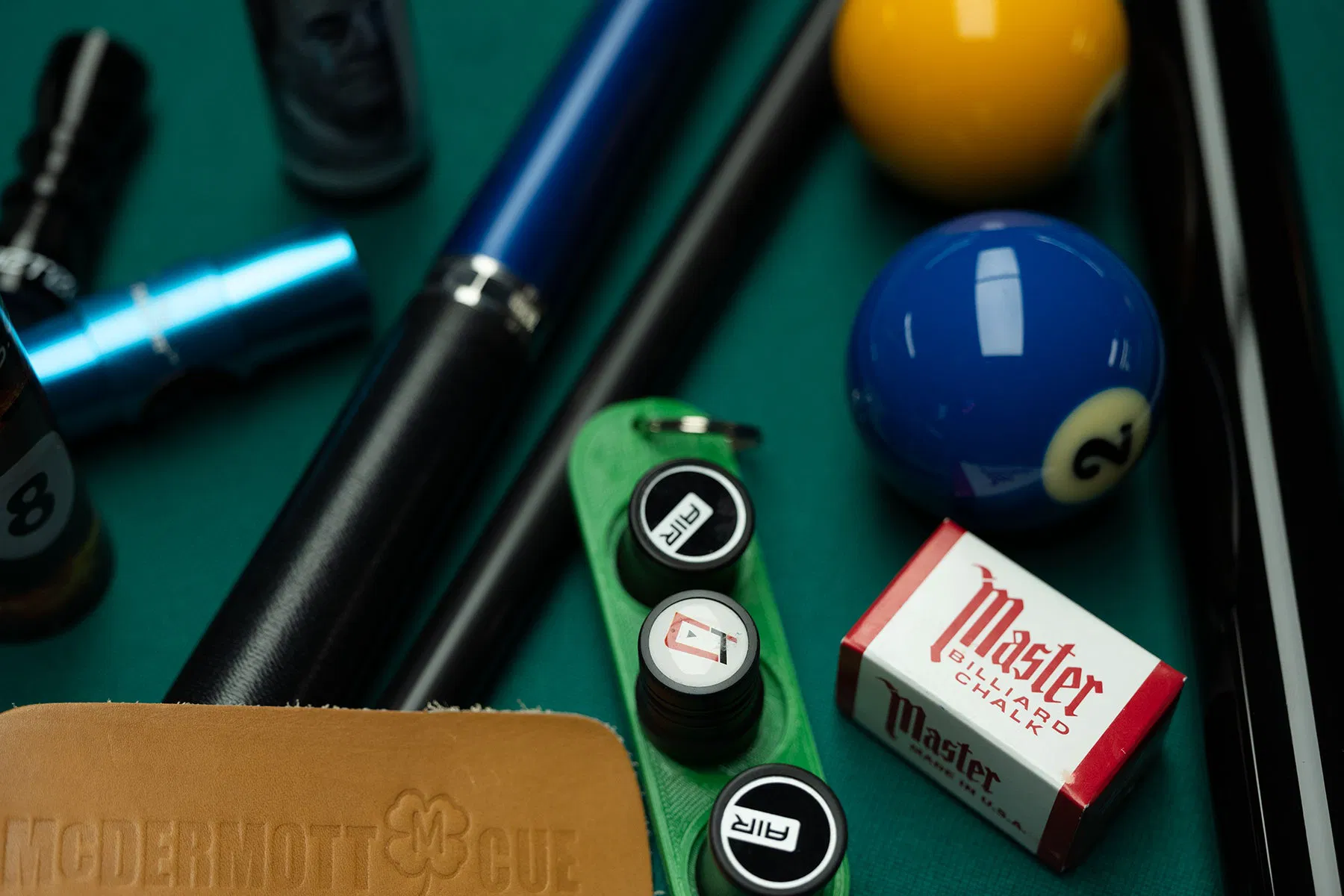
A pool cue spec sheet only runs about six numbers deep, but two or three of them shape how the cue feels every single time you bend over a shot. Here is what each spec actually changes — and which ones you can safely ignore.
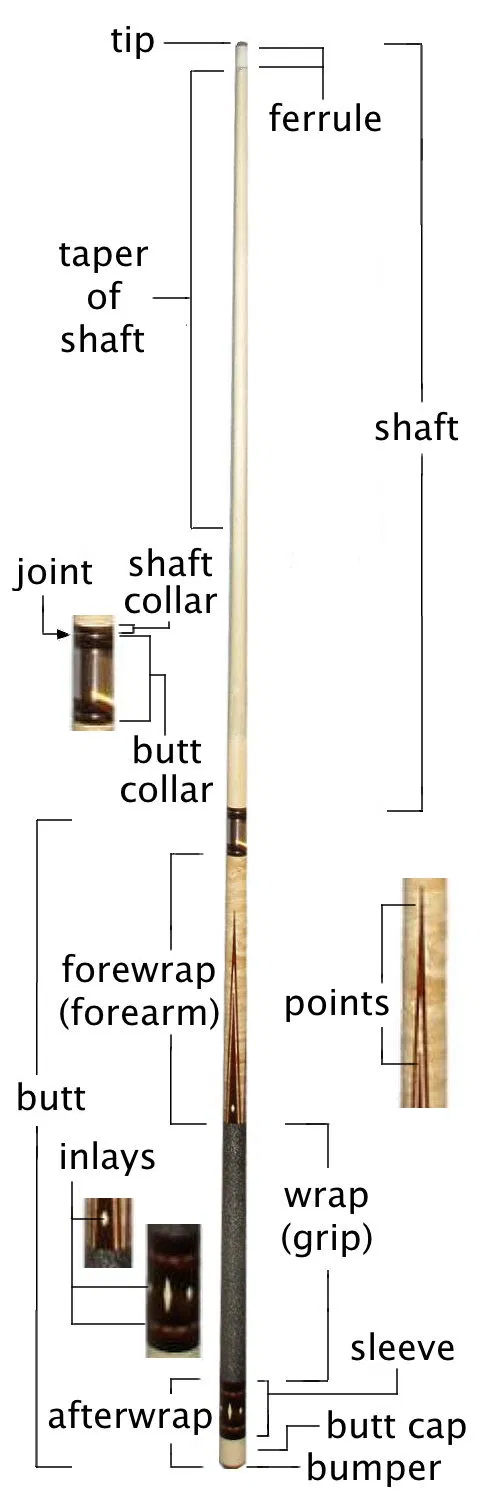
The Three Specs That Matter
Weight: 18–21 oz
Most playing cues weigh between 17 and 21 ounces, and the industry's default sits right in the middle at 19 oz. Custom cuemakers typically recommend 18–20 oz for a pool cue.
What weight changes is stroke feel, not raw power. A heavier cue sends the cue ball farther for the same stroke speed, which some players read as "more power." A lighter cue asks for a quicker stroke to get the same result but gives more feedback on soft, finesse shots. Neither is better — it is a preference that settles in as your stroke develops.
- New players: start at 19 oz. It is the standard for a reason — neutral enough to learn on.
- Specialty cues break the rule: break cues often run at the heavy end for a firmer hit, while jump cues run much lighter and shorter because jumping calls for a fast, compact stroke.
Tip diameter: 11.75–13 mm
The number on the spec sheet is the shaft's diameter at the tip. The industry default is 13 mm — that is what ships on most production cues. Low-deflection and carbon shafts typically run smaller, commonly around 12.4–12.9 mm, with some models as thin as 11.75 mm.
The trade-off is forgiveness against precision:
- Larger tip (near 13 mm): bigger contact surface, more forgiving of slightly off-center hits, easier to pocket balls while your stroke is still developing.
- Smaller tip (under ~12.5 mm): less mass at the shaft's end, which generally means less deflection (squirt) on sidespin shots — and many players find it easier to see exactly where the tip meets the ball.
One myth worth killing: a smaller tip does not magically create more spin. Spin comes from how far off-center you strike the cue ball — what a smaller, lighter shaft end does is change how far the ball squirts off-line when you do it.
Beginners: stay near 13 mm. The forgiveness is worth more than the theoretical spin gains.
Shaft material: maple vs. carbon fiber
Hard rock maple has been the standard shaft wood for a century. It flexes in a way players describe as "feel" or "feedback," it is the cheaper option, and it is what nearly every house cue is made of. Its weaknesses: it can warp with humidity and temperature swings, and no two pieces of wood play exactly alike.
Carbon fiber shafts are the newer alternative — a consistent hit from shaft to shaft, strong resistance to warping, and usually engineered for low deflection. The trade-offs are a higher price and a different feel: stiffer, with a sharper sound that some players love and others never warm to.
For a first cue, maple is the honest answer for most players — cheaper, and it teaches you what "feel" actually means. Carbon makes sense once you know you want it, or if you play where humidity kills wood cues. We break the deflection question down further in what "LD" actually does.
Specs That Matter Less Than You Think
- Length (57–59 in): 58 inches is the default and fits nearly all adults. Only kids, shorter players, or unusually tall players need to think about it — and a cramped home room is a better reason for a short cue than arm length is.
- Wrap (linen, leather, or none): grip comfort and sweat management. It changes how the cue feels in your hand, not how the ball moves.
- Joint type (3/8×10, 5/16×14, Uni-Loc, Radial and friends): affects how the cue breaks down and subtly how the hit feels, but every major joint works fine. It only becomes important when you buy a second shaft — it has to match your butt.
- Ferrule: the collar under the tip, usually about an inch long. You do not choose it directly; it comes with the shaft's design.
What Actually Matters for a First Cue
If you are buying your first playing cue, the checklist is boring on purpose:
- Straightness. Roll the shaft on a flat table — any wobble or daylight under the shaft means warp. Pass on it.
- A weight you can control. 19 oz until you know better.
- A ~13 mm tip with medium hardness — the forgiving end of the spec range.
- A smooth shaft that slides through your bridge hand without grabbing.
Everything else — exotic woods, inlays, low-deflection upgrades — is refinement you can buy later, once your own stroke tells you what it actually needs.
Want the full buying walkthrough? Our beginner's guide to choosing a cue stick covers budget, try-before-you-buy and the rest, and the Cue Database lists specs across the current cue lineup.
Sources
Spec ranges in this article reflect industry-standard manufacturer spec sheets and public references, including the cue stick overview on Wikipedia and the pool cue dimension reference at LeaguePool.
More coverage
Keep reading
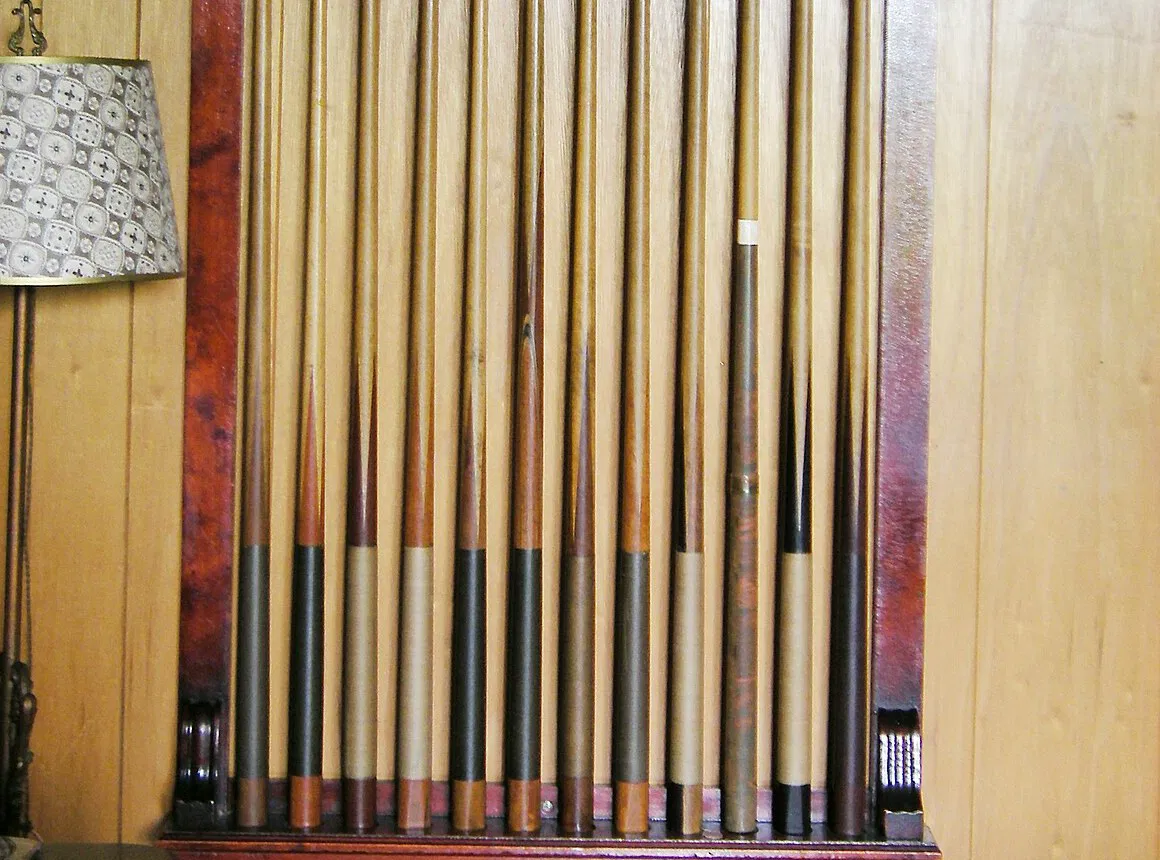
Sneaky Pete Cue Explained: The House Cue That Isn't
A Sneaky Pete is a quality two-piece cue built to look like a cheap bar cue — plain outside, serious inside. The history, the tells, and what they cost.
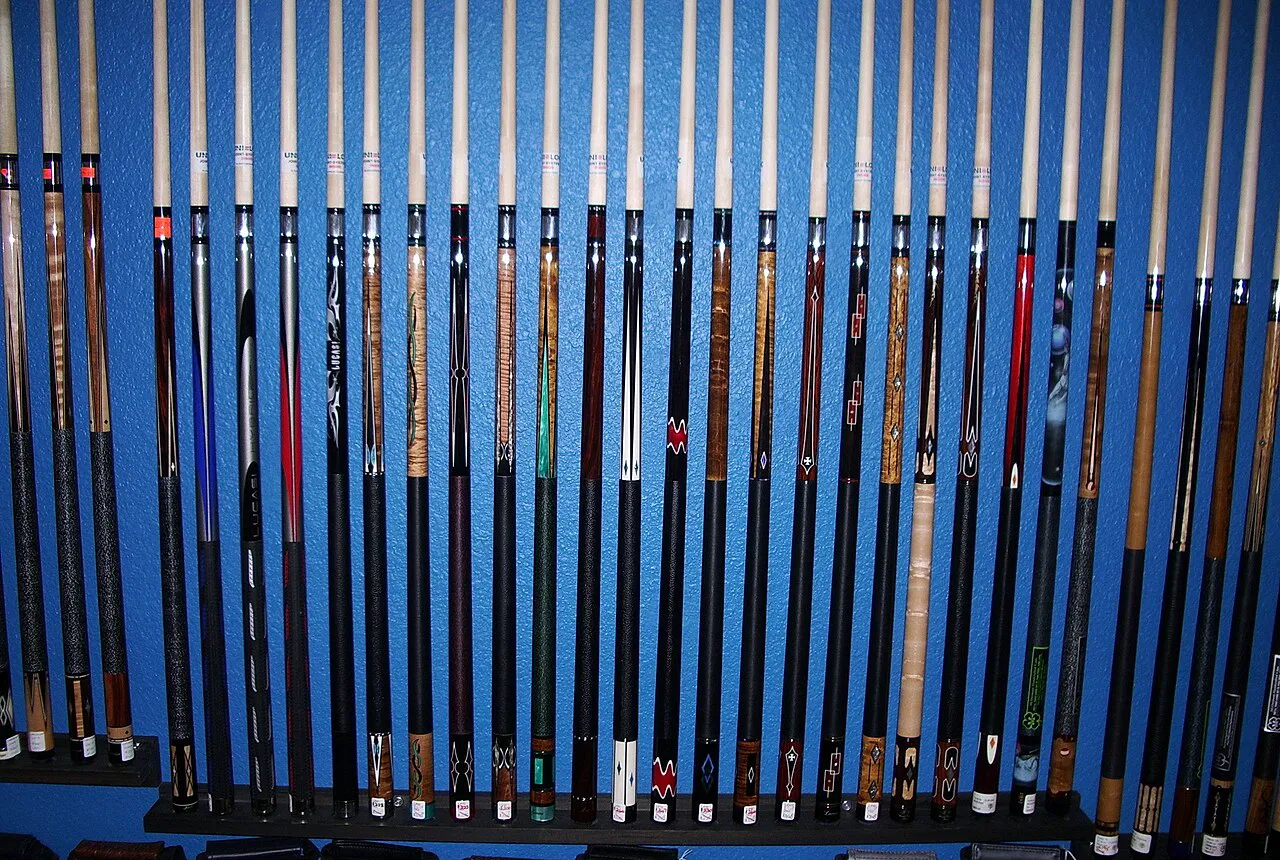
Pool Cue Wood Types: Maple, Ash, and What the Exotics Do
Maple rules the shaft, ash owns snooker, and ebony, cocobolo and rosewood dress the butt. What cue woods actually change — and what is decoration.
Pool Table Cloth Compared: Simonis vs Gorina vs Andy
Walk into any forum thread about reclothing an American pool table and the same three names surface within minutes: Simonis, Gorina and Andy. All three make…