Pool Cue Tip Hardness Guide: What Soft, Medium and Hard Change
Every spec sheet lists a tip hardness — but the letter on the box is not a standard, and the physics says the chalk on your hand matters more.
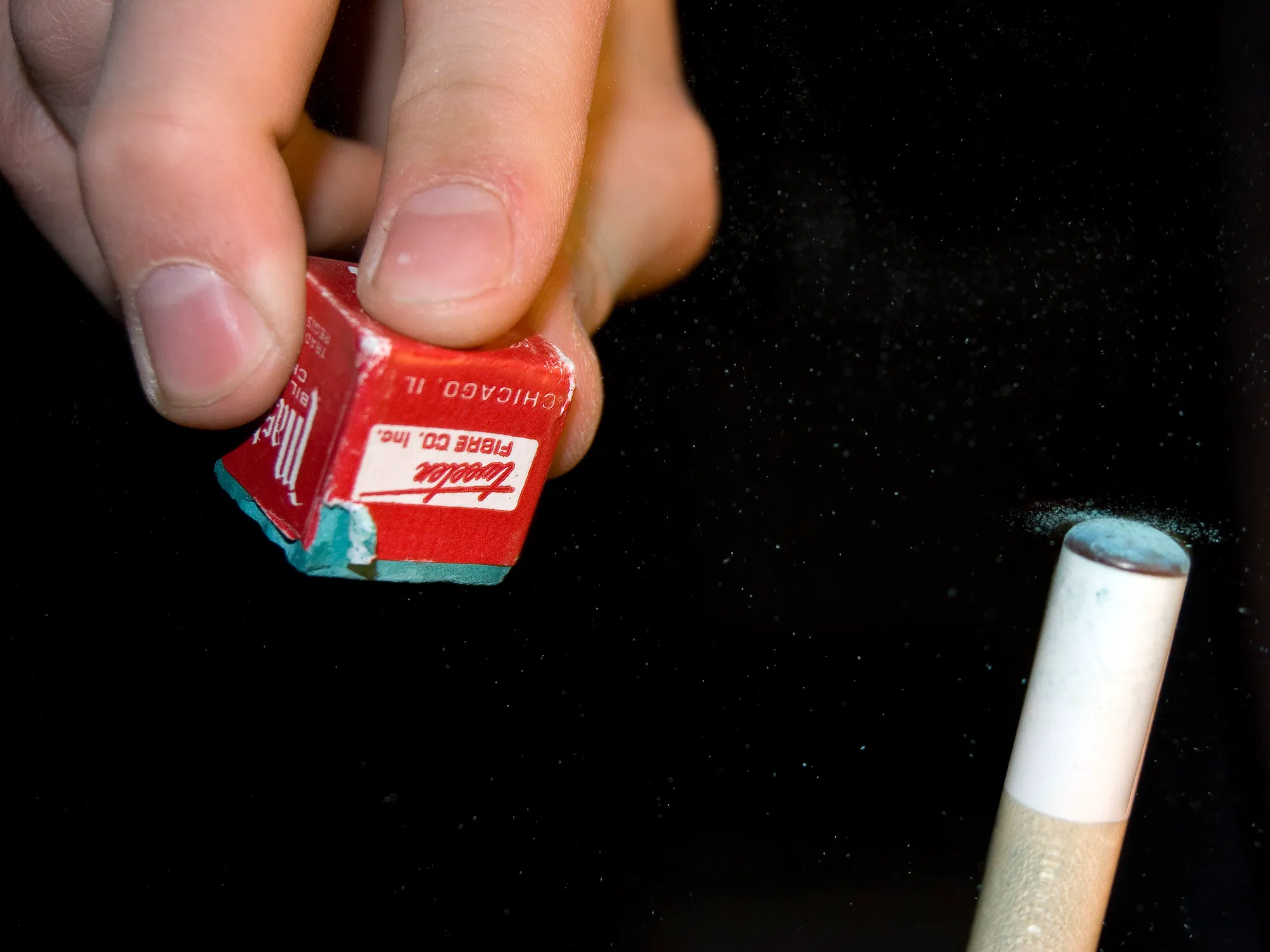
Every playing-cue spec sheet ends the same way: tip hardness — soft, medium or hard. It is the cheapest part of the cue to swap and the spec that collects the most mythology. Here is what measured data and manufacturer documentation say it actually changes.
First: the Label Is Not a Standard
Playing-cue tips are leather — either a single pressed piece of hide or a laminated stack of thin layers. Kamui's standard line, for instance, is sold in four grades (Super Soft, Soft, Medium, Hard), each a stack of tanned pigskin layers. Break and jump cues often skip leather entirely for phenolic.
The catch: "medium" is each brand's own opinion. On the Shore D durometer scale — the scale used for plastics and shoe soles — community-measured charts compiled on AzBilliards and republished by Dr. Dave show a Kamui Medium around 71–73, a Moori Medium around 75–77, an ungraded Elk Master down near 58–65, and phenolic break tips at roughly 97. Two tips both sold as "soft" can measure ten points apart.
Read the letter as "softer or harder inside this brand's lineup," not as a spec you can compare across brands.
What Hardness Actually Changes
Feel and sound. A soft tip deadens the impact — Dr. Dave describes the sound as more of a "thud," with less vibration reaching the grip hand. A hard tip hits sharper and louder. Neither is better; it is preference, and his bottom line is blunt: you will probably play best with whichever one you believe in.
Energy transfer, slightly. A harder tip has slightly better hit efficiency — it returns a little more speed to the cue ball for the same stroke speed. That marginally helps draw shots, where extra cue-ball speed keeps more backspin alive on the way to the object ball. A softer tip's slightly lower speed delivery can suit finesse play. Small percentages, not a power button.
Chalk grip. Softer leather holds chalk better; harder tips need regular scuffing or abrasive chalk to stay grippy, and a glazed tip miscues. With proper chalking, the miscue limit — how far off-center you can strike before the tip slips — comes out the same for soft and hard. Phenolic is the extreme case: it barely holds chalk at all.
Upkeep. Hard tips keep their shape longer. Soft tips mushroom — the leather bulges past the ferrule — though the bulge is cosmetic on any shot inside the miscue zone and trims away with fine sandpaper. The bigger wrinkle is drift: tips do not stay graded. A tip-maker quoted on Dr. Dave's site notes that soft and medium tips compress with play and most drift toward roughly 76 Shore D over time — one reason pros swap tips on a schedule rather than waiting for the feel to wander. A tip worn down or cut shorter also plays harder than it did new.
The skim factor. Because a soft tip compresses more at impact, it leaves bigger chalk marks on the cue ball — which slightly raises the odds of cling (skid or "kick"), the bad hit where transferred chalk sends the object ball off line.
Jumping. In leagues that do not allow jump cues, a harder tip on your playing cue makes a legal jump stroke easier. Only relevant if that is your league.
What It Doesn't Change
- Spin. For a given tip offset, the amount of spin is set by how far off center you strike — full stop. Tip-to-ball contact lasts about a thousandth of a second whether the tip is soft or hard, and the tests Dr. Dave cites found that a well-chalked hard tip applies as much spin as a soft one, sometimes slightly more. "Soft tips get more English" is the myth; the chalk earns the offset, not the grade.
- Deflection (squirt). Within the normal range, tip hardness has no practical effect on squirt. The one exception is a soft tip that happens to be dense and heavy — the extra endmass can add deflection.
Phenolic Is a Different Tool
Break and jump tips — usually phenolic — measure around 97 Shore D, far beyond any leather playing tip. They barely deform and barely hold chalk, which suits the job: breaking wants energy transfer, not finesse, and a flatter tip shape helps what little chalk does stick. They are not a substitute for a leather playing tip; players who take breaking seriously carry separate cues for it.
Which Hardness When You Buy
The honest checklist:
- Do not pick the cue for its tip. A laminated aftermarket tip runs roughly $25–$35 (Kamui's listed prices) and any cue repair shop can install one in minutes. Choose the cue for weight, diameter and shaft — our pool cue specs explainer ranks which of those matter.
- Default to medium. Whatever grade ships on the cue, play it until your own stroke tells you otherwise.
- Then match the job: softer if your chalking is lazy or you like a damped feel; harder if you want less upkeep and a touch more efficiency — and easier jumps where jump cues are banned.
Sources
More coverage
Keep reading
Sneaky Pete Cue Explained: The House Cue That Isn't
A Sneaky Pete is a quality two-piece cue built to look like a cheap bar cue — plain outside, serious inside. The history, the tells, and what they cost.
Pool Cue Wood Types: Maple, Ash, and What the Exotics Do
Maple rules the shaft, ash owns snooker, and ebony, cocobolo and rosewood dress the butt. What cue woods actually change — and what is decoration.
Pool Table Cloth Compared: Simonis vs Gorina vs Andy
Walk into any forum thread about reclothing an American pool table and the same three names surface within minutes: Simonis, Gorina and Andy. All three make…