Pool Cue Tip Shape: What Dime vs Nickel Radius Actually Does
Dime and nickel are radii, not brands — what the curve on your tip actually changes, and why the famous debate is smaller than it sounds.
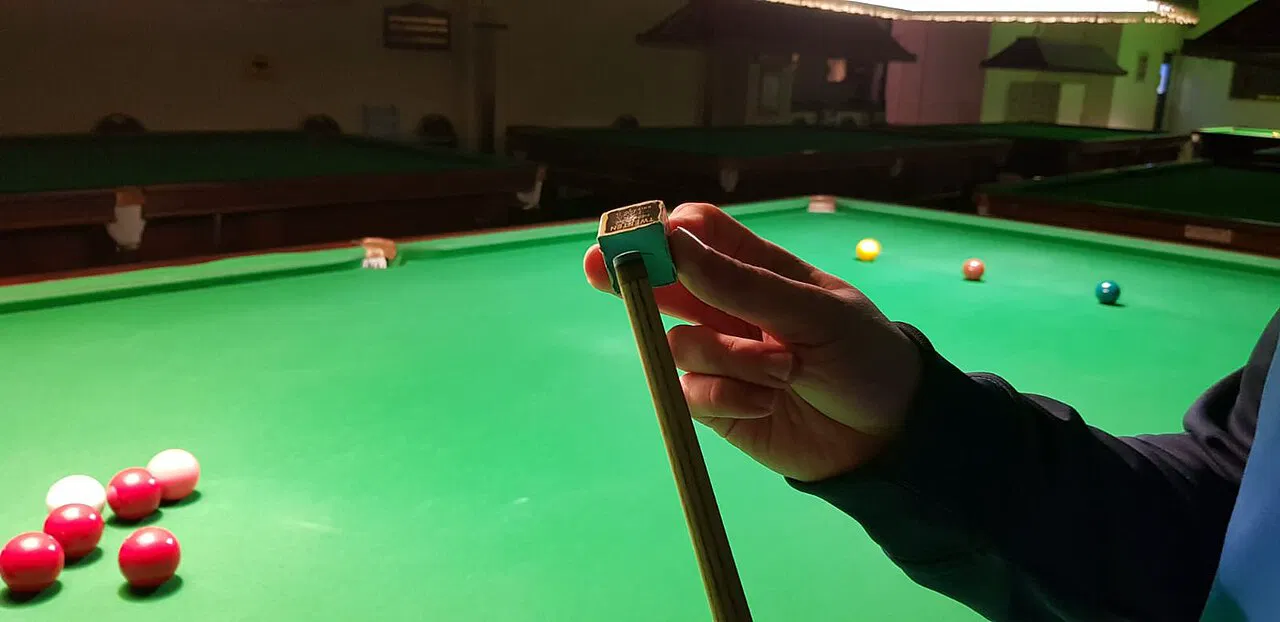
Every cue spec sheet ends at the tip, and every pool-hall argument about tips ends at the same two coins. "Dime" and "nickel" are shorthand for the curve ground into the leather dome — and while players debate them endlessly, the measured difference between the two is smaller than almost anyone believes. Here is what tip shape actually changes, the one sizing rule that matters, and how to keep the curve once you pick it.
What the Coin Names Actually Mean
Tip shape is a radius — the curve of a circle, sliced off at the edges of the ferrule. The industry labels that curve with US coins because everyone can picture one:
- Dime radius — about .358 inch, roughly 9 mm. The roundest of the standard shapes; the tip comes to a fairly tight dome.
- Nickel radius — about .415 inch, roughly 10.5 mm. Slightly flatter; the all-around default on most playing cues.
- Quarter radius and flatter — roughly 12 mm and up, toward nearly flat. Shows up on break cues and on cues of players who want the broadest contact face.
Smaller coin, rounder tip. Those .358/.415 figures are not folklore — they are the actual radii machined into Willard's dime and nickel tip shapers, the reference tools shops use to cut the curve. Tip hardness is a separate variable on the same piece of leather.
What a Rounder Tip Changes
Dr. Dave Alciatore's cue-tip research lists several real — if modest — advantages to a rounder shape:
- Miscue margin at big offsets. A rounder tip keeps a more uniform contact area as you aim farther from center, so maximum-English strokes are a little safer from tip-edge contact.
- A smaller contact patch. Less leather on the ball means slightly fewer cling/skid/"kick" incidents from chalk transfer.
- Clearance on power draw. On near-maximum draw strokes a wide, flat tip can clip the cloth after contact; a rounder tip on a smaller shaft buys extra table clearance.
- A touch less endmass. Trimming the shoulders down to a dime curve removes a little leather at the shaft end — marginally lower squirt, one reason low-deflection shafts tend to ship with rounder tips.
What a Flatter Tip Changes
The other direction has its own list:
- Forgiveness near center ball. On a mostly-center hit with slight aim error, a broader, flatter tip produces less unintentional sidespin — the mistake translates into cue direction instead of English. For the same reason, small doses of sidespin are easier to meter, because more cue offset is required to produce them.
- Break-cue logic. PoolDawg's shaping guide notes most break cues carry less curvature than playing cues — you want a straight, predictable hit and no accidental spin on the break, which is also why dedicated break cues run flat, hard phenolic faces.
- Chalk spread. A flatter dome holds chalk across a wider, more even surface.
The Honest Truth About Dime vs Nickel
Here is the part the pool hall gets wrong. Dr. Dave's June 2024 Billiards Digest column puts it bluntly: the difference between a dime shape and a nickel shape is "unimportant in a practical sense" — a conclusion echoed in the expert quotes on his FAQ page. Line the two curves up against the cue ball and the contact points land nearly on top of each other; a secondary breakdown of the same comparison puts the gap at about 0.8 mm even at the maximum-spin contact point, and around 0.2 mm at the offsets club players actually use.
Two implications:
- "More curve = more spin" is a myth. Tip offset sets the spin. A rounder tip reaches the same spin with less cue offset — a flatter tip can apply identical spin, you just have to aim the cue farther off-center to get it. Same English, different cue position.
- Consistency beats the choice. Whatever curve you pick, keeping it identical week to week matters more than which coin you matched.
The One Sizing Rule That Matters
Shape is not a free choice on every shaft — it interacts with tip diameter. Dr. Dave's rule: to keep the tip's edge from contacting the ball at large offsets, the tip's radius has to be smaller than the shaft's tip diameter.
- 9–10 mm shafts (snooker, English pool): dime or rounder.
- ~12 mm shafts: quarter or rounder — nickel and dime both fit.
- Standard 13 mm pool shafts: anything works — dime, nickel or quarter all keep the edge clear.
That is why snooker tips look so round — a small shaft physically requires it — and why the dime/nickel debate really only exists on full-size pool shafts. Diameter itself is a different spec; the cue specs explainer covers what 11.75 vs 13 mm changes.
Which Curve for Which Player
- Default to nickel if you are unsure — it is the most common shape in American pool, holds chalk evenly and forgives small aim errors.
- Dime if your game leans on heavy sidespin, draw and massé, or if your shaft runs on the thin side.
- Flatter on a break cue — you want the straightest possible contact, not finesse.
- Snooker shafts get no choice: dime or rounder, per the sizing rule.
Keeping the Curve
A tip's shape drifts as it wears — mushrooming flattens the shoulders, miscues and scuffing eat at the dome — so the curve is a maintenance item, not a one-time spec.
- Radius shapers do the measuring for you. Tools like the Willard shaper are machined to .358 inch (dime) or .415 inch (nickel): grind, then hold the built-in gauge against the tip — done when no light shows between gauge and dome. They run about $10–15 at the big billiard retailers.
- Shaping costs leather. Every reshape removes material — Dr. Dave's equipment-care column warns that frequent shaping wears a tip faster and pulls the next replacement closer. Scuff only when chalk stops holding, and know when the tip is actually done.
- Breaking flattens domes. Power breaks gradually squash a shaped tip — one more argument for a separate break cue.
Settled on a curve? The rest of the spec sheet lives in the specs explainer, and the Cue Database lists what the current cue lineup ships with.
Does a dime-shaped tip put more spin on the cue ball?
No — spin comes from how far off-center the tip strikes. A dime shape reaches the same spin with less cue offset; a flatter tip applies identical spin with more offset. What a rounder shape buys is cleaner contact at those large offsets.
What tip shape do most pool cues come with?
Nickel or something near it on most playing cues — it is the common default. Many carbon and low-deflection shafts ship with a dime curve or close to it, partly because shaving the shoulders trims endmass.
Is nickel or dime better for a beginner?
Nickel. It is a little more forgiving of small aim errors on center-ball hits and holds chalk across a broader surface. Either works — just keep it consistent.
Can I reshape a cue tip myself?
Yes — a dime- or nickel-radius shaper with a built-in gauge makes it a five-minute job. Each session removes a little leather, so shape only when the dome has visibly drifted, and budget for a slightly shorter tip life.
Sources
- Dr. Dave — Cue Tip Size and Shape Effects (FAQ) — rounder vs flatter effects: miscue margin at large offsets, smaller contact patch, draw clearance; Johnson/Jewett: little real dime-vs-nickel difference
- Dr. Dave — "Cue Tip Size and Shape Effects", Billiards Digest, June 2024 — dime vs nickel "unimportant in a practical sense"; a flatter tip needs more cue offset for the same spin; tip-radius-must-be-under-shaft-diameter rule (9 mm shaft → dime or rounder, 12 mm shaft → quarter or rounder)
- PoolDawg Academy — Shaping Your Pool Cue Tip — dime and nickel are the standard shapes; break cues run less curvature to avoid accidental spin (read via search excerpt — direct fetch blocked)
- Quarter King Billiards — Pool Cue Tip Shaping: Dime, Nickel & Quarter Curves — ~8.9 mm dime / ~10.5 mm nickel radii; nickel the all-around default; most carbon shafts ship with dime or near it
- Tell Me Best — Cue Tip Shape: Dime or Nickel — contact-point gap ≈0.8 mm at maximum-spin offset, ≈0.2 mm at club-level offsets
- Willard Cue Tip Shaper — Mueller's and Quarter King listings — .358"/.415" machined radii, built-in gauge light test, listed $9.95–$14.95
- LeaguePool — Pool Cue Dimensions and Tip Sizes — tip diameter ranges: pool 11.5–13 mm, snooker 9–10 mm
- Dr. Dave — Equipment Care, Billiards Digest, June 2021 — shaping wears tips faster; scuff only when chalk stops holding
Cover photo: Snooker Spot, CC BY 2.0, via Wikimedia Commons.
More coverage
Keep reading
Sneaky Pete Cue Explained: The House Cue That Isn't
A Sneaky Pete is a quality two-piece cue built to look like a cheap bar cue — plain outside, serious inside. The history, the tells, and what they cost.
Pool Cue Wood Types: Maple, Ash, and What the Exotics Do
Maple rules the shaft, ash owns snooker, and ebony, cocobolo and rosewood dress the butt. What cue woods actually change — and what is decoration.
Pool Table Cloth Compared: Simonis vs Gorina vs Andy
Walk into any forum thread about reclothing an American pool table and the same three names surface within minutes: Simonis, Gorina and Andy. All three make…