Pool Table Cloth Compared: Simonis vs Gorina vs Andy
Worsted vs napped construction explained, where Simonis, Gorina and Andy cloth is actually made, what the wool/nylon blends do to speed and durability, and what a set costs at public retail.
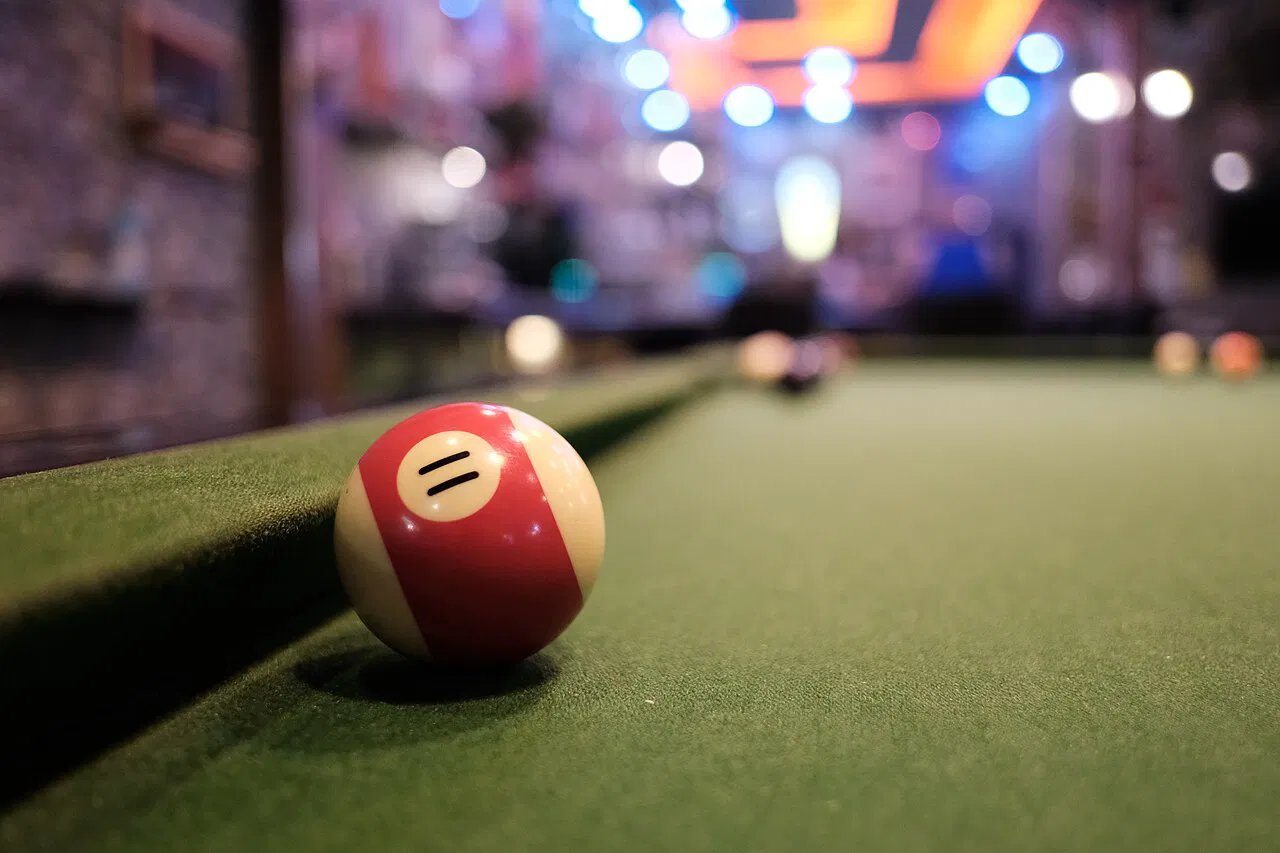
Walk into any forum thread about reclothing an American pool table and the same three names surface within minutes: Simonis, Gorina and Andy. All three make worsted "speed cloth" for pool — which means the brand decision happens only after a bigger one, the kind of cloth itself. This guide lays out both layers: what worsted actually is versus the fuzzy stuff on older tables, then how the three brands differ in origin, blend, playing speed, durability and price — with what owners and installers report, and where each brand's own marketing needs a pinch of salt.
Worsted vs Napped: The Real Fork in the Road
Before any brand comparison matters, the construction type does. Billiard cloth is wool, usually with some nylon blended in, and the yarn can be spun two ways.
Napped cloth (also called woolen cloth or just "felt") is spun from a mix of long and short fibers twisted into a fuzzy yarn, then finished so a soft pile — the nap — stands up on the surface. That nap has a direction, and it changes the game: balls roll slower, and they drift slightly depending on whether they travel with or against the pile. Napped cloth needs regular brushing in one direction to keep it honest. It is the standard surface for British pool and snooker tables — retail guides like Liberty Games' point out it suits the smaller tables and tighter pockets of the British game.
Worsted cloth is spun from combed yarn — the short fibers are removed before weaving — which produces a tight, smooth surface with no nap at all. Balls roll faster and, crucially, roll the same in every direction. Dr. Dave Alciatore's cloth FAQ notes the practical differences: worsted stays flat, resists pilling, holds chalk dust on the surface where it can be brushed off, and plays fast from the first day with no break-in period — while woolen cloth starts slower and actually speeds up as its short fibers wear off. Worsted costs more to manufacture, which is why it sits at the premium end of every price list.
One nuance worth keeping: speed depends on the specific cloth model, not only the worsted-or-woolen label — a light worsted can outpace a heavy one. And every cloth in this article is worsted; the cheapest no-name "felt" in a big-box table accessory kit usually is not.
The Three Brands and Where They Come From
Origin is the first thing the brands argue about — partly because it is verifiable, partly because it makes good marketing.
Simonis is woven by Iwan Simonis in Verviers, Belgium, in a mill the company traces to 1680 — a claim corroborated beyond its own site by the Wallonia region's official history project, which dates the Simonis textile enterprise to that year. Simonis calls its cloth the standard at virtually all major pool tournaments, and the claim largely holds up: televised professional events overwhelmingly run on Simonis 860.
Gorina is Spanish. The company says it has manufactured billiard cloth since 1835, first in Barcelona and now in Menàrguens — the date appears in dealer listings and was repeated in the sales copy for the cloth Gorina supplied to the International Pool Tour in the mid-2000s, when it was the tour's official cloth. In the US, Mueller's is its exclusive distributor. Gorina's current marketing leans hard on this heritage and on a proprietary tighter fiber-winding process it says preserves playing speed longer; the winding claim is the company's own, so treat it as positioning rather than proven fact.
Andy is the youngest of the three. Its US distributors date the brand to 1984 — Eastern Billiard Supply calls it "introduced in 1984," and retail listings describe it as Taiwan's first professional worsted billiard cloth maker — though one AZBilliards press item says 1973, so treat the founding year as approximate. Production began in Taiwan; Andy Cloth USA, based in Wyoming, imports cloth it says is manufactured under the Andy name in Shanghai. Andy has real tournament history too: retail listings note its cloth was used at the 2019 WPA Players Championship.
The Lineups Compared
Manufacturers and retailers publish different levels of detail, so treat this table as a snapshot of the best-documented figures rather than lab-verified specs.
| Cloth | Wool / nylon blend | Weight | Notes |
|---|---|---|---|
| Simonis 860 | 90 / 10 | ~410 g/m² | The reference standard for 8- and 9-ball; slightly slower than 760 |
| Simonis 760 | 70 / 30 | ~355 g/m² | The faster blend — more nylon, lighter weave; for bank pool and players who want speed |
| Simonis 860HR | 70 / 30 | ~410 g/m² | 860's weight with 760's blend — built for heavy commercial traffic |
| Gorina Basalt | 88 / 12 | ~28 oz/yd | Gorina's flagship; forum consensus puts it closest to 860 |
| Gorina Tournament 2000 | worsted blend | lighter | Thinner and faster than Basalt |
| Andy 988 Pro Tour | 80 / 20 | heavyweight cut | Andy's tournament grade, per its US distributor and Seybert's listing |
| Andy 600 Club | ~70 / 30 | — | The distributor positions it near Simonis 760 in blend and speed |
A few honest caveats. Simonis publishes blend and weight figures for its whole range; Gorina and Andy communicate specs mostly through distributor listings, which occasionally disagree with each other — one forum post lists Basalt as 80/20 while Mueller's official description says 88/12. Where sources conflict, the manufacturer's own description wins here.
How They Play — What Owners and Rooms Report
There is no independent lab test of billiard cloth speed, so the honest evidence is installer and player consensus, and it is remarkably consistent across AzBilliards threads over the years:
- Basalt plays like 860. Multiple table mechanics describe Gorina Basalt as comparable to Simonis 860 in speed and wear; one room owner ran Basalt for years specifically because he found it more durable than regular 860, and speculated 860HR was Simonis' answer to exactly that competition.
- Tournament 2000 is noticeably quicker — users put it nearer 760 territory, with one estimating his table played 15–20% faster than a friend's 860 table.
- Andy 988 sits in the same band — most players who have both side by side call it equal to or slightly faster than 860, with similar wear. Rooms using it report it holds up well.
- Feel and finish differ subtly. One room reported Andy's surface felt rougher and its stain protection weaker than Simonis' — grease and food marks were harder to remove. That is a single operator's report, not a lab result, but it is the kind of detail worth knowing for a commercial room.
- The installer matters more than the label. Mechanics repeat that cloth tension does more for speed than brand choice — a tighter install is a faster table, full stop.
On longevity, worsted cloths generally outlast woolen equivalents, and within worsted the heavier weaves (860HR, Basalt) are the durability picks. All cloth slows down as it ages and picks up oils — the routine in our cloth care guide and felt cleaning guide does more for a table's fifth year than brand choice does.
Choosing by Use Case
Home table. Any of the three works — the question is speed preference and budget. Simonis 860 is the default most installers reach for; if your room is humid or your table plays slow, the faster 760 or Andy 988 compensates. Gorina Basalt or Andy 988 save roughly $80–140 against Simonis at the 9-foot size, which is real money against a professional install.
Pool room or bar. Durability and per-table cost dominate. Heavy traffic points to the heavier weaves — 860HR or Basalt. Rooms quoted on AzBilliards mention paying around $140–200 per table for Andy cloth at volume, which is exactly why room owners experiment: shaving $100+ per recover across twenty tables funds a lot of cushion rubber. Stain resistance is worth weighing if food service happens near the tables.
Tournament play. Simonis 860 is the de facto standard most televised events use, and installing it means playing on what the pros play on. But the alternatives have legitimate tournament pedigrees — Gorina clothed the International Pool Tour in 2006, and Andy cloth has headlined WPA-sanctioned events. If the goal is replicating match conditions at home, 860 remains the safest pick; if the goal is a fast, consistent surface, all three deliver.
If a new cloth is going on, the install itself is its own project — our refelting guide covers precut kits, staple-vs-glue, the stretch sequence and what pro installation costs.
What a Set Costs
Prices below are precut bed-and-rail sets pulled from public retail listings in November 2026 — they move with promotions, and installation is extra.
| Cloth | 7 ft | 8 ft | 9 ft | Retailer |
|---|---|---|---|---|
| Simonis 860 | ~$337 | — | ~$493 | Seybert's |
| Simonis 860HR | ~$354 | — | ~$515 | Seybert's |
| Gorina Basalt | ~$250 | ~$311 | ~$362 | Mueller's |
| Gorina Tournament 2000 | ~$229 | ~$284 | ~$330 | Mueller's |
| Andy 988 | ~$209 | — | ~$349 | Seybert's |
The pattern holds at every size: Andy is cheapest, Gorina sits in the middle, Simonis carries the premium — forum regulars will tell you part of that premium buys the name and the distribution network, and part buys the fact that every other cloth is judged against it. Whether the gap matters depends on whether you are buying one cloth or twenty.
Is worsted cloth faster than regular felt?
Yes — worsted has no nap, so balls roll faster and consistently in every direction. Napped (woolen) cloth is slower, has a directional grain that needs brushing, and is standard on British pool and snooker tables rather than American pool tables.
What is the difference between Simonis 860 and 760?
Blend and weight. 860 is 90% wool / 10% nylon at about 410 g/m² and is the tournament standard; 760 is 70% wool / 30% nylon at about 355 g/m² and plays faster. 860HR combines 760's blend with 860's weight for heavy commercial use.
Is Andy cloth as good as Simonis?
Owners and rooms who have played both generally rate Andy 988 as equal to or slightly faster than Simonis 860, with similar wear — at a meaningfully lower price. One commercial room reported weaker stain resistance on Andy. There is no independent lab data; the verdict is community consensus, not measurement.
Where are these cloths actually made?
Simonis in Verviers, Belgium (mill dating to 1680); Gorina in Spain, now Menàrguens (company says since 1835); Andy began in Taiwan and its US importer says cloth now ships from a Shanghai factory.
Does cloth brand matter more than installation?
Table mechanics say no — stretching the cloth tighter does more for speed than the difference between brands. A premium cloth installed loosely will play slower than a budget cloth installed drum-tight.
Sources
- Iwan Simonis — company history and Connaître la Wallonie — Simonis 1680
- Gorina — Why Gorina Is the Premium Choice (manufacturer marketing; heritage claims cross-checked against dealer and forum sources)
- Eastern Billiard Supply — Andy Cloth (US distributor: 1984 introduction, Shanghai factory)
- Dr. Dave Billiards — cloth FAQ, summarized at TheGearSports cloth guide (worsted vs woolen construction and wear behavior)
- Liberty Games — Pool Cloth Buyer's Guide and Dooly's — Worsted or Napped (fitment by table type)
- AzBilliards forums: Andy vs Simonis, Gorina Basalt cloth, budget worsted felt, fast cloth recommendation (owner and installer experience — presented as consensus, not lab data)
- Retail pricing: Seybert's pool table cloth, Mueller's pool table cloth (accessed November 2026)
More coverage
Keep reading
Sneaky Pete Cue Explained: The House Cue That Isn't
A Sneaky Pete is a quality two-piece cue built to look like a cheap bar cue — plain outside, serious inside. The history, the tells, and what they cost.
Pool Cue Wood Types: Maple, Ash, and What the Exotics Do
Maple rules the shaft, ash owns snooker, and ebony, cocobolo and rosewood dress the butt. What cue woods actually change — and what is decoration.
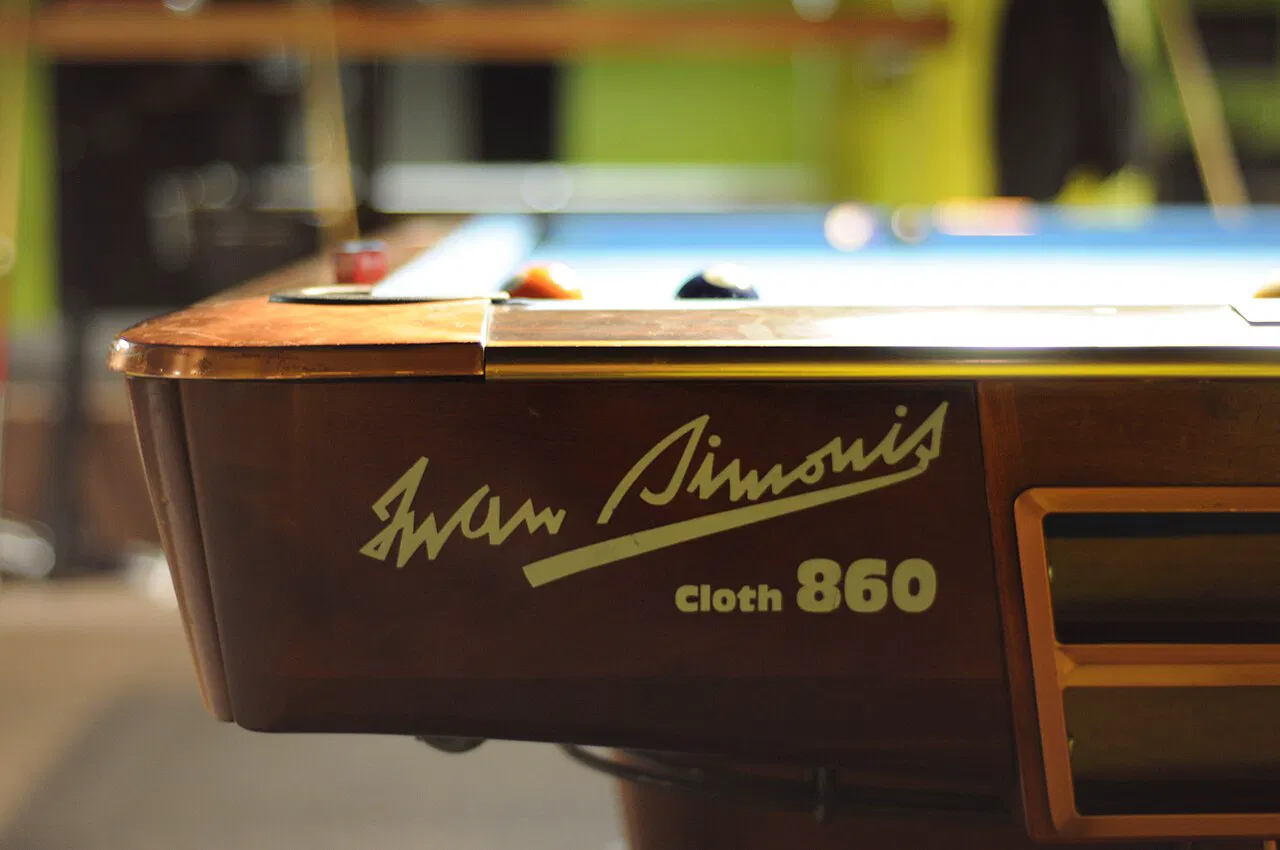
How to Refelt a Pool Table: Steps, Costs, and the Logo Rule
How refelting a pool table works: worsted vs woolen recap, precut kits, staple vs glue, the bed stretch sequence, rail wrapping, logo placement under the rail, and pro costs.