Sneaky Pete Cue Explained: The House Cue That Isn't
It looks like it came off the wall rack. It costs like it didn't.
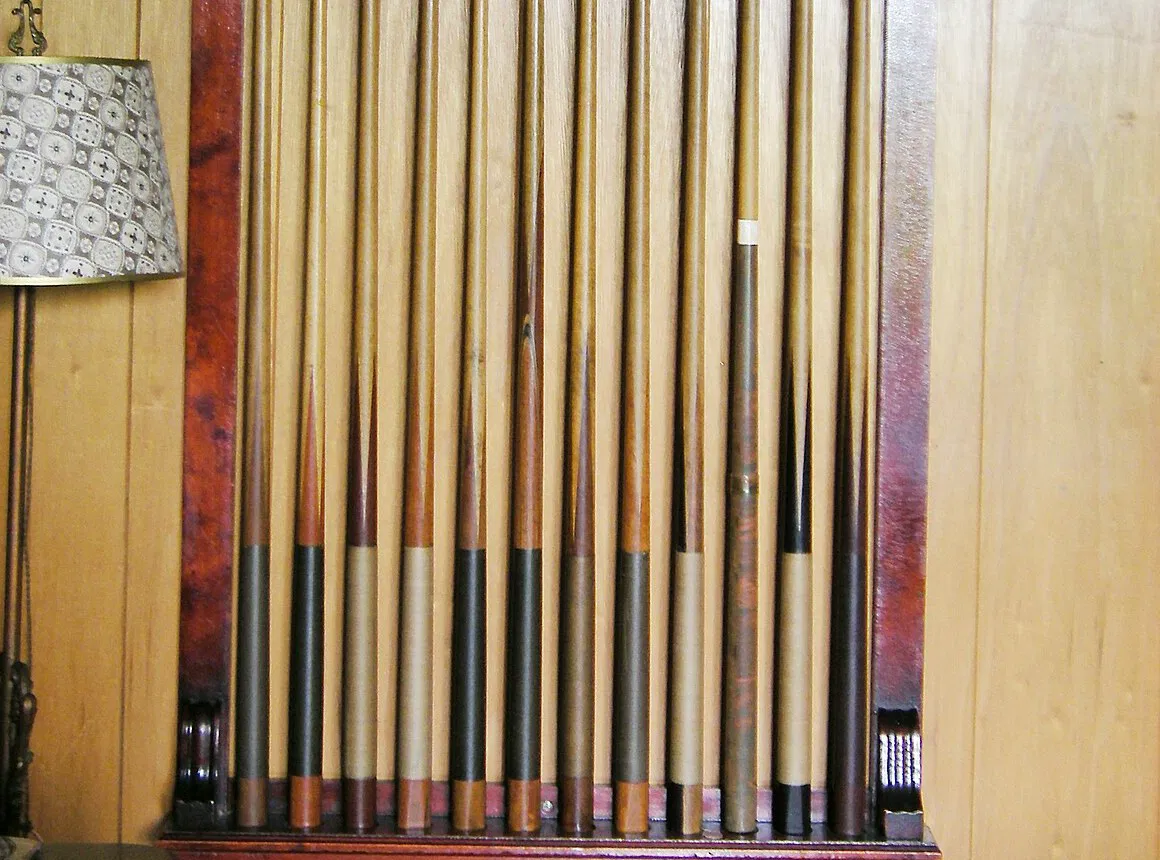
Every pool room has the same wall rack: a row of plain sticks, four dark spliced points on a light forearm, no wrap, no decoration, no brand to admire. A Sneaky Pete is a cue built to look exactly like those house cues — except it unscrews in the middle, and inside the disguise sits the shaft, joint and build quality of a real player's cue. The name, the look and the reason people still buy them all trace back to the same era: pool's hustling years.
The hustle behind the name
In mid-20th century America — the era Seybert's brief history calls the golden age of pool hustling — a player who walked into a strange room with an obviously expensive cue had already lost his edge. An inlaid custom cue announced skill before a ball was struck. The Sneaky Pete solved that: a well-made two-piece cue disguised as the free cue hanging on the wall, so the room read the player as a casual bar shooter.
Who invented it is where the record turns to legend, and the tellings don't agree with each other:
- PoolDawg's version credits Peter Anthony Crisafi — "Sneaky Pete" — a New Yorker born in 1919 who traveled playing pool for money. As the story goes, he stole his favorite house cue from Flambonis, a New York room, and had it converted into two screw-together pieces so he could carry it from hall to hall.
- Seybert's and Meucci tell the same tale but name the player Pete Margo.
- AzBilliards' long-running thread on the question collects a third version: that a Chicago cuemaker — possibly Herman Rambow — built the first one after WWII for a road player named Peter who was tired of lugging a one-piece cue.
The honest summary is that nobody can prove which Pete it was — the style was already around when today's oldest posters encountered it in the 1970s, and "sneaky Pete" itself was older American slang for something illicit kept out of sight (one thread notes it meant cheap liquor during WWII). What isn't folklore is the design logic: a cue that hides its quality in plain sight gave a money player a real edge.
How to recognize one
A Sneaky Pete's disguise is the same in every era — it copies the house cue's silhouette:
- A plain forearm with four spliced points — typically dark wood or stained points on a natural maple ground, the same look as the cheapest cue on the rack. No inlays, no veneers, no ringwork.
- No decorative wrap — usually wrapless, or a plain linen at most.
- A joint that tries to disappear. Where most two-piece cues wear an obvious metal collar at the middle, a classic Sneaky Pete uses a wood-to-wood joint or a very thin, low-profile collar, so assembled it reads as one solid piece from across the room. The seam is the only tell — and the reason the disguise works.
Underneath the plain skin the cue is fully real: a straight hard-maple shaft with a proper taper, a genuine joint pin, weight bolts and the build quality the price implies. Two current examples show the range of interpretations. McDermott's Titanium Grey Sneaky Pete lists "a classic Sneaky Pete design with 4 sky-blue stained points on natural maple," "No Collar, Sneaky Pete style," a 3/8×10 pin and no wrap — the traditional spec almost unchanged. Predator's Roadline Sneaky Petes go the other way: four-point True-Splice construction, a micarta joint collar, a Uni-Loc weight cartridge and a low-deflection shaft — the house-cue costume over the most modern internals a production cue can carry.
One definitional looseness worth knowing: retailers now apply "Sneaky Pete" to almost any plain or basic-looking cue — PoolDawg's guide notes the label gets used even for designs with visible steel joints, like Mezz's Sneaky Pete model. Purists want the hidden-joint version; the market settled for "looks simple."
Sneaky Pete vs the decorated cue
What an ornate cue spends on appearance, a Sneaky Pete spends on build. Inlay work, figured veneers, exotic butt woods and gemstone materials are where most of a show cue's price lives — and as that guide covers, none of it changes the hit. The parts that decide how a cue plays — shaft, tip diameter, weight and balance — are identical in principle whether the outside is plain or carved.
That cuts both ways, though, and it's the point most summaries miss: a Sneaky Pete is not automatically a cheap cue. The classic four-point look is itself a construction method — the same spliced points that make true-splice cues expensive — and Predator's version runs $649–859. "Sneaky Pete" describes how a cue looks, not what it costs or how well it's made.
Why players still choose the plain look
Nobody today needs the disguise — you buy a Sneaky Pete for other reasons, and PoolDawg says as much: few modern buyers are hustling anybody.
- The look itself. The style is pool's minimalism: clean lines, honest wood, nothing to scratch or admire but the shape. For a lot of players that reads as more serious than inlay work.
- Value per dollar. With nothing spent on decoration, the budget lands on shaft, straightness and joint quality — the specs that actually affect play.
- The sleeper romance. There's still a quiet pleasure in a cue that looks like nothing and hits like something. The hustle is nostalgia now, not strategy.
- Feel. Players who like a wood-to-wood joint describe a different contact feel than a steel-collared joint — a real preference data point, since joint material does change the cue's feel and sound even if it doesn't change measurable performance (our joint types guide has the rundown).
It's also the sleeper choice for a first serious cue: unflashy, honest, and the wrap section is one less thing to decide on. Just check it like any other cue — sight the shaft and check the joint, the same inspection our used-cue checklist walks through.
What one costs
Retail listings in November 2026 spread the style across the whole price ladder — the plain look is available at every budget:
| Tier | Example | Price | Retailer |
|---|---|---|---|
| Budget | Action APA40 | $116.10 | PoolDawg |
| Budget | Rage RGHH Heavy Hitter (25 oz break cue, four-prong sneaky pete build) | $125.10 | Seybert's |
| Budget | Action ACTSP41 Sneaky Pete | $148.50 | PoolDawg |
| Mid | AVID ERA 95-323W 6-Point Sneaky Pete | $349 | PoolDawg |
| Mid | Scorpion Carbon Fiber Sneaky Pete | $405 | PoolDawg |
| Mid | PoolDawg Sneaky Pete by McDermott | $423 | PoolDawg |
| Mid | McDermott Titanium Grey Sneaky Pete | $468 | PoolDawg |
| Mid | Lucasi LZ2000SPG Sneaky Pete | $476.10 | PoolDawg |
| Mid | Meucci Sneaky Pete (Black) | $490 | PoolDawg |
| Mid | Viking VIK352 | $495 | PoolDawg |
| Premium | Predator Roadline SP4PBNW (Purple Heart, no wrap) | $649 | Seybert's |
| Premium | Predator SP4BLNW (Black/Blue points, no wrap) | $699 | Seybert's |
| Premium | Predator Roadline Sneaky Pete (linen wrap) | $859 | Seybert's |
The Cue Database carries full specs for current models. Prices above are listed retail and move with promotions — MSRP on several models runs 10–20% higher than street price.
Is a Sneaky Pete a real cue or a cheap one?
A real cue. The name describes the plain exterior, not the build — a Sneaky Pete is a proper two-piece playing cue with a quality shaft and joint, styled to look like a house cue. Entry models start around $115 and premium versions pass $800.
Why is it called a Sneaky Pete?
It comes from pool's hustling era: a quality cue disguised as a house cue so opponents wouldn't know what they were up against. Who "Pete" was is contested — PoolDawg credits New York road player Peter Anthony Crisafi, Seybert's and Meucci name Pete Margo, and forum history points at a Chicago maker after WWII.
How do you tell a Sneaky Pete apart from a house cue?
Pick it up and look at the middle. A house cue is one solid piece; a Sneaky Pete unscrews at a hidden or low-profile joint — wood-to-wood or a thin collar on the traditional ones. It will also have a real taper, a joint pin and usually weight bolts, none of which a wall cue has.
Does a Sneaky Pete play better than a decorated cue?
No — and no worse either. Looks don't hit balls: playing performance lives in the shaft, tip, weight and balance, which a Sneaky Pete shares with any other two-piece cue. You're choosing a style, not a performance class.
Sources
- Seybert's — Sneaky Pete Pool Cues: A Brief History — Pete Margo origin story, hustling-era context, plain-exterior/quality-interior definition
- PoolDawg Academy — Sneaky Pete Cues — Peter Anthony Crisafi/Flambonis legend, oldest two-piece design, term now applied to any plain cue incl. steel-joint models like Mezz
- Aska Billiards — What Is a Sneaky Pete Cue? — house-cue disguise definition, wood-to-wood/low-profile joint tell, no decorative wrap
- Meucci — The Story of "Sneaky Pete" — corroborating maker account of the hustler origin
- AzBilliards Forums — Who was 'Sneaky Pete'? — competing origin claims incl. post-WWII Chicago attribution; evidence the provenance is legend
- Seybert's — Predator 4-Point Sneaky Pete SP4BLNW and Roadline collection — True-Splice construction, Uni-Loc weight system, prices $649–859; Rage RGHH price
- PoolDawg — Sneaky Pete cue listings — Action/AVID/Scorpion/Lucasi/Meucci/Viking prices; brand range notes
- PoolDawg — McDermott Titanium Grey Sneaky Pete — spec sheet (4 stained points, no collar, no wrap, 3/8×10 pin) and price
More coverage
Keep reading
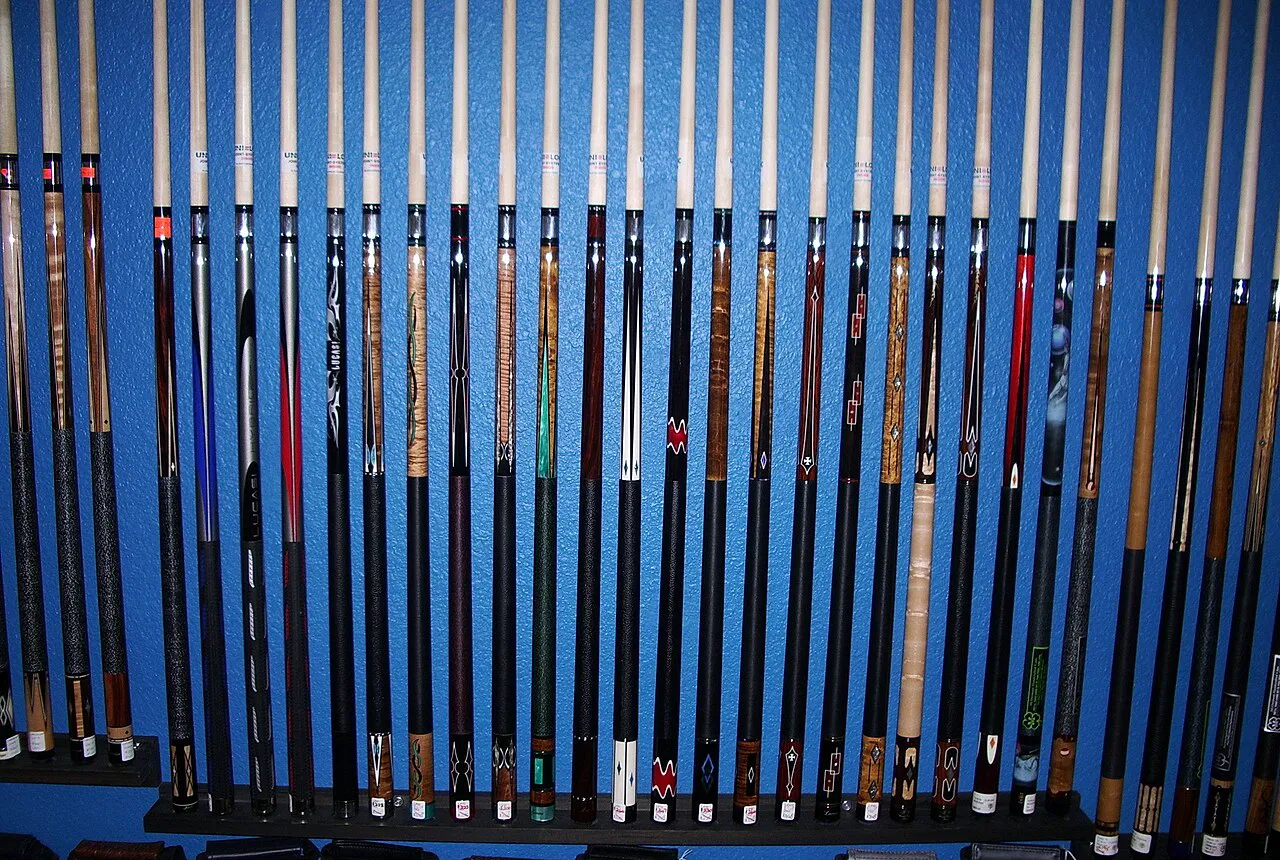
Pool Cue Wood Types: Maple, Ash, and What the Exotics Do
Maple rules the shaft, ash owns snooker, and ebony, cocobolo and rosewood dress the butt. What cue woods actually change — and what is decoration.
Pool Table Cloth Compared: Simonis vs Gorina vs Andy
Walk into any forum thread about reclothing an American pool table and the same three names surface within minutes: Simonis, Gorina and Andy. All three make…
How to Refelt a Pool Table: Steps, Costs, and the Logo Rule
How refelting a pool table works: worsted vs woolen recap, precut kits, staple vs glue, the bed stretch sequence, rail wrapping, logo placement under the rail, and pro costs.