Pool Cue Balance Point: What It Is and How to Find Yours
A cue's balance point rarely makes the spec sheet, but it shapes how the same weight feels. What it is, where it sits, and when it matters.
Brand & Topics
A cue's balance point rarely makes the spec sheet, but it shapes how the same weight feels. What it is, where it sits, and when it matters.
Rolling a cue on the table is the classic warp check — and it's misleading. Sight the shaft instead. Here's how, and what a warp actually costs you.
Pool cues run about 58 inches, but short cues, extensions and pro customs all bend that rule. Here is what each length is for — and which fits you.
What a cue shaft taper actually is, how pro and conical profiles differ at the bridge and in the hit, what taper does to deflection, and who each suits.
Leather tips wear slowly, then fail quietly. How long a cue tip lasts at your play frequency, the signs it is done, and what the swap costs.
Break cues are built differently from playing cues — harder tips, stiffer shafts, different tapers. What the design changes, what it costs, and who actually needs one.
Irish linen, leather, rubber, sport grips or no wrap at all — what each pool cue wrap changes in grip and sweat control, and what rewrapping costs.
What pool cue joint pins (3/8×10, 5/16×14, Uni-Loc, Radial) actually are, what they change in feel, and why the joint matters for shaft upgrades.
What cue tip hardness actually changes — feel, energy transfer, chalk grip and upkeep — measured against durometer data and Dr. Dave's testing.
How to choose a pool cue weight: what 18, 19 and 21 oz actually change, who each tier suits, the myths to drop, and a one-session test before you buy.
What cue weight, tip diameter, and shaft material actually change at the table — and which specs matter most when buying your first pool cue.
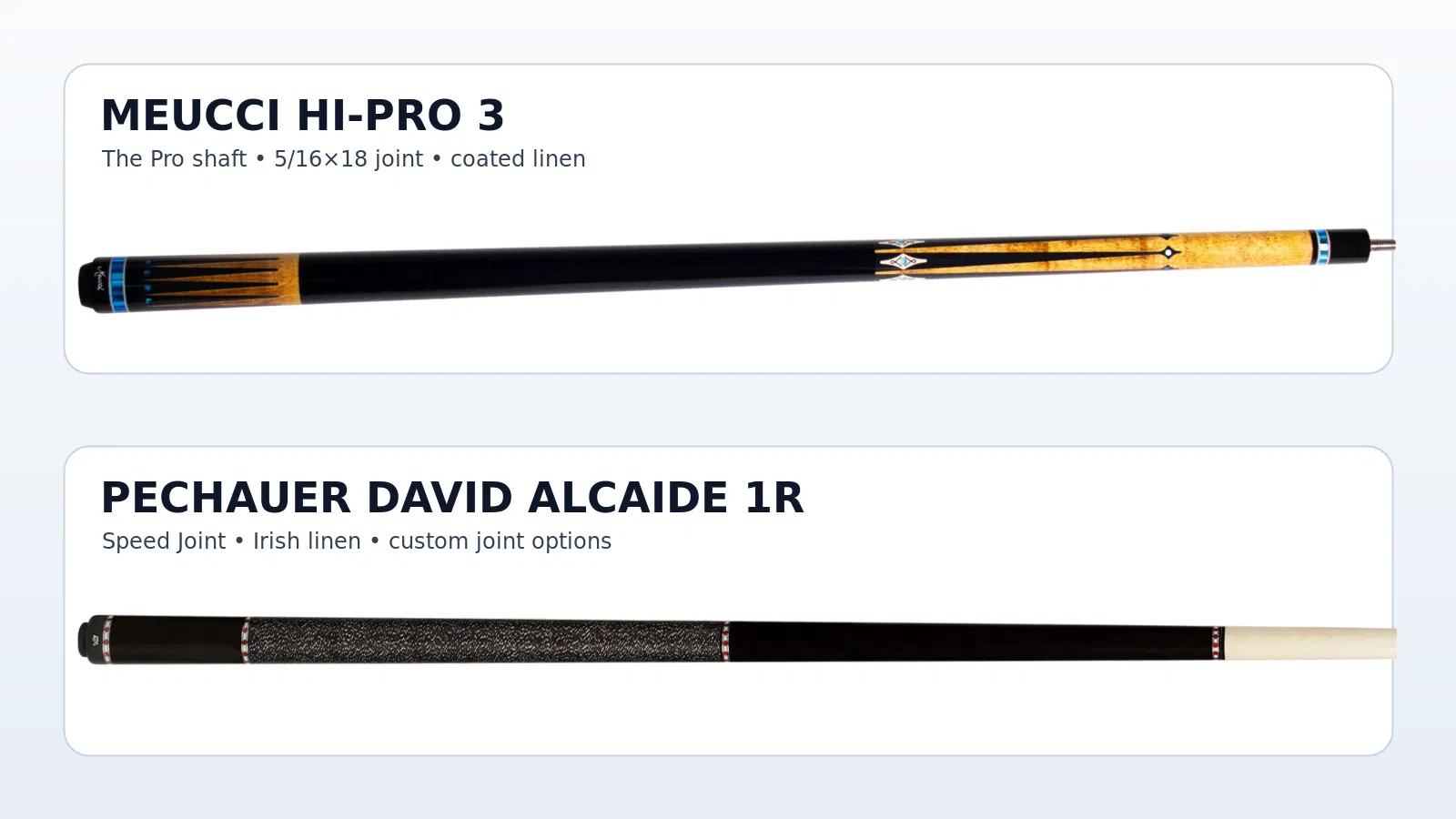
Compare the Meucci Hi-Pro 3 and Pechauer David Alcaide 1R on price, shaft specs, wrap feel, joint options, and current build times.