How to Tell If a Pool Cue Is Warped (the Check That Works)
Rolling a cue on the table is the classic test — and it lies. Sight the shaft instead; here is how, plus what a warp really means and when it matters.
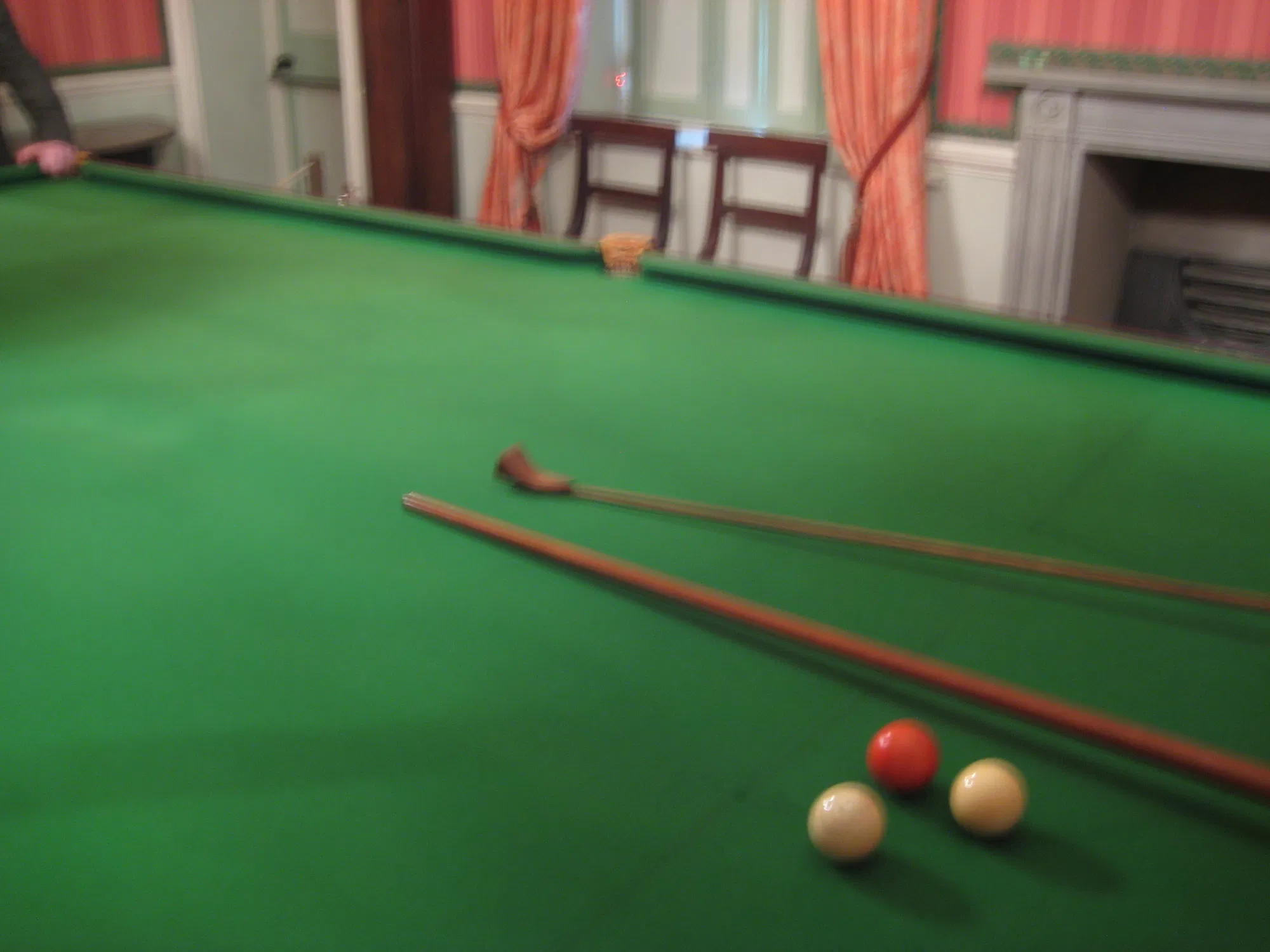
Every pool player has done it: picked up a house cue, laid it on the table and rolled it, watching the tip for a wobble. It feels like due diligence. It is also close to worthless — every cue-care authority that addresses the question says the same thing. The reliable warp check takes about five seconds, needs no table at all, and uses the best measuring instrument you own: your eyes.
The check that works: sighting
The test that actually detects warp is called sighting, and it works exactly like checking the straightness of a rifle barrel:
- If it is a two-piece cue, unscrew it and check the shaft alone — most warp lives in the shaft, and the joint will only confuse the picture.
- Hold the shaft up at eye level, angled slightly downward, and look down its length from butt to tip.
- Rotate the shaft slowly through a full 360 degrees, watching the line of the shaft and the silhouette of the tip. Any bend announces itself immediately — a straight shaft holds one clean line; a warped one traces a curve you cannot unsee.
- Repeat on the butt section.
Dr. Dave's cue-care FAQ, PoolDawg's warp-check guide and retailer F.G. Bradley's expert notes all land on the same verdict: sighting is the most reliable test, and it is the first thing to do with any new or used cue.
Why rolling on the table misleads
The roll test fails for a list of reasons — and every one of them can make a straight cue look warped:
- The table is not a reference surface. Slate can be a hair off level, and cloth has a nap plus wear patterns; even slight felt variation makes a true cue wobble.
- A cue is not a cone or a cylinder. Its taper means diameter changes along the roll, and many butts are flattened on one side — both produce bounce that has nothing to do with straightness.
- Things stick to cues. Weight stickers, price labels, decals and wraps all add bumps that show up as wobble.
- The joint betrays the test. On an assembled two-piece cue, a roll mostly exposes how the two halves meet — joint alignment and collar depth — not shaft warp. Dr. Dave puts it plainly: a rolling cue usually reveals joint defects rather than shaft defects, which are the less serious problem anyway.
- The weight is at the back. Cues are butt-heavy, so even a straight shaft's tip dances slightly when rolled.
In short, a wobble on the roll test proves the cue might be warped — or that your table has a nap and your cue has a sticker. Sighting removes all of that ambiguity.
How much warp actually matters
Here is the uncomfortable truth the same sources agree on: every wood cue warps eventually, because wood is a natural material that answers to its environment. No cue is laser-straight, and a barely-visible bend is cosmetic, not catastrophic.
For a slight warp, Dr. Dave offers a field fix: a bend only affects your aim if it sits in the wrong plane, so mark the cue's orientation — use a distinctive grain line or decal — and hold it the same way every shot, keeping the warp on the vertical plane where it cannot push your tip sideways. If the bend is visible enough to bother your eye at address, or it lives where your bridge hand slides, that is new-shaft territory rather than a quirk to manage.
Where warp comes from (and how to slow it down)
Moisture is the main enemy, and temperature swings are its accomplice. The prevention list from Dr. Dave's care guide is short:
- Keep the cue out of extremes — the trunk of a parked car is the classic cue-killer, because heat and humidity swings make the wood move.
- Use a hard case over a soft one, and store it standing upright, not lying flat. Our cue case guide covers what the case is actually protecting against.
- Consider joint protectors on a two-piece cue. The joint faces are cut across the wood grain, which makes them the most moisture-hungry surfaces on the whole cue; caps that screw over both halves seal them.
- Expect it anyway. Even careful owners eventually see some movement — the goal is to delay it and catch it, not to beat physics.
The warp check that matters most: before you chalk it
Timing matters more than technique when the cue is new. Dealer after dealer states the same policy: sight the cue before you chalk, scuff or play it — once it has been chalked or used, it is yours, not a return. This is the check to run in the shop or the day the box arrives, not after your first session.
Warranty is the other side of the same coin, and it is worth reading before buying rather than after warping. McDermott sells its cues with a lifetime warranty that includes warpage, and Players advertises a lifetime guarantee "even against warpage" — commitments that exist precisely because wood moves. And if warp is a dealbreaker rather than a maintenance item, there is a materials answer: carbon-composite shafts are marketed as warp-immune — Cuetec's Cynergy line, for instance, is described as having "no warping, no seasonal movement, no humidity response" (manufacturer claim; see is carbon fiber worth the price for the broader tradeoff).
Can a warped cue be fixed?
Depends how far it has gone. A slight bend can sometimes be persuaded back — gently, by hand, over time — which is the conservative advice Dr. Dave gives for minor warps. Anything beyond that is not a repair job so much as a parts decision: on a two-piece cue the butt is usually the survivor, and replacing just the shaft buys you a straight cue for a fraction of a new one. That is also the practical reason to know your joint type — it determines which replacement shafts will even fit. And if the "warp" you spotted is actually a worn or mushroomed tip changing the cue's silhouette, when to replace a pool cue tip is the fix instead.
Does rolling a cue on the table check for warp?
Not reliably. Table nap, cue taper, stickers and the joint can all make a straight cue wobble. Sight down the shaft from butt to tip and rotate it — that is the test that works.
Will a slight warp affect my game?
A small warp is mostly cosmetic. Play with it oriented the same way every shot — bend on the vertical plane — and it will not push your tip off line. A bend you can see at address is worth a new shaft.
Can a warped pool cue be straightened?
A slight warp can sometimes be bent back gently; a significant one usually means replacing the shaft. On a two-piece cue the butt typically survives — check your joint type before ordering a replacement shaft.
Do carbon fiber cues warp?
Wood warps; carbon composite is sold precisely because it does not — manufacturers describe carbon shafts as immune to the humidity and temperature movement that bends maple. That is a maker's claim, but it is the main reason players switch materials.
Sources
- Dr. Dave Alciatore: Caring for a cue — the sighting method, why rolling shows joint rather than shaft defects, playing around a slight warp, moisture as the main cause, case and joint-protector advice
- PoolDawg Academy — How to Check a Pool Cue for Warping — sight vs roll, all wood cues warp over time, check before chalking, lifetime warranty note
- F.G. Bradley's — How to Check a Pool Cue for Warping — taper, stickers and joint depth as false positives; returns only on unchalked cues
- Cue Store — Why rolling a cue on the table is misleading — the full mechanics of the false wobble: cloth nap, flattened butts, butt-heavy balance
- FCI Billiards — Cuetec Cynergy shafts — the manufacturer's warp-immunity claim for carbon composite (quoted as such)
- Billiard Factory — Players Shortie Cues and DK Game Room Outlet — Players Y-B01 — dealer listings citing the Players "lifetime guarantee even against warpage"
More coverage
Keep reading
Sneaky Pete Cue Explained: The House Cue That Isn't
A Sneaky Pete is a quality two-piece cue built to look like a cheap bar cue — plain outside, serious inside. The history, the tells, and what they cost.
Pool Cue Wood Types: Maple, Ash, and What the Exotics Do
Maple rules the shaft, ash owns snooker, and ebony, cocobolo and rosewood dress the butt. What cue woods actually change — and what is decoration.

Pool Table Cloth Compared: Simonis vs Gorina vs Andy
Walk into any forum thread about reclothing an American pool table and the same three names surface within minutes: Simonis, Gorina and Andy. All three make…