Poison Maelith vs Rhino Voyager USA 2025: Best Cue Under $450?
Two carbon-shaft playing cues sit just $30 apart, but their joints, grip designs and setup options point to different buyers.
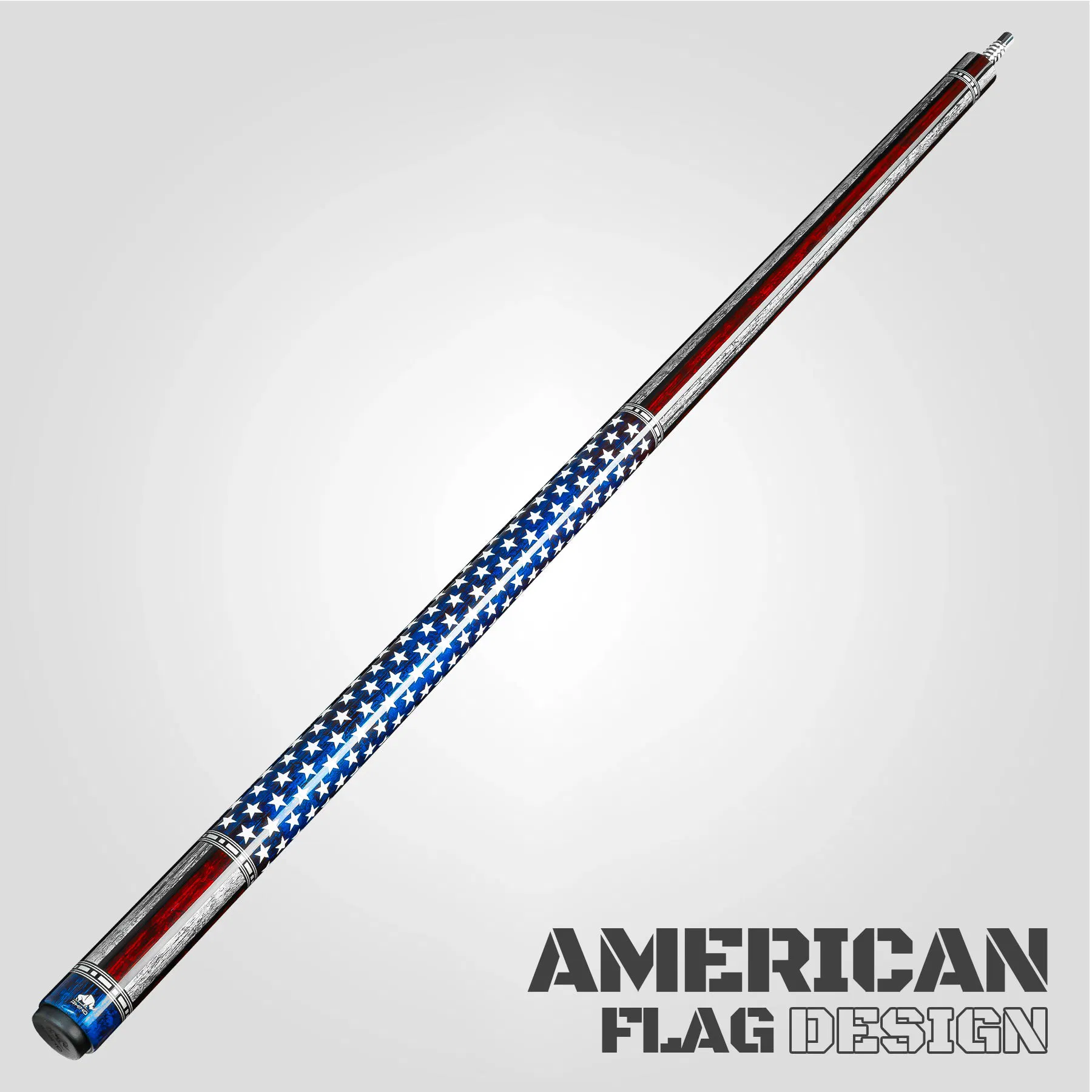
Rhino Voyager USA 2025 is the stronger value on published specifications, while Poison Maelith is the more distinctive package for players who want a 58-inch cue, a Radial joint and a vinyl-accented design. The gap is only $30, so this choice is less about saving money than choosing the setup that fits your game and existing gear.
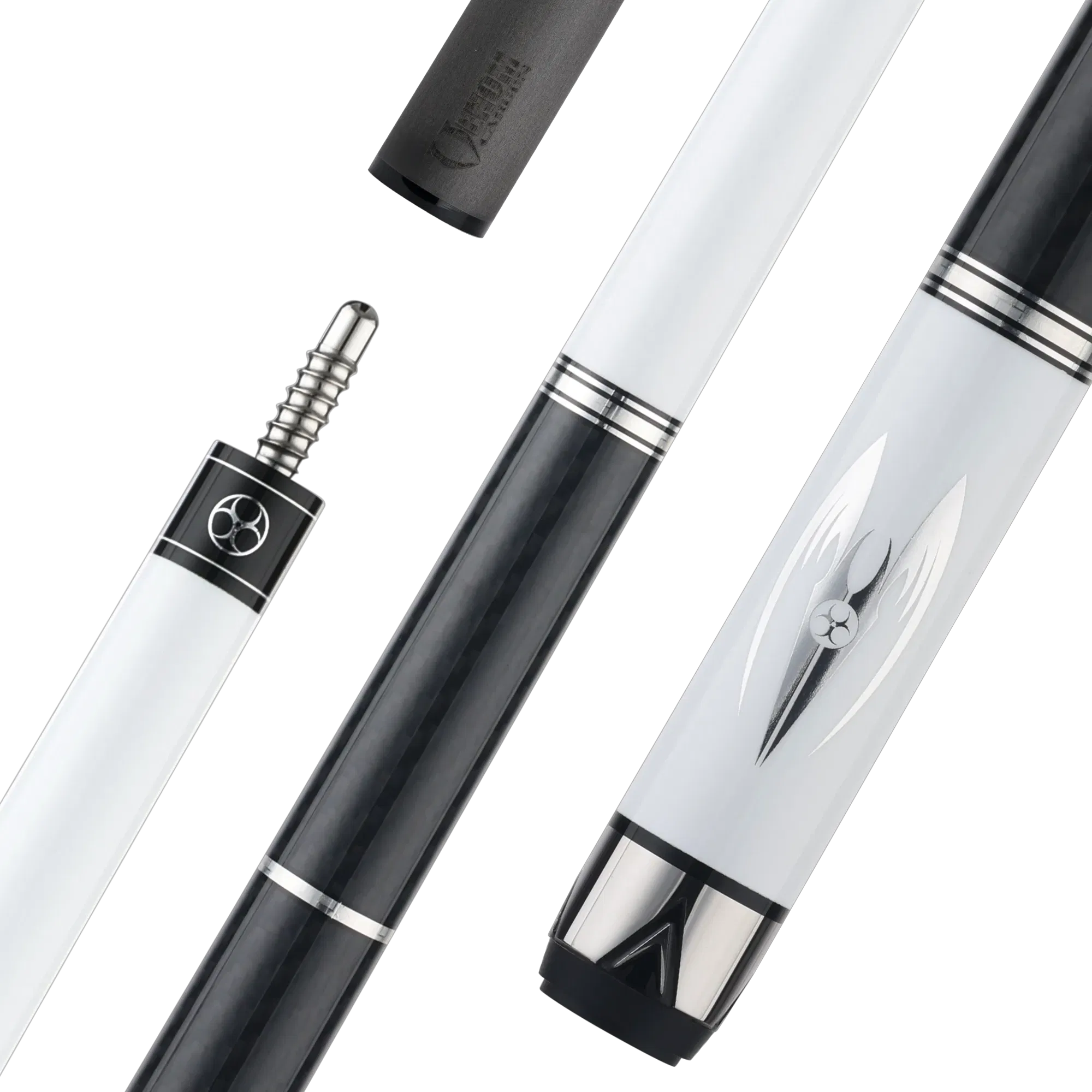
This is a manufacturer-data comparison, not a claim of hands-on testing. Official specifications can reveal fit, adjustability and value. They can't settle subjective questions such as hit tone, feedback or how either taper feels after a long session.
Why do these two carbon cues belong in the same comparison?
Both are complete playing cues built around carbon-fiber shafts, pro tapers and tip diameters close to 12.5 mm. Both also target players who want low-deflection equipment without moving into four-figure cue pricing.
The price match is unusually close. Poison lists the Maelith at $449. Rhino lists the Voyager USA 2025 at $419. That makes the Maelith $30 more expensive, a 7.2% premium over the Rhino.
| Specification | Poison Maelith White/Black | Rhino Voyager USA 2025 |
|---|---|---|
| Official price | $449 | $419 |
| Current status | New, 10 in stock | In stock |
| Shaft | Venom carbon fiber, low deflection | Premium carbon fiber, low deflection |
| Shaft length | Not separately listed | About 30 inches |
| Tip | 12.4 mm Medium Poison leather tip | 12.5 mm Time Crystal tip |
| Tip construction | Leather | 10 layers compressed into one |
| Taper | Pro taper | Pro taper |
| Joint | Radial | 3/8-8 stainless steel |
| Published length | 58 inches assembled | About 30-inch shaft plus 29-inch butt |
| Grip area | Three-section vinyl design with rings | Wrapless |
| Butt material | Not fully specified | Carbon composite |
| Published weight | Not listed | Shaft 3.7-4.0 oz; butt 15-15.5 oz |
| Weight adjustment | Not listed | Supported |
| Included item | Poison soft cue bag | Joint protector |
What does the extra $30 buy with the Maelith?
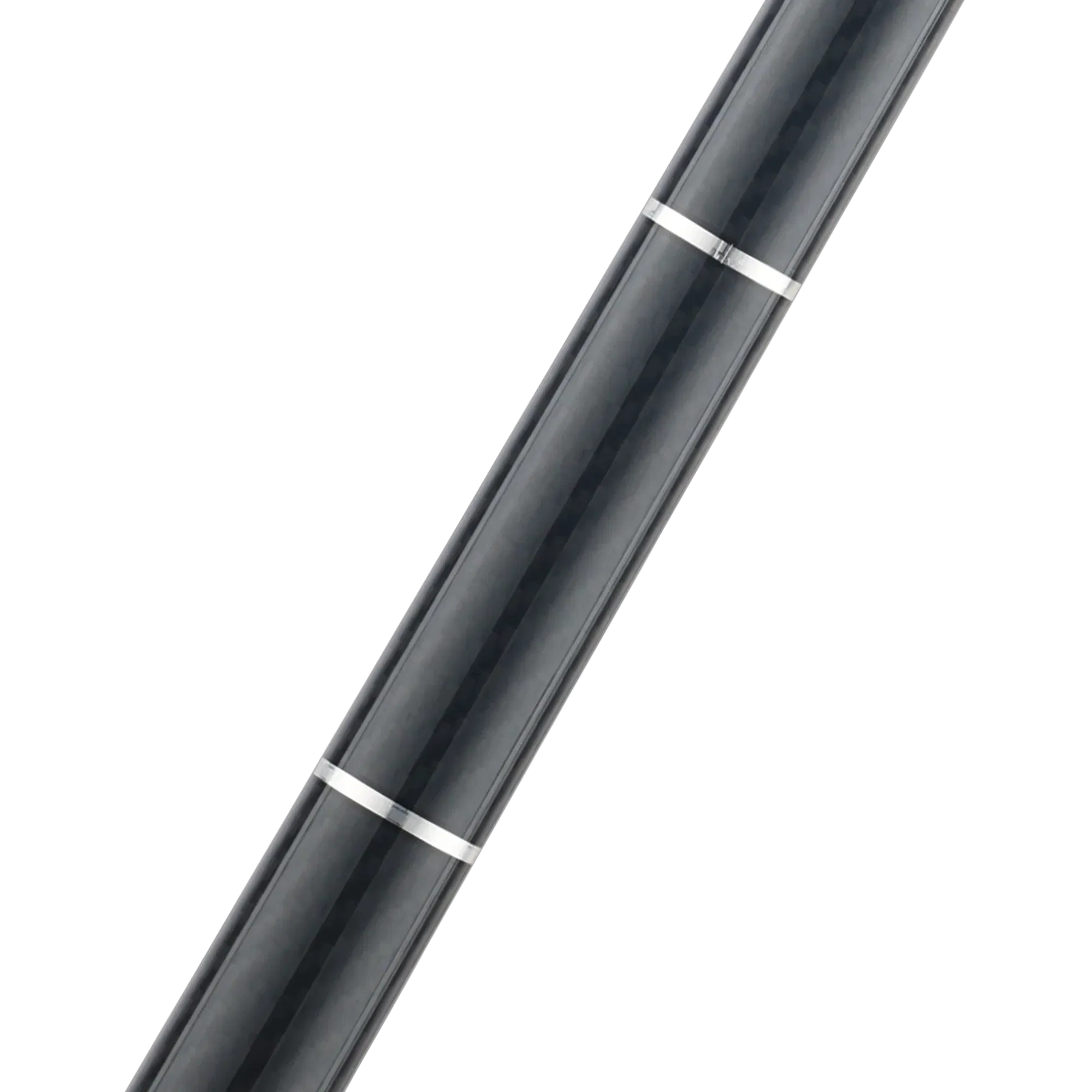
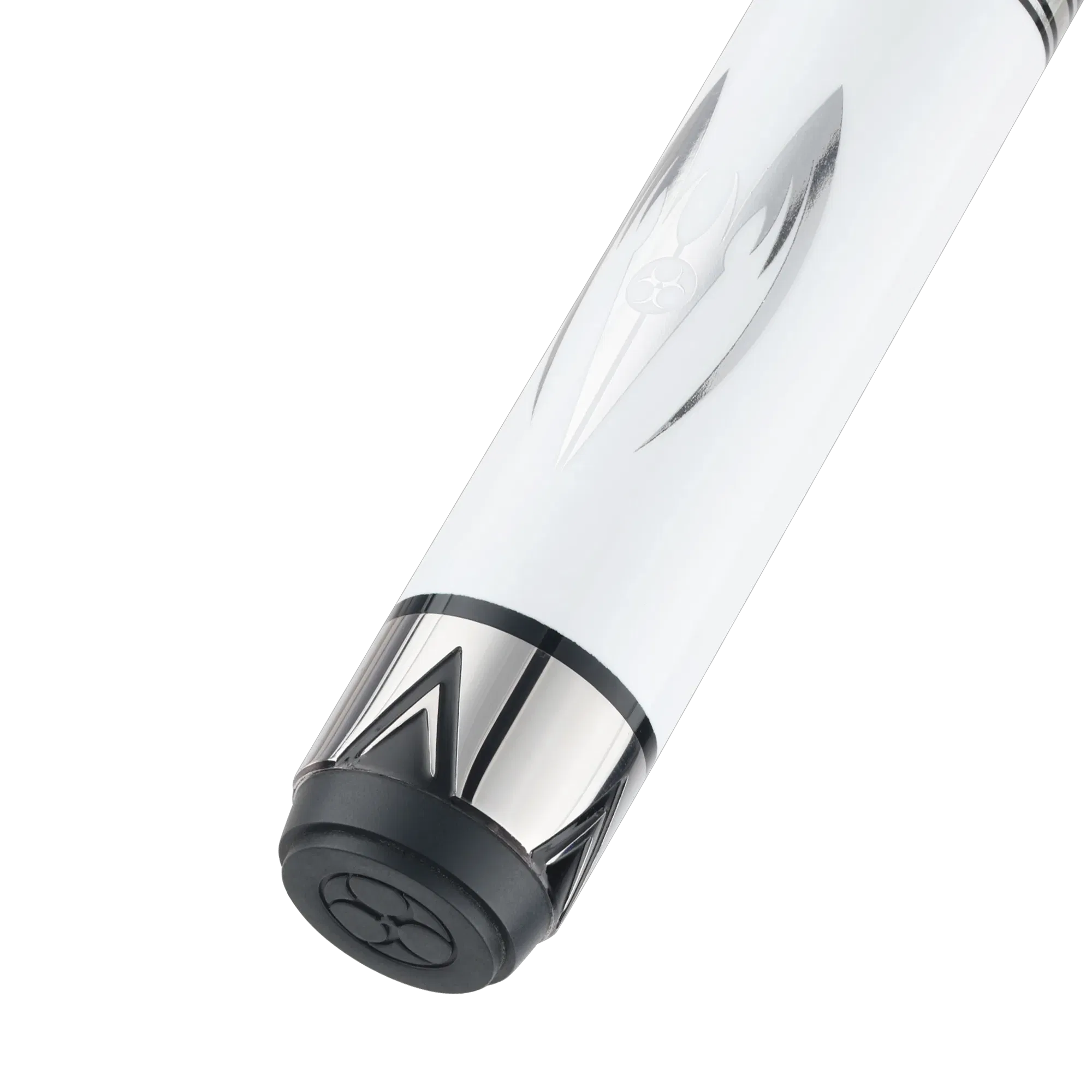
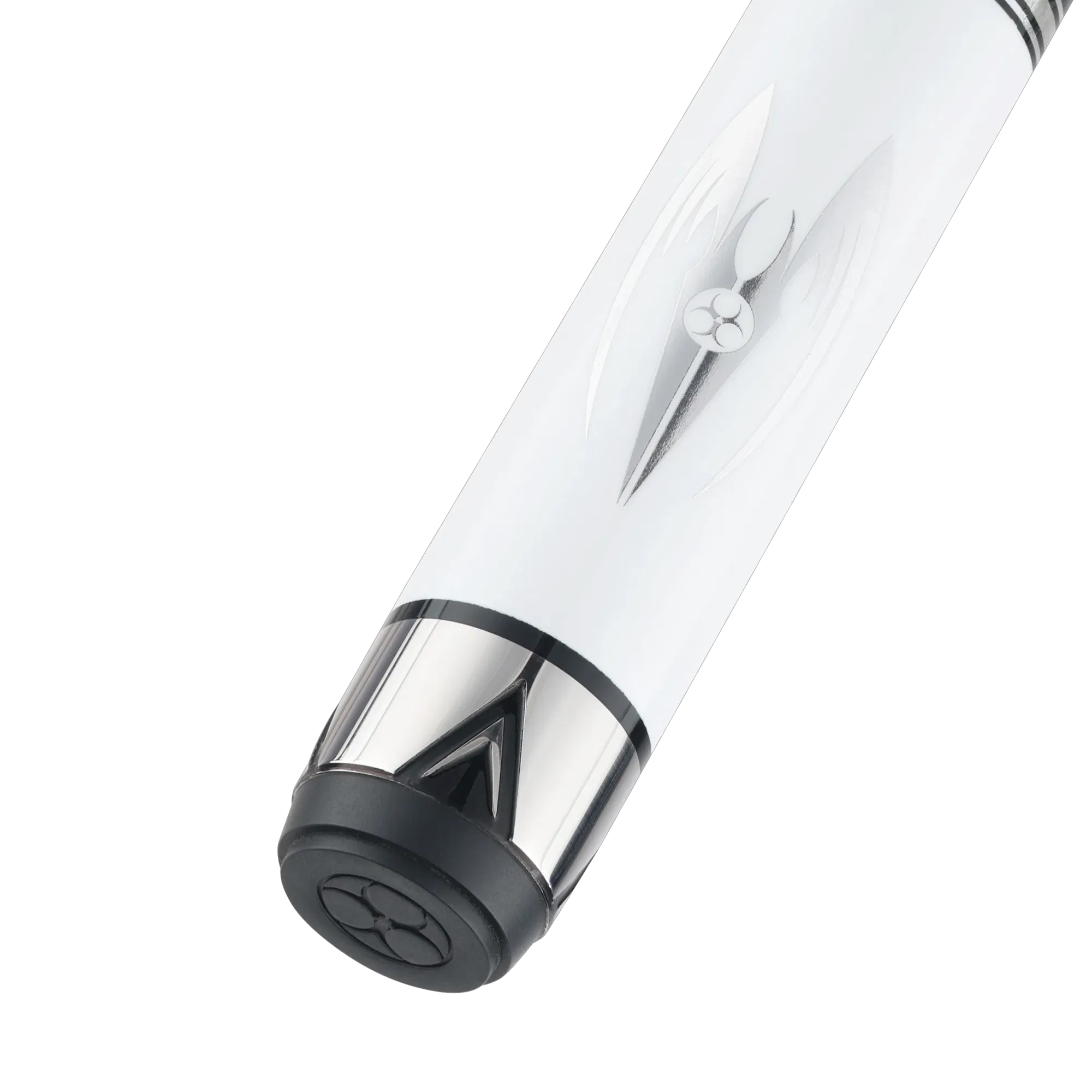
The Maelith's case is built around design, a familiar standard length and its accessory package. Predator gives it a pearl-white handle with translucent carbon-fiber detailing, black accents, stainless rings and a silver Maelith mark on the butt sleeve. A soft Poison cue bag is included.
That matters if the cue is meant to be ready for league night out of the box. A buyer who would otherwise purchase a basic soft case separately may erase much of the $30 price difference.
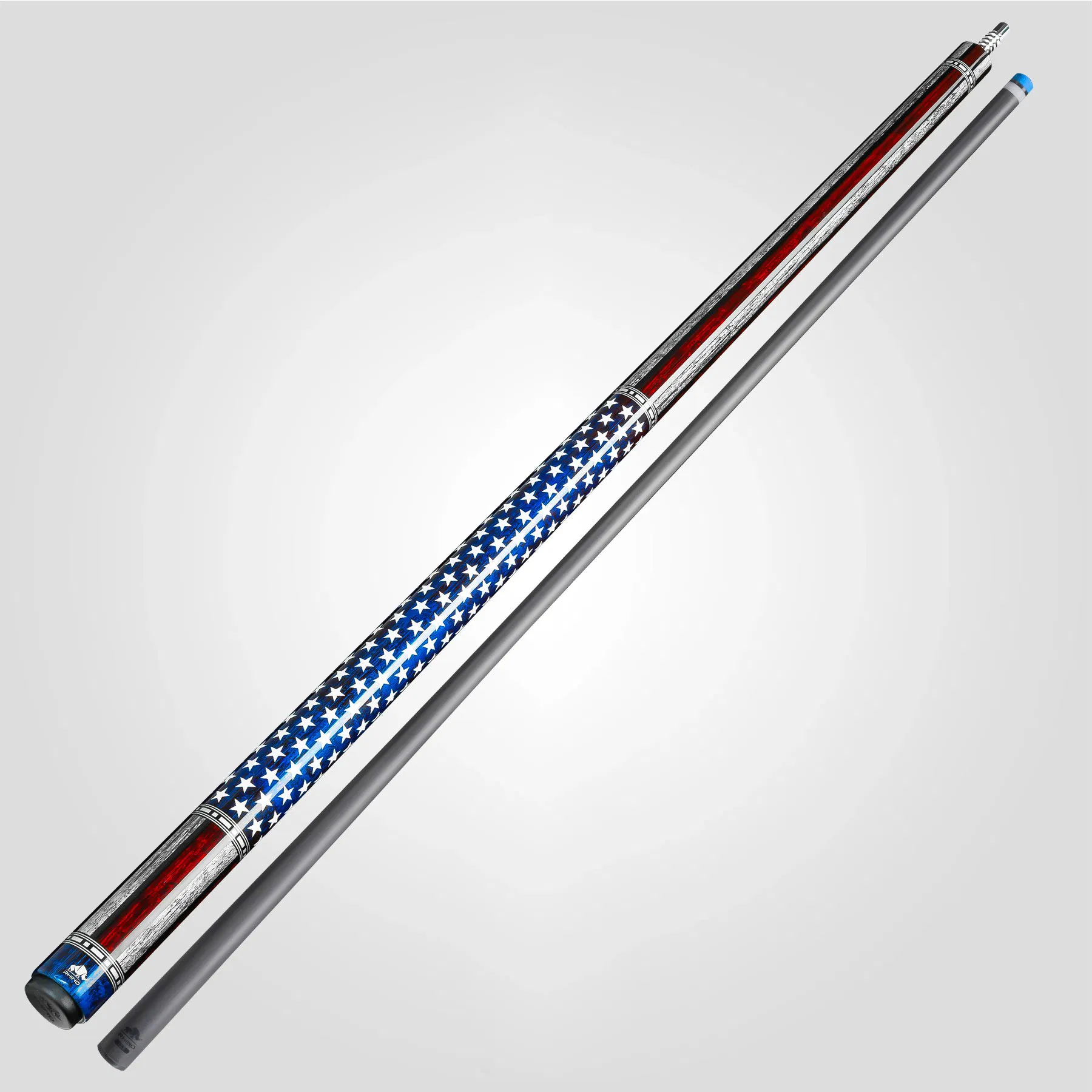
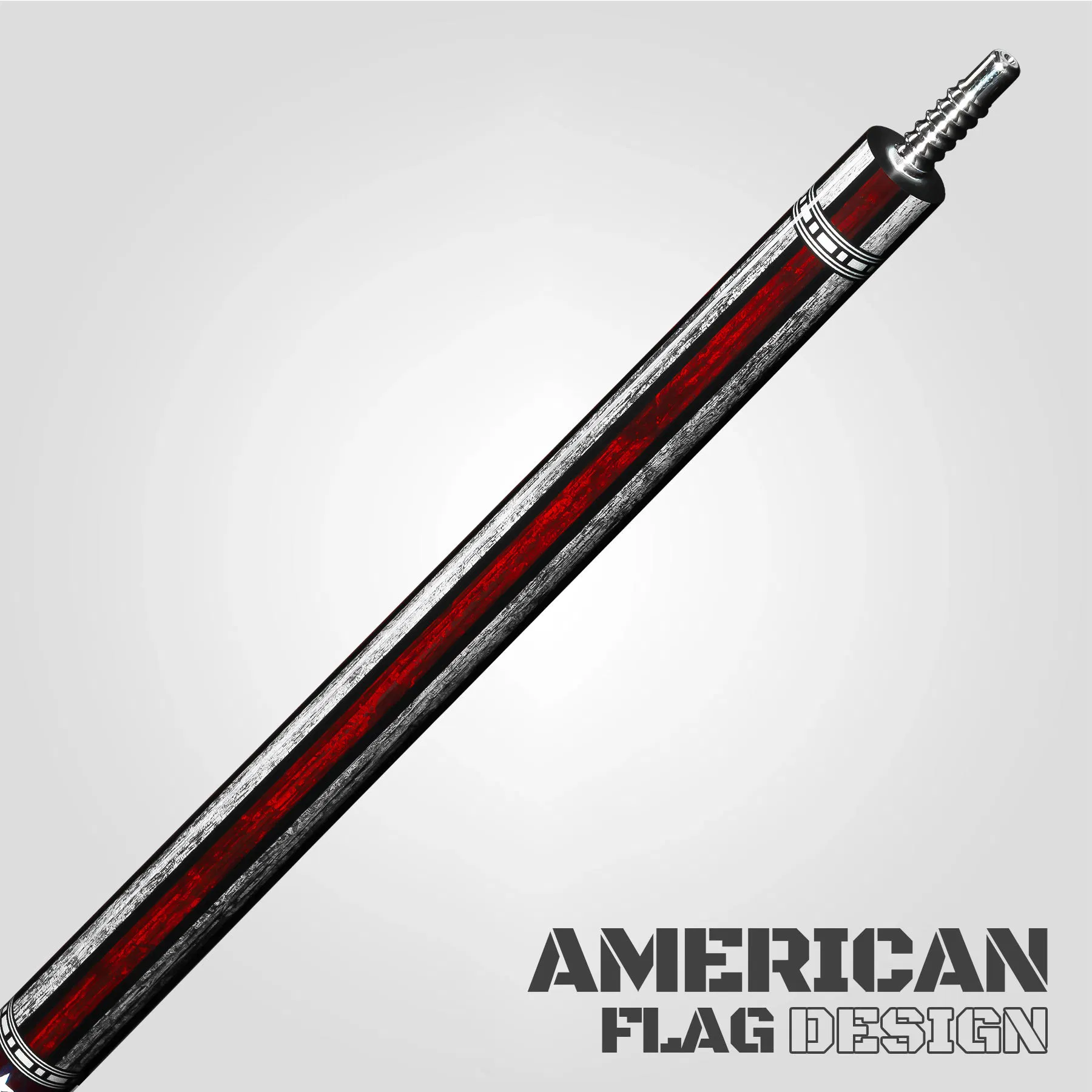
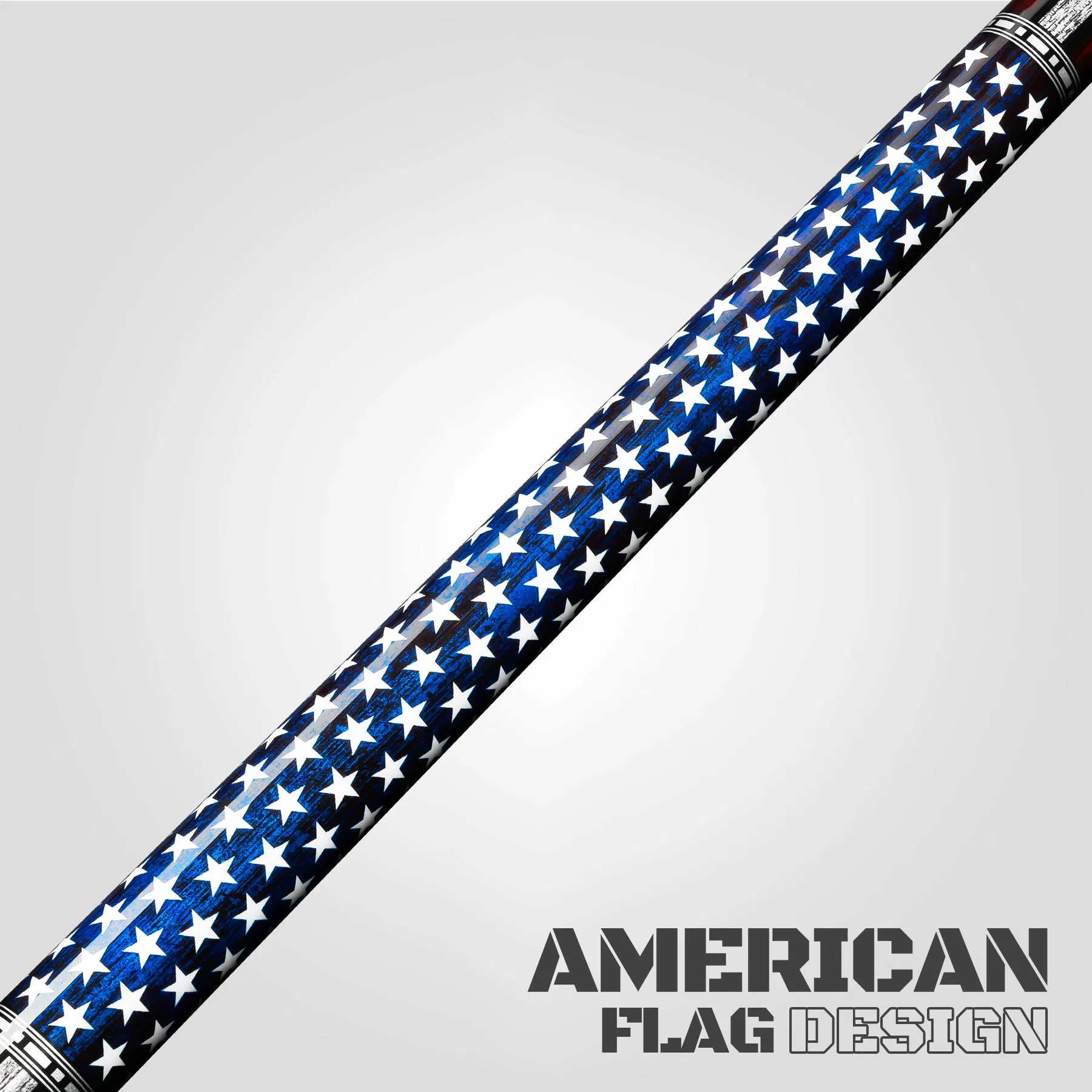
The styling is also less anonymous. White, black and bright metal rings give the Maelith a cleaner, almost monochrome presentation. The Rhino goes in the opposite direction with stars, red and silver panels, and unmistakable USA graphics. Neither cue tries to disappear in the rack.
Which shaft package is explained more clearly?
Poison specifies a Venom carbon-fiber shaft with low-deflection technology, a pro taper and a 12.4 mm Medium Poison leather tip. Those are the details most buyers need to understand the intended playing category. The 12.4 mm diameter also sits in a familiar middle ground for players who want spin access without moving to a very thin tip.
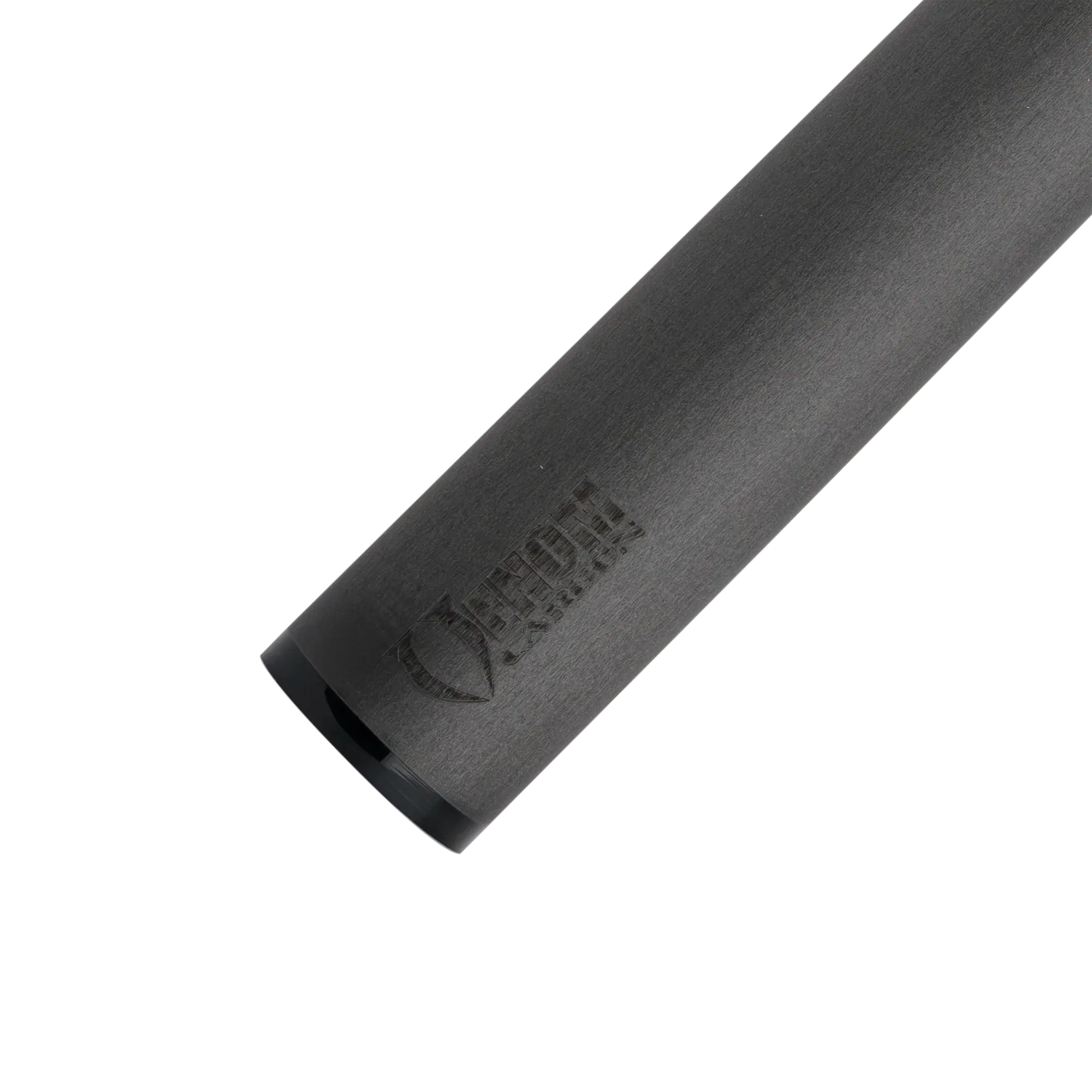
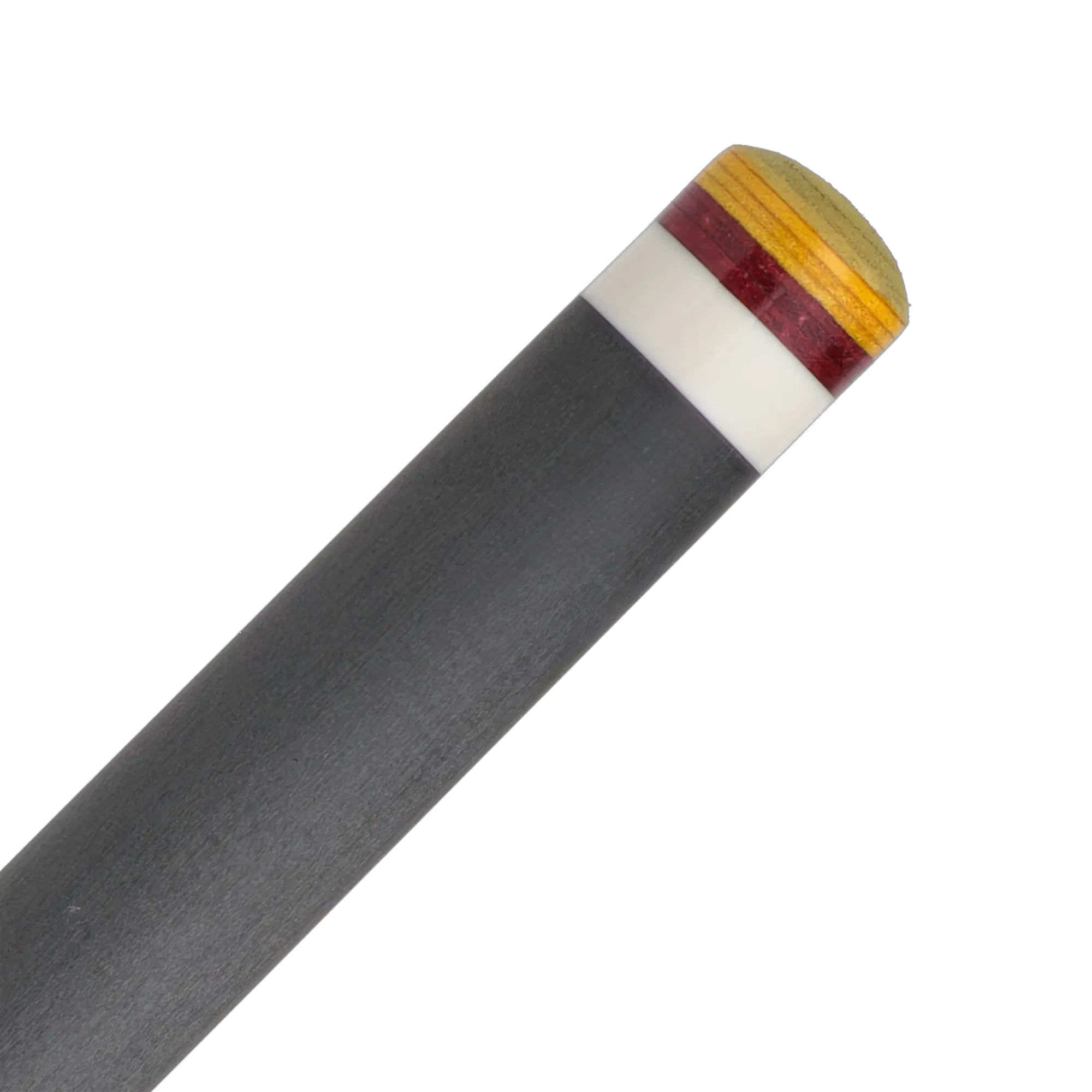
Rhino publishes more measurements. Its Premium Carbon Fiber shaft is about 30 inches long and weighs roughly 3.7 to 4.0 ounces. The 12.5 mm Time Crystal tip uses ten layers compressed into one. Rhino does not list a hardness grade for that tip on this product page, so it shouldn't be treated as directly equivalent to Poison's Medium tip.
The difference between 12.4 and 12.5 mm is just 0.1 mm. On paper, that is too small to choose a winner. Tip material, hardness, shaft construction and taper execution will matter more than the diameter gap alone.
How do the joints change the buying decision?
Joint choice may decide this comparison before price does. The Maelith uses a Radial joint. The Voyager USA 2025 uses a stainless-steel 3/8-8 joint.
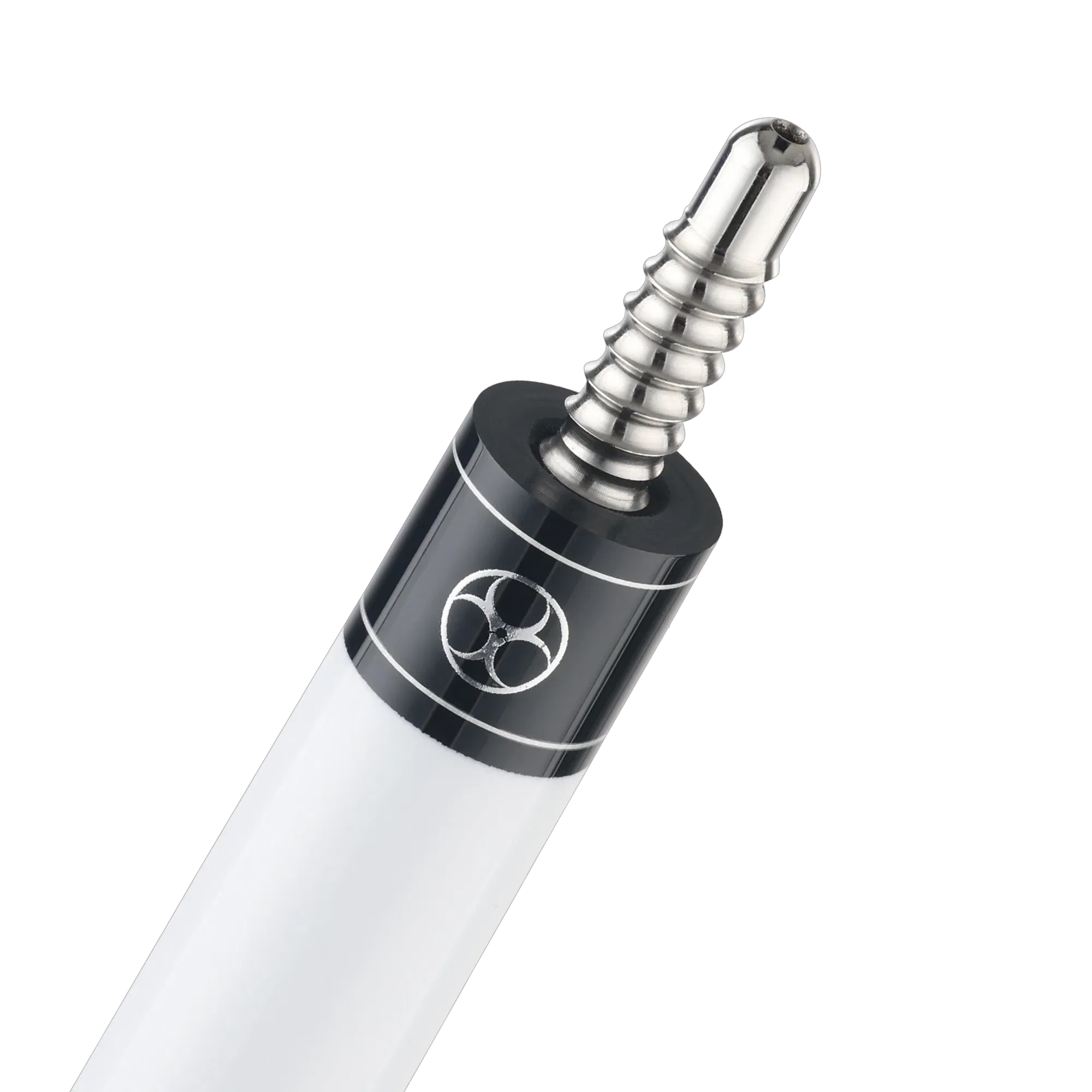
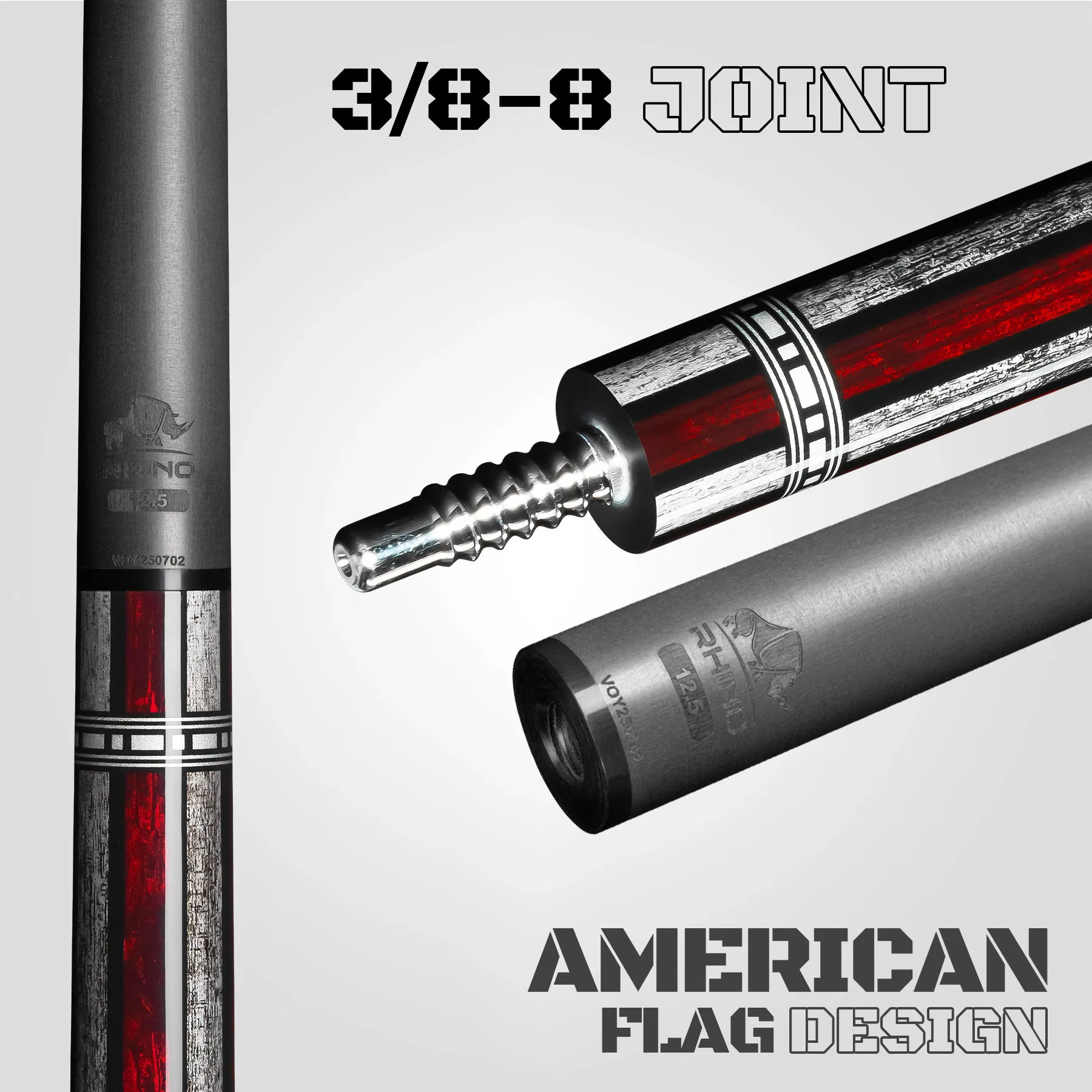
Players who already own spare Radial shafts have a practical reason to lean toward Poison. Players invested in Rhino's 3/8-8 equipment may prefer to remain in that system. The two joint labels are different, and neither manufacturer confirms cross-compatibility between these exact cue packages. Don't assume one shaft will fit the other butt.
Does the one-inch length difference matter?
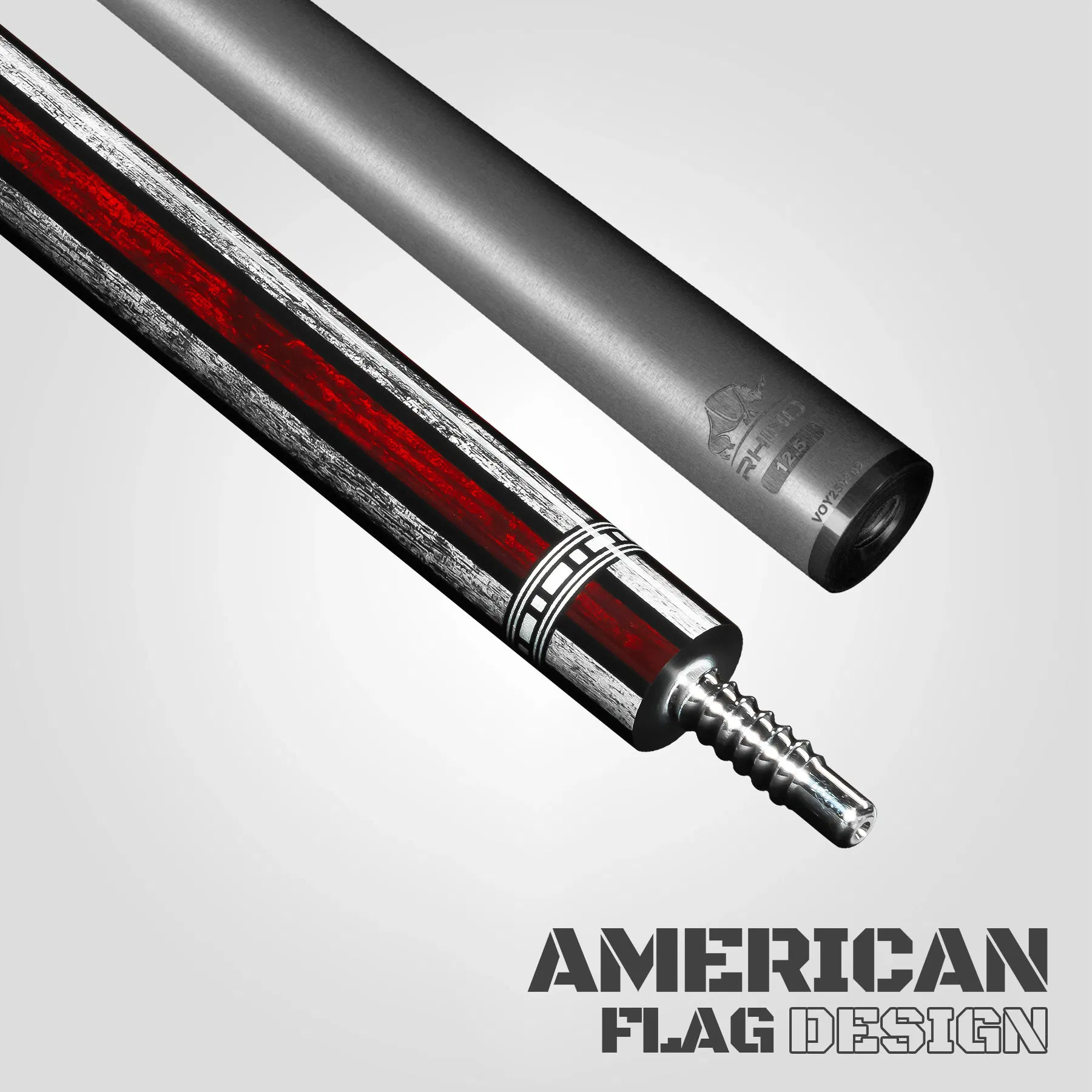
Predator lists the Maelith at 58 inches, the standard length familiar to most adult players. Rhino lists a shaft of about 30 inches and a butt of about 29 inches. Those component figures add to roughly 59 inches, although the product page does not state a separate assembled-length figure.
One inch isn't automatically better. A slightly longer cue can suit taller players or anyone who wants a little more reach without an extension. A standard 58-inch build may feel more familiar and is easier to compare with common cases and replacement setups.
Which grip design fits your preference?
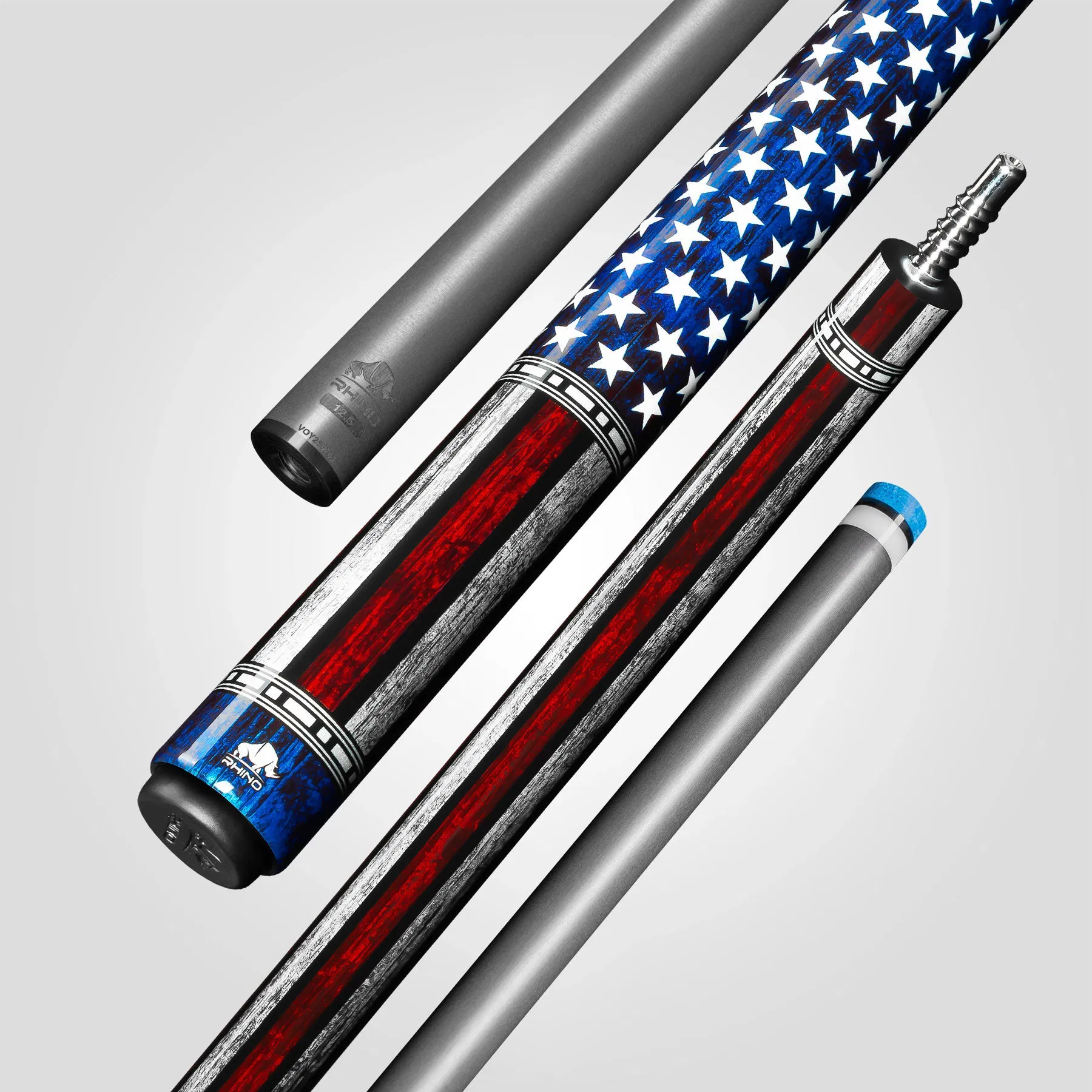
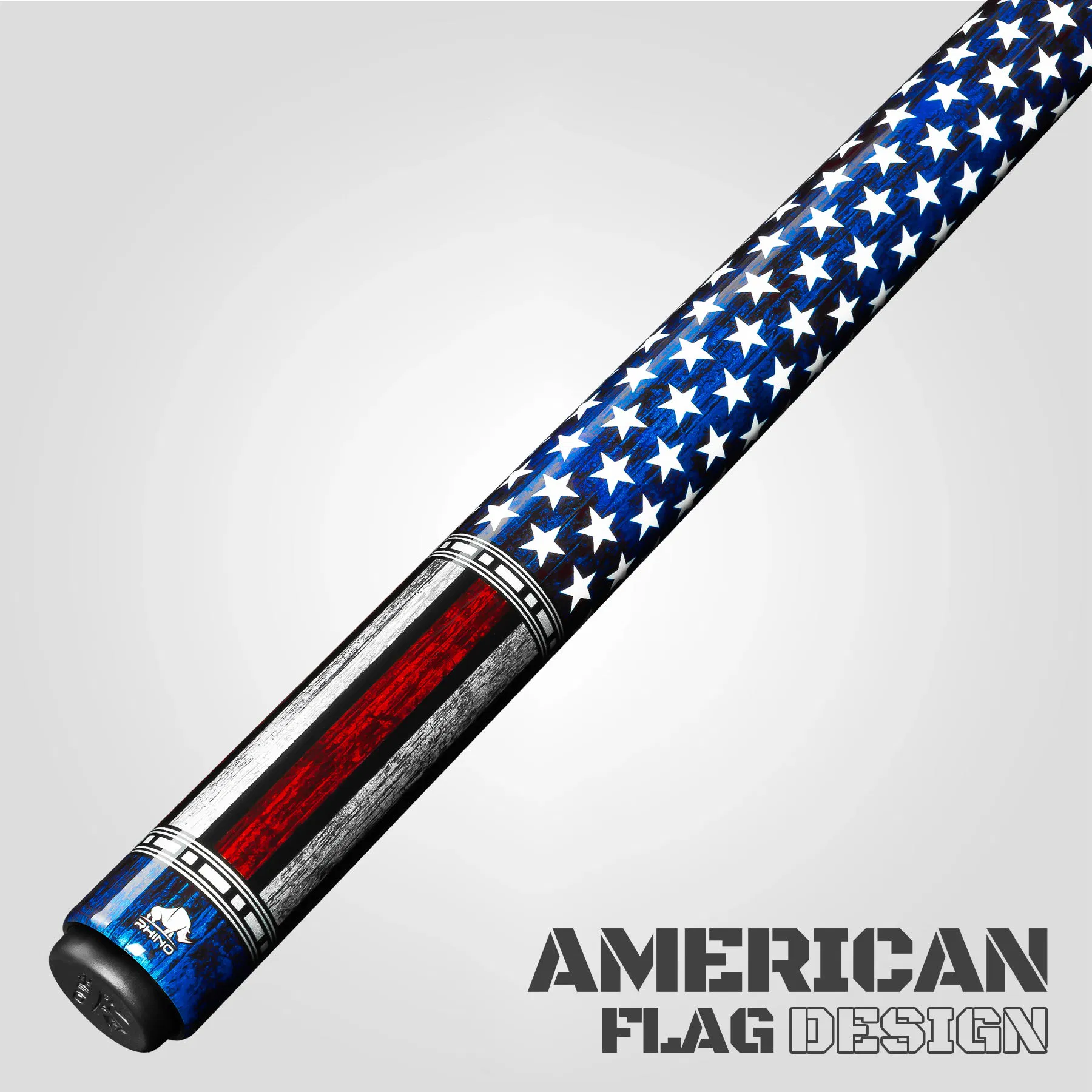
Rhino calls the Voyager wrapless. Its carbon-composite butt uses a glossy graphic finish, so the grip experience should be judged as a smooth, unwrapped setup. Players who like moving their grip hand freely along the butt often prefer this format.
Predator describes the Maelith as having a three-section vinyl-wrap design with rings, then adds that the cue does not have a solid wrap. That wording suggests a segmented design treatment rather than a conventional full-length linen or leather wrap. Buyers who expect the texture of a traditional wrapped handle should pay attention to that distinction.
Which cue gives you more setup control?
Rhino wins the published-data round. Its shaft and butt weights imply a total range of about 18.7 to 19.5 ounces before considering normal assembly tolerances. It also supports a weight-adjustment system accessed through the bumper.
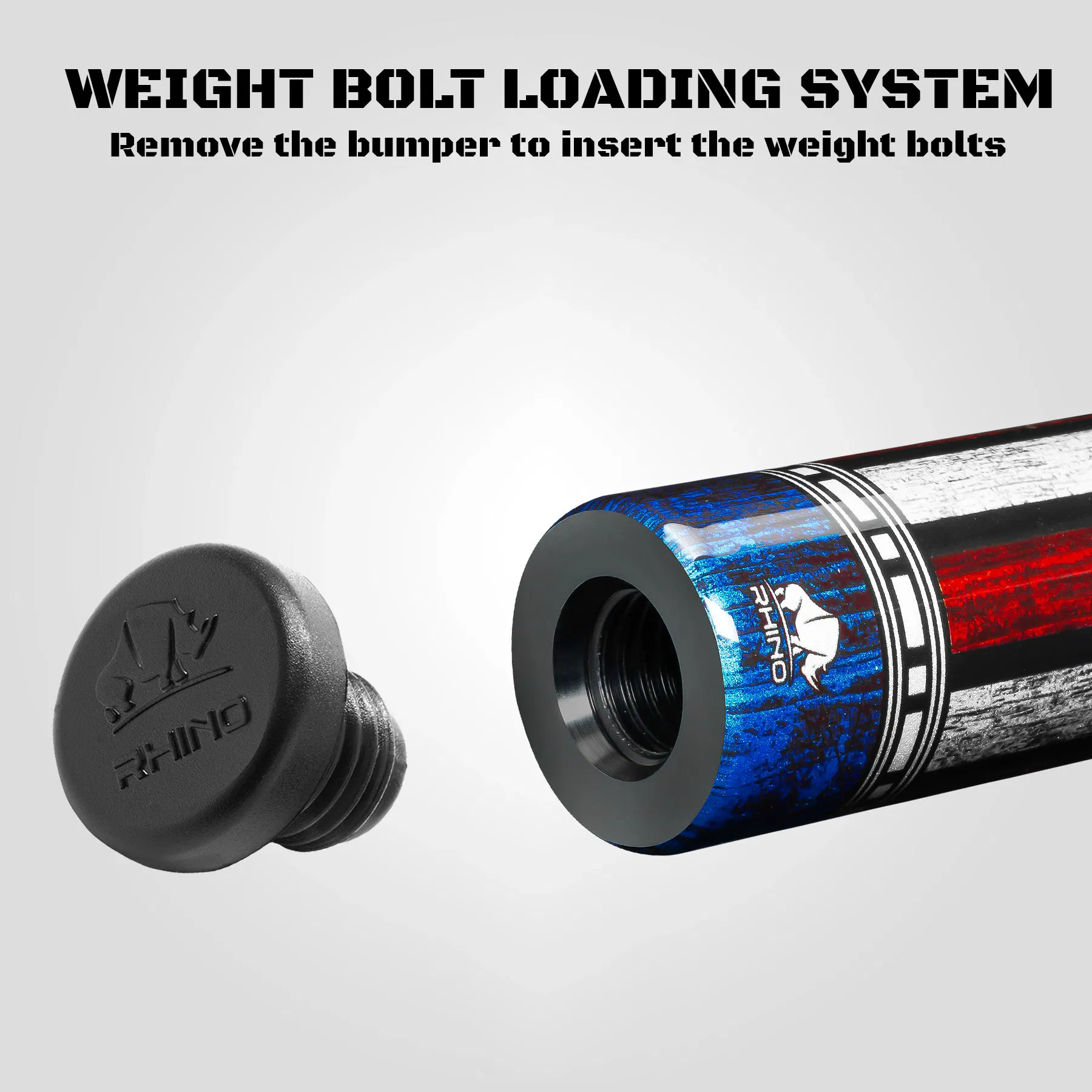
Poison does not publish the Maelith's total weight, separate component lengths or a weight-adjustment specification on the official page. That doesn't prove the cue lacks adjustment. It means the current listing does not provide enough information to credit it with that feature.
For buyers who care about dialing in balance and total mass, Rhino removes more uncertainty before checkout. That is a real value advantage, especially for an online purchase.
Who should choose the Poison Maelith?
Choose the Maelith if a 58-inch cue, Radial joint and 12.4 mm medium leather tip match your setup. It also makes sense for a player who prefers the white-and-black finish and wants a soft case included.
It is the more curated package. The design, accessory and joint choice are the selling points. Players who need a published weight range or clearly documented adjustability should ask Predator or an authorized dealer before buying.
Who should choose the Rhino Voyager USA 2025?
Choose the Rhino if value means getting more setup information for less money. Its published component weights, supported weight adjustment, carbon-composite butt and included joint protector make the specification sheet unusually complete at $419.
The tradeoff is specificity. The USA graphic is bold, the grip is wrapless, and the 3/8-8 joint may not match shafts a buyer already owns. Those aren't flaws. They simply narrow the ideal customer.
What is the final verdict?
Rhino Voyager USA 2025 is the rational value pick. It costs $30 less and publishes more of the information that affects setup, including component weight and adjustability. A buyer comparing features per dollar has a clearer case for Rhino.
Poison Maelith wins for the player whose priorities are different: Radial compatibility, standard 58-inch length, a medium 12.4 mm leather tip, a white-and-black statement design and a soft bag in the box.
There is no honest performance winner without controlled play testing. Based on official data alone, Rhino offers more measurable value, while Poison offers the more tightly styled package.
Is the Poison Maelith more expensive than the Rhino Voyager USA 2025?
Yes. The Maelith is listed at $449 and the Rhino at $419, a $30 difference.
Do both cues use carbon-fiber shafts?
Yes. Poison uses its Venom carbon-fiber shaft, while Rhino lists a Premium Carbon Fiber shaft. Both manufacturers describe their shafts as low deflection.
Can the shafts be swapped between these two cues?
Do not assume so. The Maelith uses a Radial joint and the Rhino uses a 3/8-8 stainless-steel joint.
Which cue has an adjustable weight system?
Rhino explicitly lists weight adjustment as supported. Poison does not publish an adjustment specification for this Maelith model.
Which cue is better for taller players?
Rhino's published component lengths total roughly 59 inches, while the Maelith is listed at 58 inches. Fit still depends on stance, reach and personal preference.
Which cue is the better value under $450?
Rhino leads on published specifications and price. Poison can be the better personal fit for buyers who want a Radial joint, 58-inch length and included soft bag.
More coverage
Keep reading
Predator Tiger Eye Cues: BK Rush and Air Rush Reviewed
Predator's Tiger Eye collection pairs BK Rush break power and Air Rush jump control with two grip choices and a limited amber-bronze finish.