Viking SS-1026A vs Cuetec SVB Gen II: What Does $199 Buy?
One cue is limited to 35. The other costs $199 more and offers a deeper adjustment system. Here is where each dollar goes.
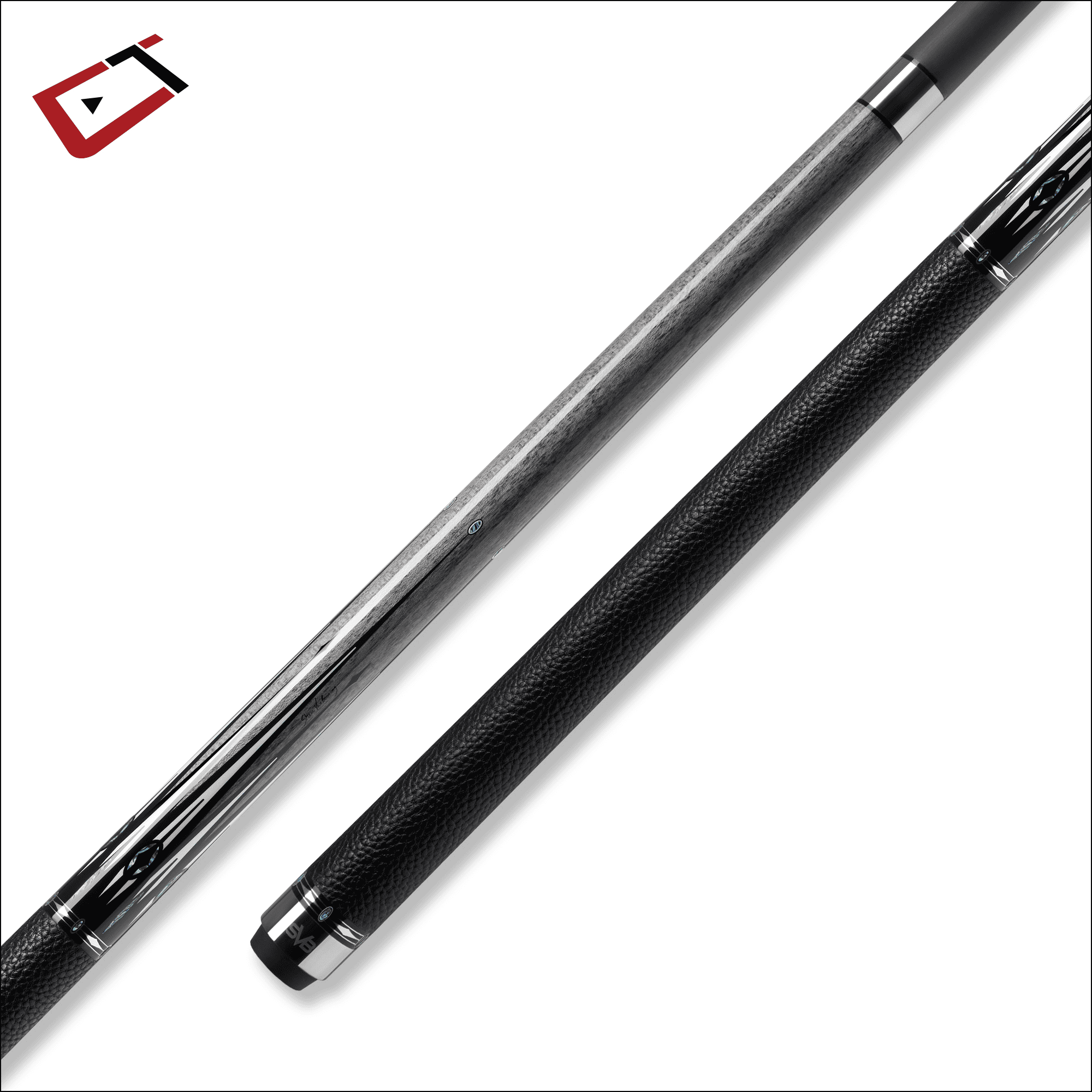
The real choice here isn't wood versus carbon. Both cues already pair a maple butt with a carbon-fiber shaft. The decision is what you want the rest of the money to buy.
At $850, the Viking SS-1026A gives you a 35-cue production run, a Triple 60 TS1 shaft and a look that won't be common at league night. The $1,049 Cuetec Cynergy SVB Gen II Gray Stain costs $199 more, but that extra money goes toward a more developed ownership system: selectable shaft diameter, published weight options, an adjustable weight platform and an extension-ready bumper.
My short verdict: choose the Viking if rarity and initial value are the attraction. Choose the Cuetec if you care more about setup control and a cue that can change with you.
This comparison is based on manufacturer specifications and official product information. It isn't presented as a side-by-side table test, so feel claims are treated as expectations rather than lab results.
What does the extra $199 actually buy?
The price gap is clean. Viking lists the SS-1026A at an $850 MSRP, while Cuetec lists the Gray Stain SVB Gen II at $1,049. That makes the Cuetec $199, or about 23.4%, more expensive.
| Detail | Viking SS-1026A | Cuetec Cynergy SVB Gen II Gray Stain |
|---|---|---|
| MSRP | $850 | $1,049 |
| Production | Limited to 35 cues | No production limit published |
| Butt wood | Curly maple | A+ kiln-dried Canadian maple core |
| Finish/design | Hand-applied Smoke stain, laser engraving, six black sleeve inlays | Gray stain, ten-point design, synthetic and genuine abalone accents |
| Wrap | Double-pressed Irish linen | Full-grain pebbled leather |
| Included shaft | Triple 60 TS1, 11.90 mm | Cynergy, 11.8 or 12.5 mm |
| Tip | Tiger Everest laminated medium | Tiger Sniper laminated soft |
| Joint | Viking Quick Release | Cuetec 3/8 x 14 |
| Published length | Not stated on product page | 29-inch butt plus 29-inch shaft |
| Published cue weight | Not stated on product page | 19 oz standard; 18, 20 and 21 oz listed |
| Weight system | Not stated | Acueweight Gen II |
| Extension setup | Not stated | Duo Extension-ready bumper |
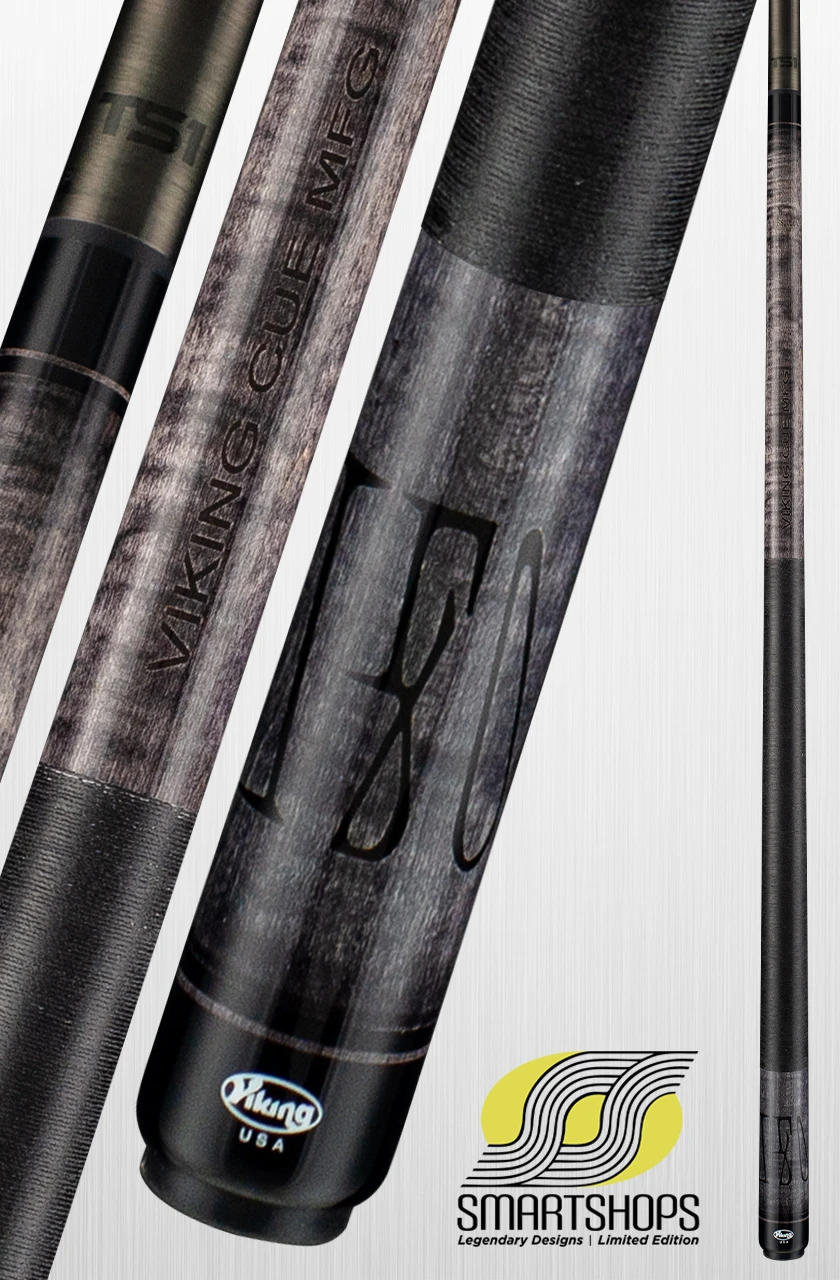
The Cuetec premium doesn't purchase exclusivity. It purchases choices. The Viking takes the opposite route: one deliberately specified limited cue with only 35 examples available through participating SmartShops dealers.
Is the Viking more than a numbered collectible?
Yes. The SS-1026A isn't a conventional maple cue wearing a limited-edition label. Its included Triple 60 TS1 is a full carbon-fiber playing shaft with an 11.90 mm tip diameter, a white ferrule and a Tiger Everest laminated medium tip. Triple 60 lists the standalone TS1 at $399.
That price is useful context, even though separating an included shaft from a complete-cue MSRP isn't a perfect valuation exercise. It shows that a large share of the Viking's $850 package is tied to a current carbon shaft, not just decoration and scarcity.
The butt still carries Viking's traditional cuesmithing identity. Curly maple receives a hand-applied Smoke stain, while matching stained maple rings, six black inlays and laser engraving give the cue a restrained gray-and-black theme. The double-pressed Irish linen gives the grip hand a familiar, dry surface. Players who find leather warm or slightly tacky may prefer that linen contact.
There is one practical catch. Viking routes the cue through its SmartShops dealer network, and the official page doesn't publish store-by-store inventory. “Limited to 35” describes total production, not what is still available today. A dealer call is part of the buying process.
How do the two carbon shafts differ on paper?
The diameters are close enough to make this a fair comparison. Viking's TS1 is 11.90 mm. Cuetec offers the Cynergy in either 11.8 or 12.5 mm; the 11.8 mm version, SKU 95-138LTW-S, is the nearest match.
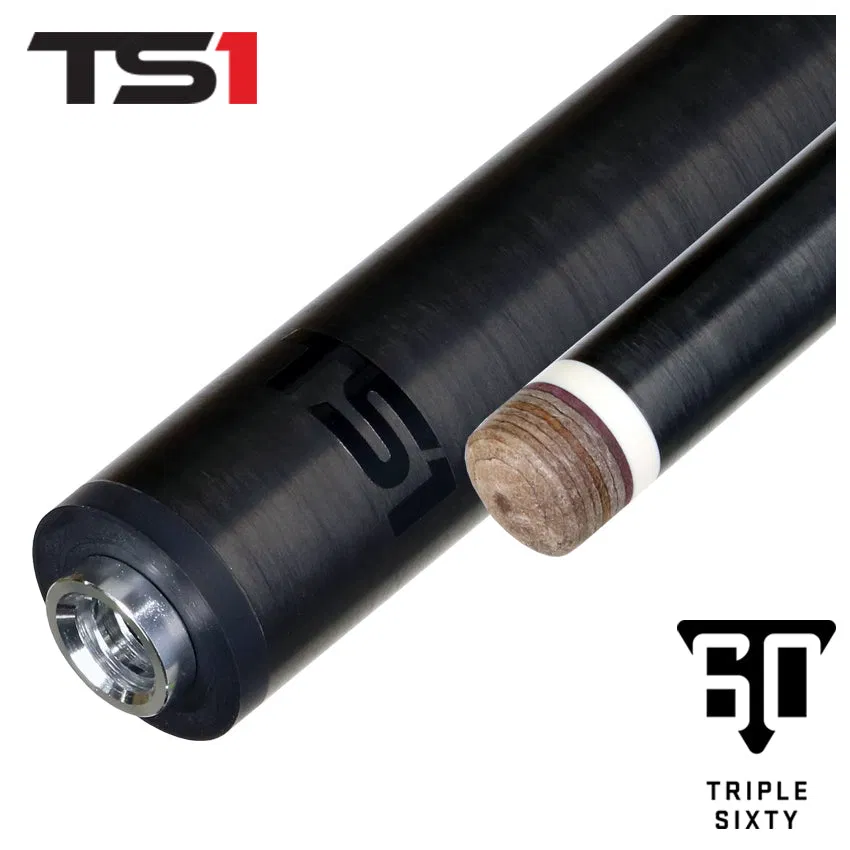
Triple 60 publishes a 29-inch length and a shaft weight of 4 ounces, plus or minus 0.14 ounce depending on the joint. Cuetec lists its 29-inch Cynergy at 3.8 ounces. On specs alone, the difference is small. Balance also depends on the butt, joint hardware and weight placement, and Viking doesn't publish the complete SS-1026A weight. It would be careless to declare one cue more forward- or rear-balanced from those shaft figures alone.
The tips point toward different starting personalities. Tiger's Everest is a medium tip, while the Sniper on the Cynergy is listed as soft. Tip labels aren't standardized across every maker, but the Cuetec setup should appeal to players who want a little more perceived grip and dwell from the factory. The Viking specification is the safer starting point for someone who prefers a firmer, more direct response.
Cuetec provides the more detailed construction story. The company describes multidirectional carbon-fiber filaments, a polyurethane foam core, a low-mass front end and its SST taper. Triple 60 identifies the TS1 as a carbon shaft and publishes its key dimensions, but its page gives conflicting taper descriptions. One section says an 8-to-12-inch pro taper while another lists a 16-inch pro taper. Until that is clarified, taper length shouldn't decide this purchase.
Which butt gives you more control over the setup?
Cuetec wins this section without much debate.
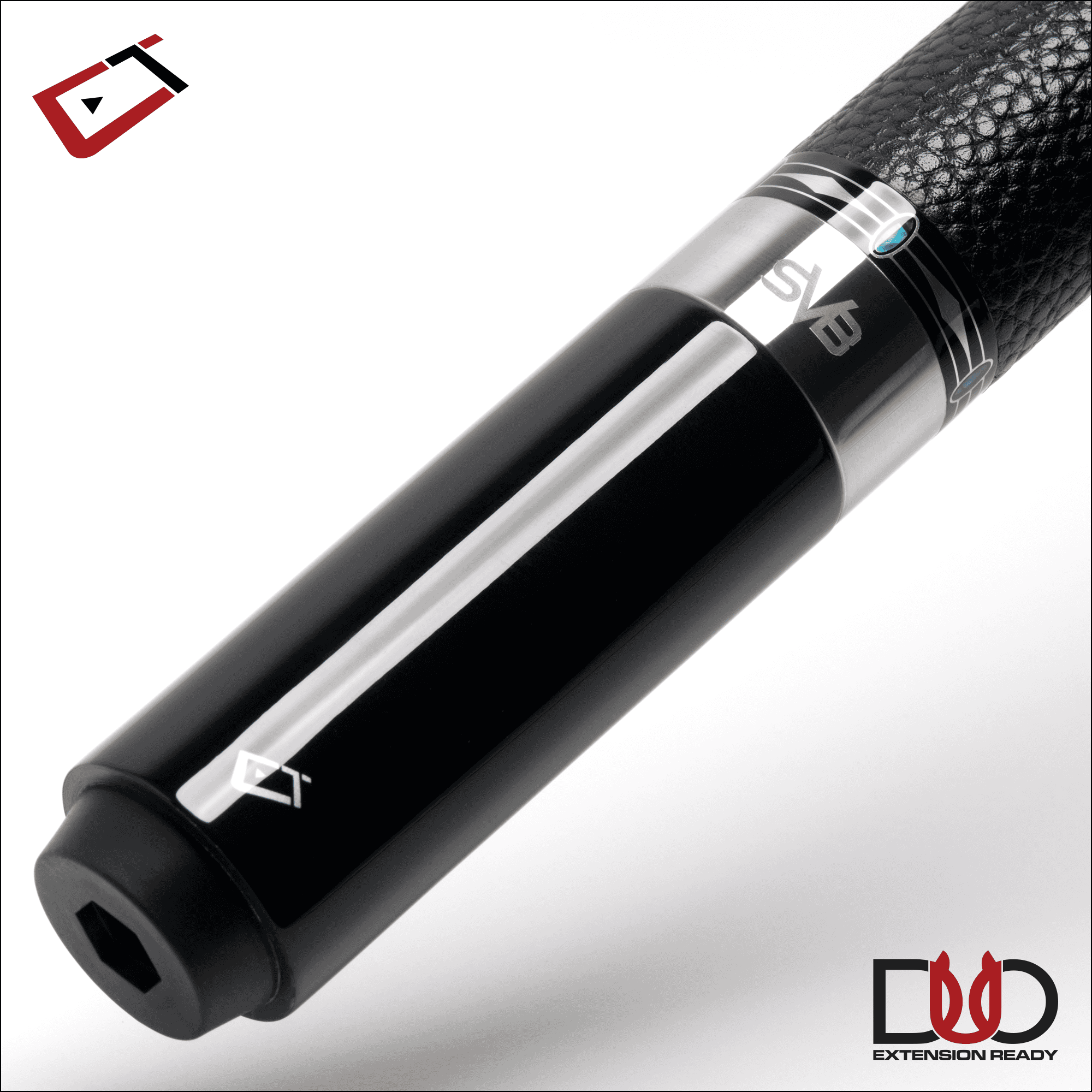
The SVB Gen II has a published 29-inch butt, a standard 19-ounce configuration and listed 18-, 20- and 21-ounce choices. Its Acueweight Gen II system is built around altering both weight and balance. The Duo-ready bumper also gives extension users a defined path without replacing the entire butt cap arrangement.
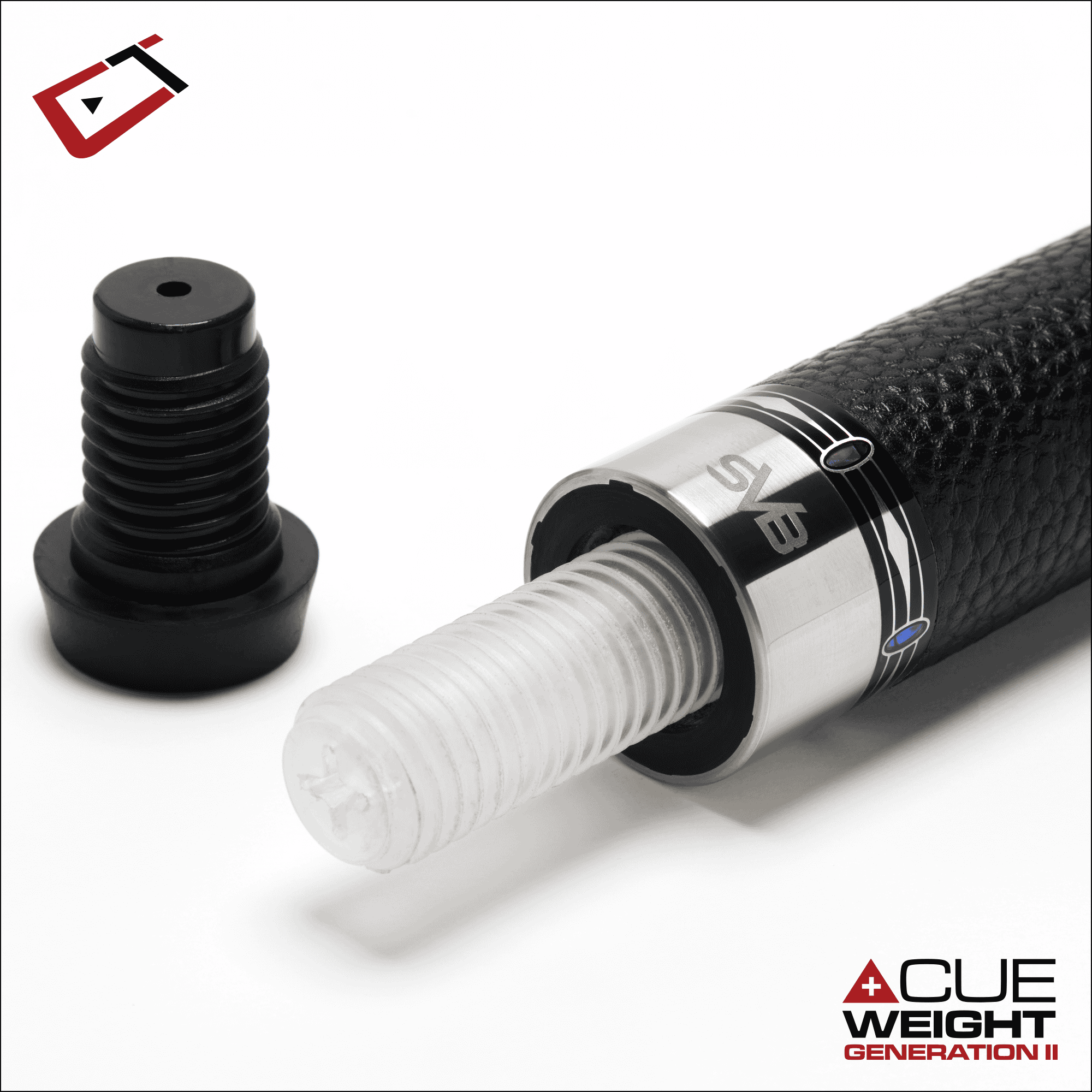
Viking's page confirms the VQR joint and the 11.90 mm shaft, but it doesn't state complete cue length, finished weight, an adjustment range or extension compatibility. That doesn't mean the cue can't be serviced or altered by a dealer. It means those decisions require a conversation rather than a published menu.
Joint choice matters too. The Viking Quick Release connection and Cuetec's 3/8 x 14 joint belong to different ecosystems. Buying either cue with plans to reuse an existing shaft should start with a joint check, not an assumption based on thread appearance.
Does the Cuetec feel like the less traditional cue?
Visually, yes. In the hand, the distinction is more nuanced.
The Cuetec butt uses a maple core, but the glossy ten-point design, abalone details, silver rings and pebbled leather make it look more polished and contemporary. Its shaft is unmistakably carbon. The 0.25-inch white sighting ferrule adds a small visual reference without creating the long white ferrule profile found on many older maple shafts.
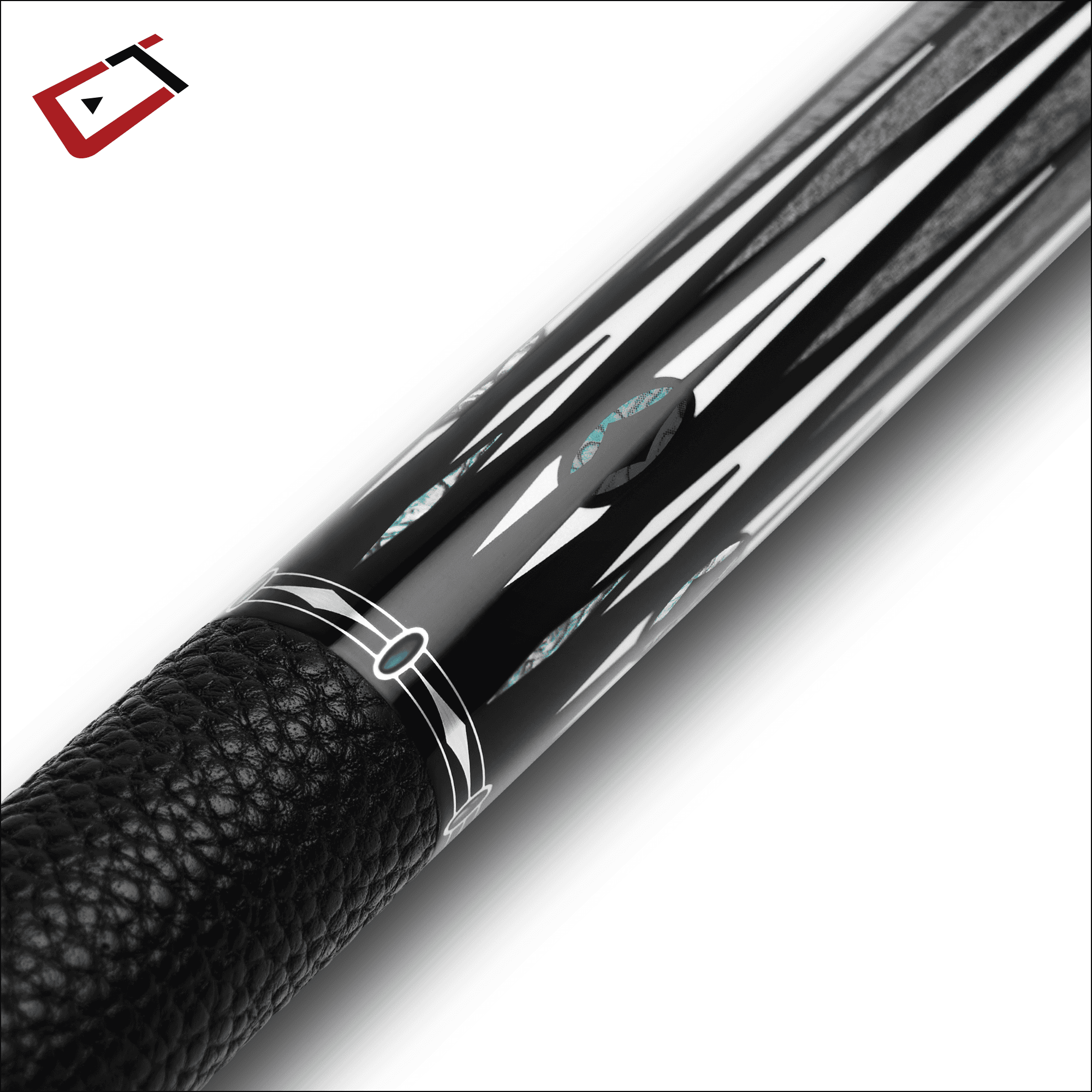
The Viking has carbon up front too, yet the curly maple, linen wrap and subdued stain pull its identity closer to a traditional American cue. It's the more interesting blend: familiar materials where the hand rests, modern material where the cue ball is struck.
Neither construction guarantees the “better” hit. Wrap texture, tip hardness, joint design and overall balance all shape what reaches the player's hand. What can be said from the specifications is that Cuetec gives buyers more ways to select and revise those variables, while Viking asks buyers to accept a fixed recipe.
Who should buy the Viking SS-1026A?
Buy the Viking if the limit of 35 genuinely adds value for you. That could mean collecting, owning a cue few opponents will recognize, or simply preferring a small-run design to a regular catalog model.
It also makes sense for the player who already knows that roughly 11.9 mm, a medium tip, Irish linen and Viking's quick-release joint are comfortable territory. At $850, the included TS1 makes the package look strong before scarcity is considered.
Skip it if you need published weight choices, a known extension solution or the freedom to choose between two shaft diameters at checkout. The SS-1026A is appealing because it is specific. That same specificity can become a limitation for a buyer who is still changing preferences.
Who should spend more on the Cuetec SVB Gen II?
The Cuetec suits a player building a long-term tournament setup. Choose 11.8 mm for the closest match to the Viking's shaft diameter, or move to 12.5 mm if you prefer a fuller bridge feel. Pick from the listed cue weights, adjust the Acueweight system later and add a Duo extension when the table demands it.
That flexibility is the argument for the extra $199. The Cuetec isn't the value winner if all you need is a carbon playing cue. It becomes easier to justify when the weight system, extension path and established Cynergy options prevent later replacement purchases.
The leather wrap is also a meaningful preference, not a luxury footnote. A player who wants more hand contact and a richer surface may find it worth the premium. A committed linen user may not.
Which cue is the smarter buy?
For pure hardware per dollar, the Viking SS-1026A gets my vote. An $850 cue with a $399-listed TS1 shaft, a curly-maple limited butt and a total production of 35 is a compelling package. The risk is availability, followed by the lack of published setup details.
The Cuetec is the smarter system purchase. Its higher price buys clarity and adjustment: two shaft diameters, documented dimensions, multiple cue weights, movable weight and a ready-made extension connection. None of that is as romantic as “one of 35,” but it may matter more after a year of weekly play.
So the choice is pleasantly simple. Buy the Viking because you want this exact cue. Buy the Cuetec because you want room to tune the cue you own.
How much more does the Cuetec SVB Gen II cost than the Viking SS-1026A?
The Cuetec's $1,049 MSRP is $199 higher than the Viking's $850 MSRP. That is about 23.4% more than the Viking price.
Is the Triple 60 TS1 a carbon-fiber shaft?
Yes. Triple 60 lists the TS1 as a 29-inch carbon-fiber playing shaft. The SS-1026A includes the 11.90 mm version with a Tiger Everest medium tip.
Is the Viking SS-1026A limited edition?
Yes. Viking states that production is limited to 35 cues. Actual stock must be checked with a participating Viking SmartShops dealer.
Which cue offers more adjustment?
The Cuetec does. It has two published shaft-diameter options, several listed cue weights, the Acueweight Gen II system and a Duo Extension-ready bumper.
More coverage
Keep reading
McDermott G241C vs Pechauer P03-R: Tech or Custom Fit?
McDermott G241C and Pechauer P03-R sit $25 apart, but G-Core shaft technology and Pechauer customization create very different buying cases.
Poison Maelith vs Rhino Voyager USA 2025: Best Cue Under $450?
Poison Maelith meets Rhino Voyager USA 2025 in a spec-based carbon cue comparison covering price, shaft, joint, grip and buyer fit.
Predator Tiger Eye Cues: BK Rush and Air Rush Reviewed
Predator's Tiger Eye collection pairs BK Rush break power and Air Rush jump control with two grip choices and a limited amber-bronze finish.