McDermott VQ1 vs Becue WAS: Carbon Feel or Wood Skin?
One exposes carbon at the grip. The other covers carbon with real wood, but the joint and balance systems shape the longer-term choice.
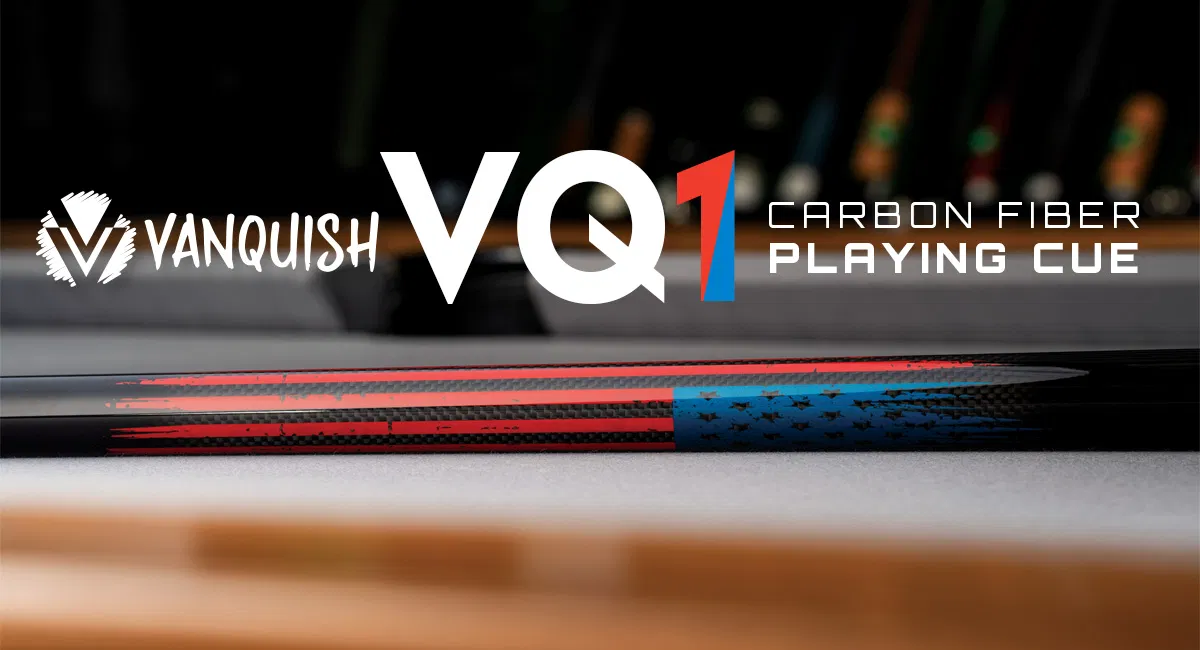
The McDermott Vanquish VQ1 is the safer complete-package choice, with a $975 MSRP, an included Defy carbon shaft, an integrated VBP balance system, four listed shaft diameters, and a published lifetime warranty. The €699 Becue WAS is the more distinctive design: carbon remains the structural material, but genuine wood veneer covers the grip and part of the butt. Choose the VQ1 for configuration clarity and a broader shaft path; choose the WAS for a wood-in-hand experience without returning to a conventional wood-built cue.
The visual argument is carbon versus wood. The buying argument is really about joints, balance hardware, and what each price includes.
Why are the VQ1 and WAS a useful comparison?
Most carbon-cue discussions focus on the shaft. These two cues push carbon into the butt as well, then take opposite approaches to the surface the player actually holds.
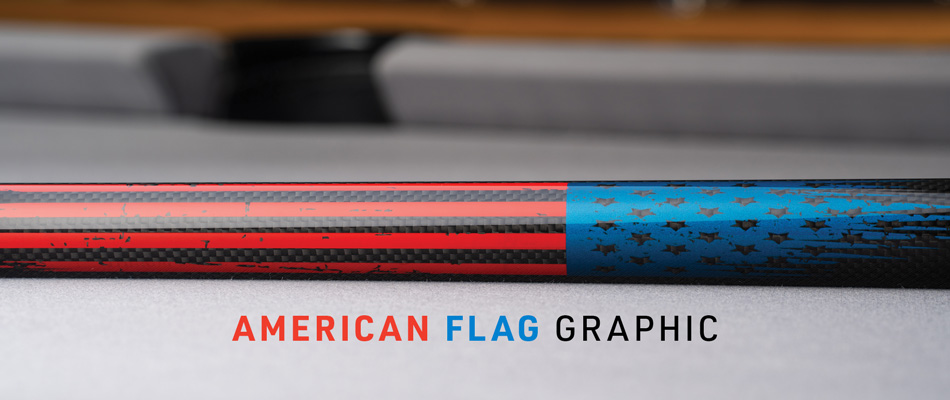
The McDermott Vanquish VQ1 leaves its carbon construction visible and uses a no-wrap handle. Its American flag graphic makes the cue look unapologetically modern. McDermott pairs that butt with a Defy carbon shaft and an internal Variable Balance Point system.
The Becue WAS stands for “Wood As Skin.” Becue describes genuine timber veneer wrapped around its carbon structure. The wood is a surface layer, not the cue's structural core. A real wood grip changes the contact surface and appearance while the maker keeps carbon underneath.
Both models also let owners alter balance. McDermott builds the VBP mechanism into the VQ1. Becue makes the WAS compatible with its Leonardo Balance System, but the weight kit is sold separately.
What do the official specifications say?
| Specification | McDermott Vanquish VQ1 | Becue WAS |
|---|---|---|
| Current listed price | $975 MSRP | €699 |
| Butt construction | Carbon fiber | Carbon structure with genuine wood veneer |
| Grip surface | No-wrap carbon | Real wood |
| Included shaft | McDermott Defy carbon | Carbon shaft with Aurora Front End Technology |
| Listed shaft diameters | 11.5, 12, 12.5 or 13 mm | Not stated on current product page |
| Shaft length | 29 inches standard; 30 and 31 available on Defy line | 29, 30 or 31 inches |
| Taper | Defy Hybrid | Not stated |
| Standard tip | Navigator Automatic Soft | CORE Red Line Medium |
| Other tip options | Not listed on VQ1 page | CORE Soft/Hard; Kamui Black SS/S/M/H |
| Joint | 3/8x10 | B-Loc, Becue-shaft compatibility only |
| Joint collar | Stainless steel | Steel, 21.3 mm diameter |
| Balance system | Integrated VBP | Leonardo-compatible; kit sold separately |
| Butt length | Not stated | 29 inches |
| Complete cue weight | Not stated | Not stated |
| Warranty shown | Lifetime, including warpage | Not stated on product page |
| Current availability signal | New current model | Available through Becue store |
The prices are not in the same currency. They also do not describe identical packages: McDermott includes its adjustable VBP hardware in the cue design, while Becue sells the Leonardo weight kit separately. Shipping, local taxes, and exchange rates can change the final comparison. Becue states that duties and import taxes are covered for orders shipped to the United States and Canada.
What does $975 buy with the McDermott VQ1?
McDermott gives the buyer a defined system rather than a bare carbon platform.
The VQ1 includes a Defy shaft that McDermott values at $480. The current VQ1 specification table lists 11.5, 12, 12.5, and 13 mm diameters, a Defy Hybrid taper, Navigator Automatic Soft tip, and 3/8x10 joint. The separate Defy shaft page confirms 29 inches as standard, with 30- and 31-inch options across the playing-shaft range.
The butt uses stainless steel at the joint collar and butt plate. The no-wrap handle keeps carbon under the rear hand, and McDermott's VBP system lets the owner move internal weights along a carbon rail. That changes where the cue feels heavy without forcing the player to change the total weight every time.
The warranty is another part of the price. McDermott states lifetime coverage, including warpage. The VQ1 page does not publish finished cue weight or total length, so buyers should still confirm those details with a dealer when ordering a nonstandard shaft length.
There is one catalog inconsistency. The main shaft table includes 11.5 mm, while the closing product text mentions only 12, 12.5, and 13 mm. The Defy line itself clearly includes an 11.5 mm model, but VQ1 buyers should confirm that size is available in their chosen cue configuration.
What does €699 buy with the Becue WAS?
Becue's value proposition starts with material contrast. The company keeps carbon as the structural base, then applies genuine wood veneer where a traditional cue would show timber. The current product photography makes that division clear: wood occupies the grip area while black carbon remains visible toward the joint and butt.
The WAS uses a 29-inch butt, steel joint collar, steel butt cup, and 21.3 mm joint diameter. Buyers can select 29-, 30-, or 31-inch shaft lengths. The shaft is described as using Aurora Front End Technology and low-deflection construction, although the page does not identify a shaft model name, taper, or tip diameter.
Tip choice is much broader than McDermott lists on the VQ1 page. The standard setup is Becue's CORE Red Line Medium. CORE Soft and Hard are offered, along with Kamui Black SS, S, M, and H options.
The €699 page currently shows one base product rather than separate priced variants. Becue's Leonardo weight kit is not included. Anyone comparing checkout totals should add that accessory if adjustable balance is part of the purchase plan.

Does wood veneer make the WAS a wood cue?
No. Becue is unusually direct on this point.
The maker says the veneer carries no structural role. Carbon remains underneath, and the wood supplies surface character, color, grain, and the warmer tactile quality that many players associate with traditional cue making.
That distinction matters. A wood-built butt can move with humidity and contains natural variation through its structure. The WAS uses timber as a skin over carbon, so the visual and grip experience is wooden even though the main structure is not.
It is still unsafe to turn that construction description into a hit verdict. No independent side-by-side test supplied with these products proves that the WAS feels warmer, quieter, firmer, or more natural during ball contact than the VQ1. The verified difference is the surface under the hand.

Which cue offers the better shaft choice?
McDermott wins on published shaft dimensions. Four tip diameters are listed, all use the Defy Hybrid taper, and the standard Navigator Automatic Soft tip is identified. Defy shafts are sold in several major joint types, which also gives owners a documented replacement route.
Becue wins on factory tip choice. Seven named tip configurations span three CORE hardness options and four Kamui Black choices. Shaft length is equally flexible at 29, 30, or 31 inches.
The gap is missing Becue data. Its WAS page does not state the shaft diameter or taper, and it does not make the Aurora-equipped shaft's exact model identity clear. Those are basic ordering questions for a player who has a strong preference for 11.8, 12.3, or another specific diameter.
In short, McDermott lets the buyer choose the shaft shape with more confidence. Becue lets the buyer choose the tip feel with more range.
How much does the joint ecosystem matter?
More than the wood-versus-carbon styling.
The VQ1 uses a 3/8x10 joint. That thread is familiar in the North American cue market, and McDermott offers Defy replacements in several joint and collar combinations. A common thread name does not guarantee a perfect fit. McDermott notes that cue joint diameters vary and recommends measuring the collar or sending the cue to the factory for the closest alignment.
Becue's B-Loc is a closed ecosystem on the WAS product page. The company states that it is compatible only with Becue shafts. That isn't a weakness for a buyer committed to Becue, but it reduces the number of third-party replacement paths that can be considered without modification.
Players who keep one butt and rotate several shafts should decide on the joint ecosystem first. Surface material can be enjoyed every shot, but a proprietary joint controls every future shaft purchase.
Which balance system is more complete at purchase?
McDermott's VBP system has the clearer out-of-box advantage.
VBP is part of the VQ1's design. Internal weights can be moved along a rail to shift balance forward or rearward. This is different from a simple butt-end bolt that mainly changes total mass at one location.
Becue's WAS supports the Leonardo Balance System, which pursues a similar goal: control over weight distribution and balance point. The product page explicitly says the kit is sold separately. The base cue price therefore buys compatibility, not the complete adjustment kit.
Neither product page publishes a finished weight range or measured balance-point range for the configurations being compared. Claims about one cue being lighter or more forward balanced would go beyond the current data.
Is the VQ1's American flag design a buying factor?
It should be. Appearance is fixed, and this VQ1 is not subtle.
The distressed red-and-blue flag graphic runs across a visible carbon butt. Buyers who want a technical, American-branded cue may see it as part of the appeal. Players who prefer plain black carbon, understated wood, or neutral tournament equipment may tire of it long before the Defy shaft wears out.
The WAS takes the opposite route. Its natural veneer and small Becue emblem read more like a conventional custom cue from across the room. Close inspection reveals the carbon sections and steel hardware.
Neither finish is objectively better. The useful question is which one still looks right after the novelty of a new cue has passed.
Who should choose the McDermott VQ1?
Choose the VQ1 if:
- You want visible carbon and a no-wrap rear grip.
- You need a clearly listed choice of 11.5, 12, 12.5, or 13 mm Defy shafts.
- An included adjustable balance system matters.
- You prefer a familiar 3/8x10 joint path.
- McDermott's published lifetime warranty is valuable to you.
Confirm the 11.5 mm option, total cue length, and finished weight before placing a custom order.
Who should choose the Becue WAS?
Choose the WAS if:
- You want carbon structure with genuine wood under the shooting hand.
- You already use B-Loc Becue shafts.
- You value 29-, 30-, and 31-inch shaft choices.
- You want a wider menu of CORE and Kamui tip hardness options.
- You accept buying the Leonardo weight kit separately.
Ask Becue to confirm the included shaft diameter, taper, final weight, and any option-related price changes before checkout.
Which cue is the better value?
The VQ1 is the better documented complete system; the WAS is the more appealing specialist choice.
McDermott's $975 price includes a Defy carbon shaft, integrated balance adjustment, four listed diameters, and lifetime warranty coverage. That combination makes the cost easier to judge before ordering.
Becue's €699 base price is attractive, and duties are included for U.S. and Canadian orders. The wood veneer, tip menu, and three shaft-length options give it a personality the VQ1 cannot copy. Yet the separate Leonardo kit and missing shaft-diameter information make the final configuration less transparent.
For a first full-carbon playing cue, the VQ1 asks fewer unanswered questions. For a player who dislikes a bare carbon grip and is comfortable staying inside Becue's B-Loc system, the WAS offers the more unusual and focused design.
Is the Becue WAS a wood cue or a carbon cue?
It is a carbon-structured cue covered in genuine wood veneer. Becue states that the wood is a surface layer and does not carry the cue's structural load.
Does the McDermott VQ1 include a carbon shaft?
Yes. The VQ1 includes a McDermott Defy carbon shaft, which McDermott lists as a $480 value.
Can a non-Becue shaft fit the WAS B-Loc joint?
Becue's product page says B-Loc is compatible only with Becue shafts. Buyers should not assume third-party compatibility.
Is the Becue Leonardo weight kit included with the WAS?
No. The WAS supports the Leonardo Balance System, but Becue states that the weight kit is sold separately.
Is an 11.5 mm Defy shaft available on the VQ1?
The VQ1 specification table lists 11.5 mm, but the closing description lists only 12, 12.5, and 13 mm. Confirm the 11.5 mm configuration with McDermott before ordering.
More coverage
Keep reading
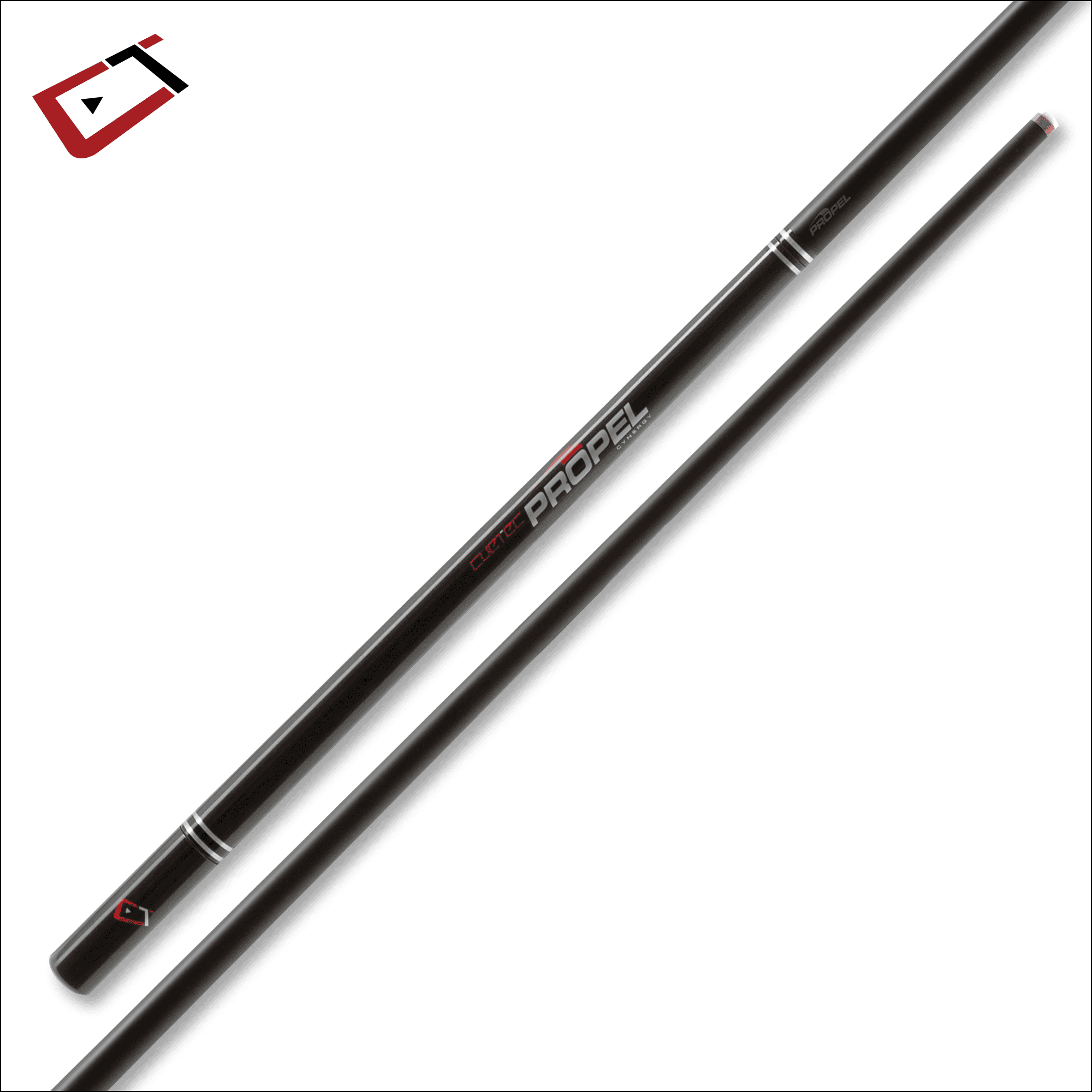
Predator Air Rush vs Cuetec Propel: What Does $30 Buy?
Predator Air Rush costs $30 more and publishes two complete configurations. Cuetec Propel answers with an 11 oz all-composite build and lower MSRP.
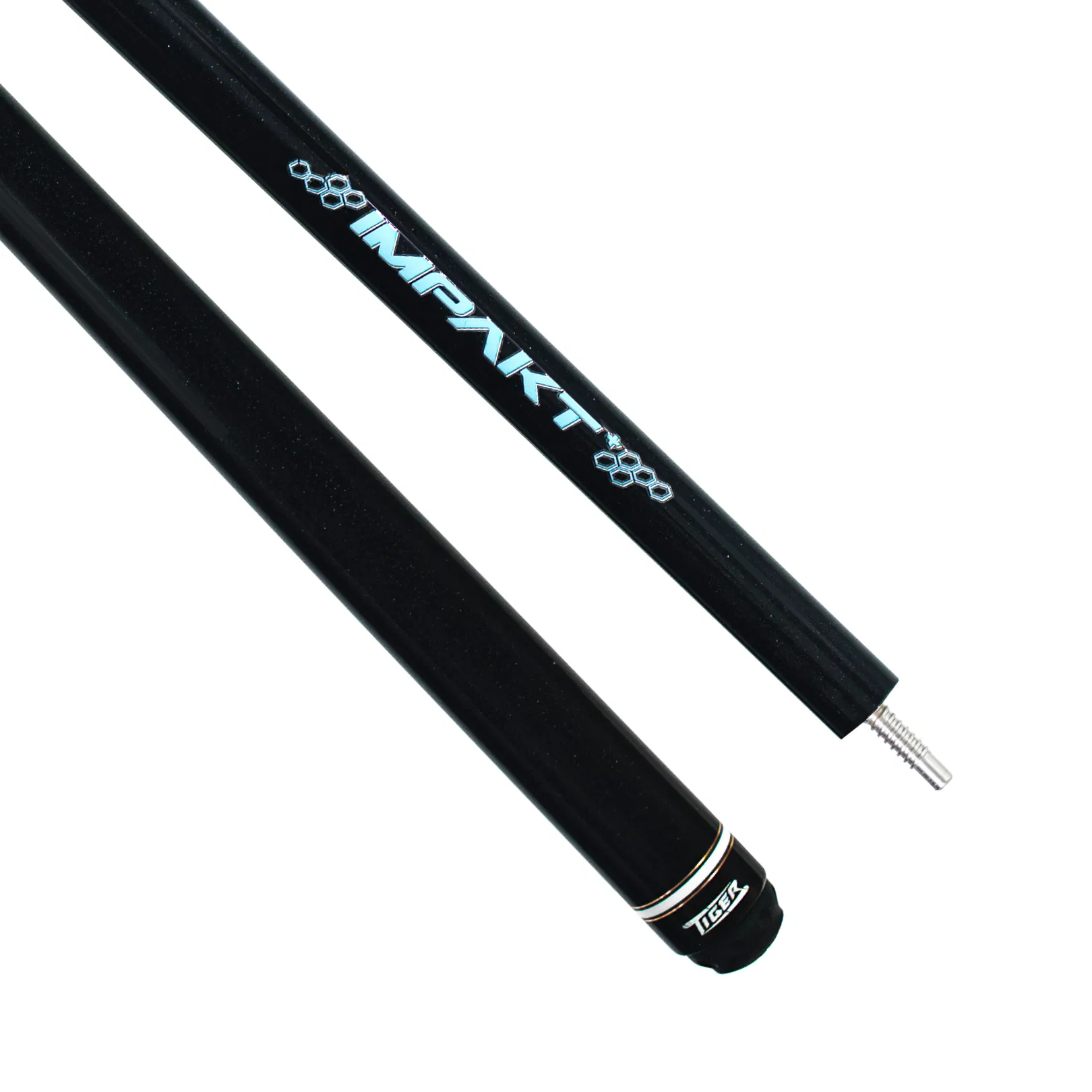
Tiger IMPAKT vs Pechauer Rogue Break: Is $150 Extra Worth It?
Tiger IMPAKT offers a complete carbon break cue from $950. Pechauer's Rogue-equipped breaker costs $800 and provides broader joint choices.
Mezz EC9-W vs Lucasi LHC14: What Does the Extra $44 Buy?
Mezz EC9-W costs $685 and favors documented maple specs. Lucasi LHC14 costs $729, adding an 11.75 mm shaft, G5 grip and vibration damping.