Tiger IMPAKT vs Pechauer Rogue Break: Is $150 Extra Worth It?
This comparison turns on configuration, not hype: Pechauer saves $150, while Tiger reaches lighter weights and offers an Irish linen grip.
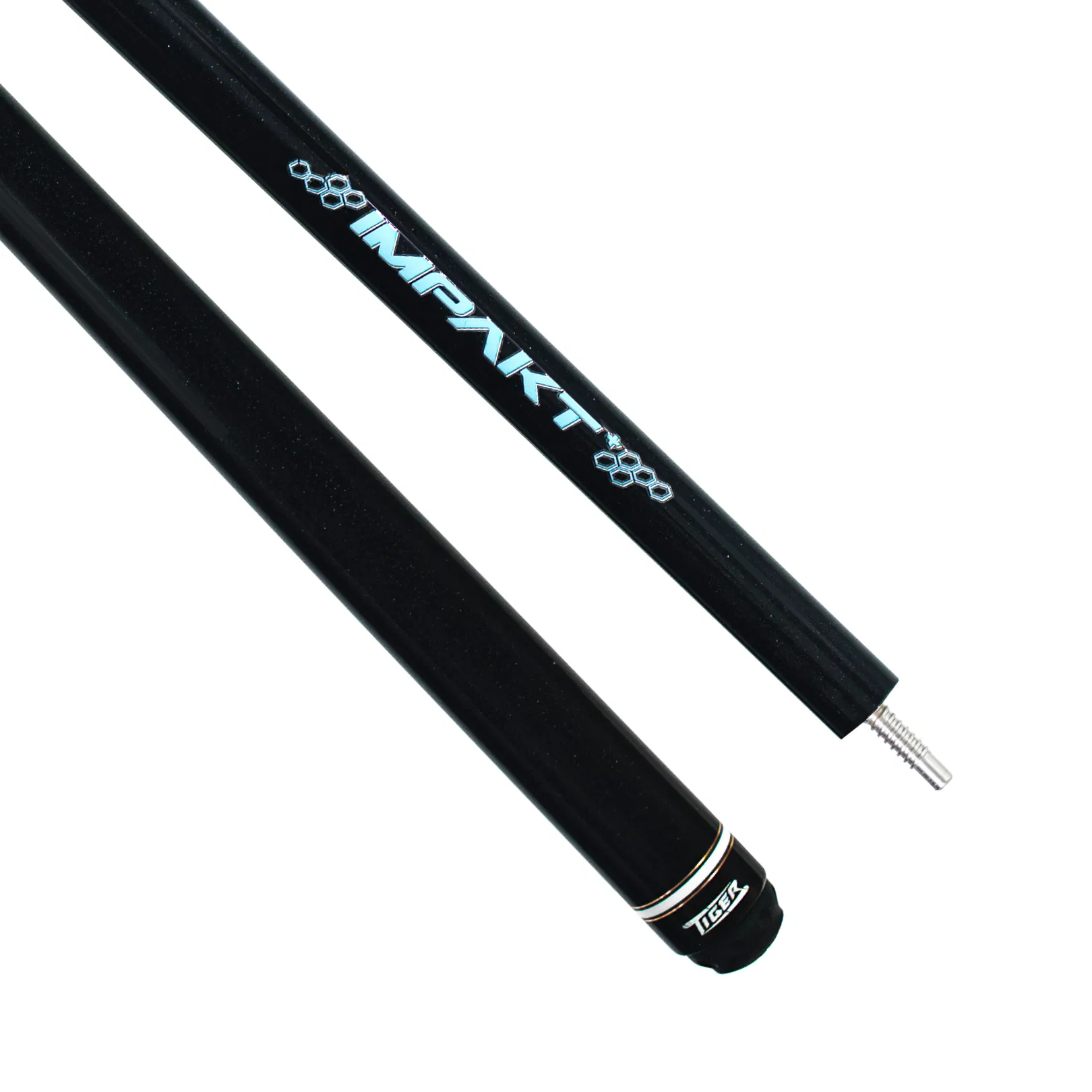
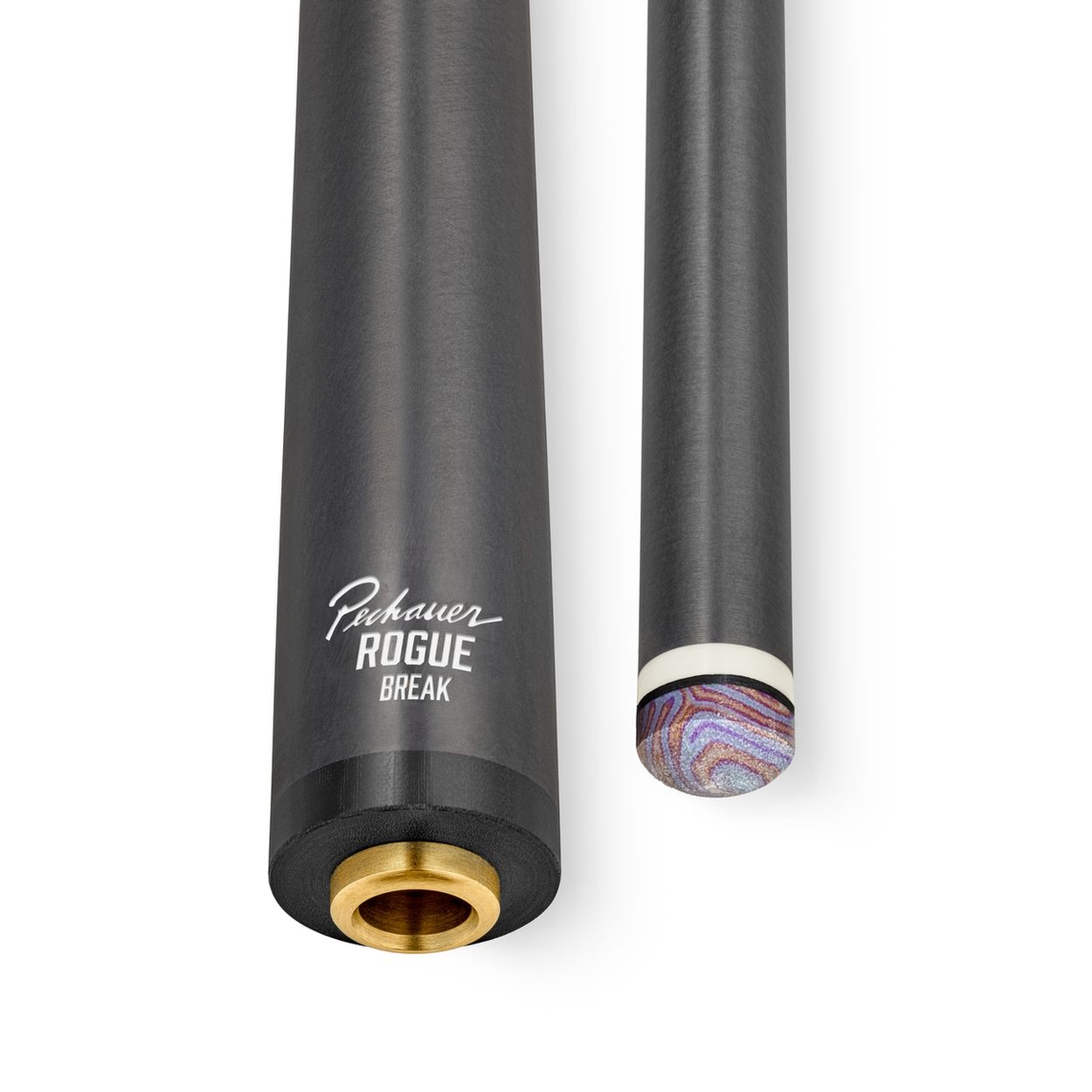
The Pechauer Break Cue with the Rogue Carbon Break shaft is the stronger value at its current $800 configured price. It costs $150 less than the $950 wrapless Tiger IMPAKT, offers more joint choices, and gives buyers a clear online configuration path. The Tiger earns its premium for a different reason: it reaches down to 17 ounces, offers an Irish linen wrap, and arrives as a tightly defined Tiger package built around the 13 mm Fortis BRK shaft.
This isn't a simple contest between two carbon shafts. It is a choice between Pechauer's configurable platform and Tiger's lighter, dealer-sold complete cue.
What changed in the price comparison?
The most important detail sits inside Pechauer's configurator. The Pechauer Break Cue starts at $390 with its standard 13 mm maple shaft. Selecting the 13.25 mm Rogue Break shaft adds $410, bringing the complete cue to $800 before tax.
That is different from buying the two pieces separately. The standalone Rogue Carbon Break shaft lists for $510, but adding $390 and $510 would overstate the price of the configured cue by $100.
Tiger lists the new IMPAKT Break Cue at $950 without a wrap and $1,000 with Irish linen. At those prices, the Pechauer configuration is $150 below the wrapless IMPAKT and $200 below the linen version.
There is one purchasing wrinkle. Tiger's current product page routes ordering through its dealer system, while Pechauer exposes the cue options and pricing in a public online configurator. A local Tiger dealer may still be useful for confirming weight, joint details, delivery, and final price before money changes hands.
How do the official specifications compare?
| Specification | Tiger IMPAKT 2026 | Pechauer Break with Rogue |
|---|---|---|
| Current complete-cue price | $950 wrapless; $1,000 Irish linen | $800 before tax |
| Butt material | Canadian Hard Rock Maple | Curly maple |
| Break shaft | Fortis BRK carbon fiber | Rogue Carbon Break |
| Shaft length | 29 inches | 29 inches |
| Tip diameter | 13 mm | 13.25 mm |
| Taper | 15-inch pro taper | 17-inch extended taper |
| Tip and ferrule | IB+ ferrule/tip combination | C4+ Break Tip with pad; 1/4-inch ferrule |
| Cue weight choices | 17 to 20.5 oz in half-ounce steps | 18.5 to 21 oz in half-ounce steps |
| Wrap | Wrapless or Irish linen | Wrapless |
| Listed joint choices | Complete-cue page doesn't specify | Pechauer Speed, Radial, 3/8x10, Uni-Loc, 5/16x18 piloted |
| Sales route | Tiger dealer network | Pechauer online configurator |
The table also corrects an easy-to-miss detail: Pechauer currently offers an 18.5-ounce option. Its range does not begin at 19 ounces.

What does Tiger's extra $150 buy?
Mostly, it buys access to a configuration Pechauer doesn't match. The IMPAKT can be ordered at 17, 17.5, or 18 ounces, making it the clear candidate for players who create break speed with a lighter cue. Pechauer's menu starts at 18.5 ounces and extends to 21.
That wider low-end range matters more than the small difference in tip diameter. A 17-ounce breaker and a 20-ounce breaker can feel like different tools during the final acceleration into the rack. Neither approach is automatically faster or more powerful. The useful choice is the one that lets the player deliver the cue squarely without steering it.
Tiger also offers a genuine wrap decision. The $950 model is wrapless; another $50 adds Irish linen. Players with a dry, loose break grip may prefer the clean maple handle. Those who want a little more texture and moisture control have the linen option. Pechauer's standard Break Cue presentation is wrapless.
The Fortis BRK is a 29-inch carbon shaft with a 13 mm tip and 15-inch pro taper. Tiger sells the shaft separately for $600, so the IMPAKT's $950 price is best understood as a premium complete package rather than a low-cost butt paired with an expensive add-on.
Why does Pechauer's configurator matter?
Pechauer lets the buyer solve the joint question before checkout. The current menu includes Pechauer Speed, Radial, 3/8x10, Uni-Loc, and 5/16x18 piloted joints at no added charge on the complete break cue.
That flexibility has two practical benefits. A player can stay inside an existing joint ecosystem, and a replacement shaft is easier to specify later. It doesn't guarantee that every butt and shaft from different makers will mate perfectly, since pilot depth, collar fit, and face alignment still matter. It does remove much of the guesswork.
Pechauer also describes its curly-maple butt as forward weighted. That should appeal to breakers who like to feel the front of the cue carry through the cue ball. It may be less attractive to someone who prefers a neutral or rearward balance. Pechauer lists the Rogue shaft at about 4.2 ounces, but neither maker publishes enough complete balance-point data for a useful numeric comparison.

Does 13 mm versus 13.25 mm change the break?
On paper, yes. In buying terms, probably not as much as the numbers suggest.
The Rogue's 13.25 mm tip is only 0.25 mm wider than the Fortis BRK's 13 mm tip. That can make the Pechauer look and feel slightly fuller near the cue ball. Players coming from thick break shafts may appreciate the visual confidence. The Tiger will look a touch closer to a common 13 mm playing shaft.
The diameter alone doesn't tell us which cue transfers more energy. Tip material, ferrule construction, shaft wall design, cue weight, timing, and strike quality all contribute. Neither company publishes a controlled head-to-head test showing that one of these two retail configurations produces higher cue-ball speed.
There's also a maintenance angle. Both tips are break-specific systems rather than ordinary playing tips. Tiger uses its IB+ ferrule/tip combination. Pechauer pairs a C4+ Break Tip and pad with a short 1/4-inch ferrule. Owners should use a repair technician familiar with carbon break shafts and follow the maker's replacement guidance.
How different are the 15-inch and 17-inch tapers?
Two inches is enough to notice in the bridge hand, especially with a long, open bridge.
Tiger gives the Fortis BRK a 15-inch pro taper. Pechauer uses a 17-inch extended taper on the Rogue. The Rogue therefore keeps a more consistent diameter farther back from the tip before the shaft begins to widen more noticeably.
That doesn't make the Pechauer soft. Taper length and shaft stiffness aren't the same measurement. Carbon layup, wall thickness, and internal construction influence stiffness too. The safer buying interpretation is about hand clearance: a player with a long bridge may find the Rogue's extended taper less intrusive, while a compact breaker may never care about the two-inch difference.
Which cue offers the better weight range?
Tiger wins on breadth. Its eight listed weights run from 17 to 20.5 ounces. Pechauer's six options run from 18.5 to 21 ounces.
The practical split is simple:
- Choose Tiger's range if you already know that 17 to 18 ounces helps your timing.
- Choose Pechauer's range if you prefer a heavier, forward-weighted break cue.
- If you live around 18.5 to 20.5 ounces, both menus cover you, so balance and taper deserve more attention than the number stamped on the order.
Heavier does not mean harder by default. A player who loses speed or accuracy with added mass may get a weaker result. A light cue isn't a shortcut either; it still has to arrive at the cue ball on line.
Which joint system is the safer purchase?
Pechauer provides the clearer answer today because every current joint choice appears directly in the configurator. That is useful for buyers who already own shafts or want a known replacement path.
Tiger lists Tiger, 3/8x10, and Radial options on the separate Fortis BRK page. The new IMPAKT complete-cue page does not state which joint is fitted to the retail package. That missing line is not evidence of a problem, but it is a question worth putting to the dealer before ordering.
Don't assume that two parts labeled 3/8x10 will always produce a perfect cosmetic and mechanical fit. Pin thread, pilot, collar diameter, facing, and tolerances can differ. A same-brand butt-and-shaft package remains the lowest-risk route.
Do the professional-player connections settle the argument?
No. They show that both systems are credible competition equipment, not that one will improve every buyer's break.
Tiger identifies world champion Darren Appleton as using an IMPAKT cue with a Fortis carbon break shaft. Pechauer's team equipment listings identify David Alcaide and April Larson with a Pechauer Break Cue and Rogue Break Carbon Fiber Shaft.
Those are useful reference points, particularly for confirming that the products are not novelty builds. Professional setups may be selected, adjusted, or maintained around a player's exact preferences. An equipment list is not a controlled performance test, and it shouldn't carry more weight than fit, timing, and budget.
Who should buy the Tiger IMPAKT?
The IMPAKT makes the most sense for a player who wants a complete Tiger break system and can identify at least one feature the Pechauer cannot provide.
Buy it if:
- You want a 17, 17.5, or 18-ounce carbon break cue.
- You prefer a 13 mm tip and 15-inch pro taper.
- You want Irish linen on a dedicated breaker.
- You already trust Tiger's IB+ and Fortis design.
- Buying through a dealer is acceptable.
Think twice if the purchase is driven only by the idea that a higher price must mean a harder break. The official specifications don't support that conclusion.
Who should buy the Pechauer Rogue configuration?
For most shoppers comparing these exact retail packages, Pechauer is the easier recommendation.
Buy it if:
- You want a carbon-shaft break cue for $800 before tax.
- You need one of five clearly listed joint options.
- You like an 18.5-to-21-ounce, forward-weighted setup.
- A 13.25 mm tip and 17-inch extended taper suit your bridge.
- You want to configure and order directly from the maker's site.
Its main limitation is equally clear. Pechauer doesn't reach Tiger's lightest weights, and the standard Break Cue is not presented with Tiger's choice of wrapless or Irish linen handles.
Is the Tiger IMPAKT worth $150 more?
Only for a buyer who will use Tiger's specific advantages. A lighter build, the linen option, the 13 mm Fortis profile, or a strong preference for the Tiger system can justify the extra $150 over the wrapless comparison.
Without one of those needs, the Pechauer configuration wins the value decision. It costs $800, publishes more joint choices, and pairs a purpose-built carbon break shaft with a dedicated curly-maple break butt. The $150 saving is real because it comes from Pechauer's current complete-cue configurator, not from adding two separate retail prices.
Neither cue can promise a better break from specifications alone. The smarter purchase is the one that matches the player's bridge length, preferred mass, grip surface, and joint ecosystem. On those terms, Pechauer covers more buyers for less money; Tiger serves the narrower buyer who knows exactly why the Fortis-based package fits.
How much is the Pechauer Break Cue with a Rogue shaft?
Pechauer's current configurator shows a $390 base cue and a $410 Rogue Break shaft upgrade, for a complete price of $800 before tax.
Why isn't the Pechauer total $900?
The Rogue shaft costs $510 when purchased separately. The complete-cue configurator applies a $410 upgrade charge instead, so adding the two standalone prices would be inaccurate.
How much does the Tiger IMPAKT 2026 cost?
Tiger lists the new IMPAKT at $950 in wrapless form and $1,000 with Irish linen. Its product page currently directs orders through Tiger dealers.
Which break cue is lighter?
Tiger offers the lower minimum weight at 17 ounces. Pechauer's current range begins at 18.5 ounces and reaches 21 ounces.
Is a 13.25 mm break tip more powerful than a 13 mm tip?
Not by diameter alone. Tip construction, shaft design, cue weight, delivery speed, and the quality of contact all affect the break.
More coverage
Keep reading
Mezz EC9-W vs Lucasi LHC14: What Does the Extra $44 Buy?
Mezz EC9-W costs $685 and favors documented maple specs. Lucasi LHC14 costs $729, adding an 11.75 mm shaft, G5 grip and vibration damping.
Predator CRM Sport vs Longoni Ferrara: Is Carbon Worth More?
Predator CRM Sport White adds REVO carbon, adjustable weight and quick release. Longoni Ferrara counters with maple, WJ22 and far lower dealer pricing.
JFlowers DANTE 2 vs KONLLEN Nocturne-01: Where Does $100 Go?
JFlowers DANTE 2 costs $100 more than KONLLEN Nocturne-01. Compare carbon shafts, joint data, grip options, accessories and upgrade paths.